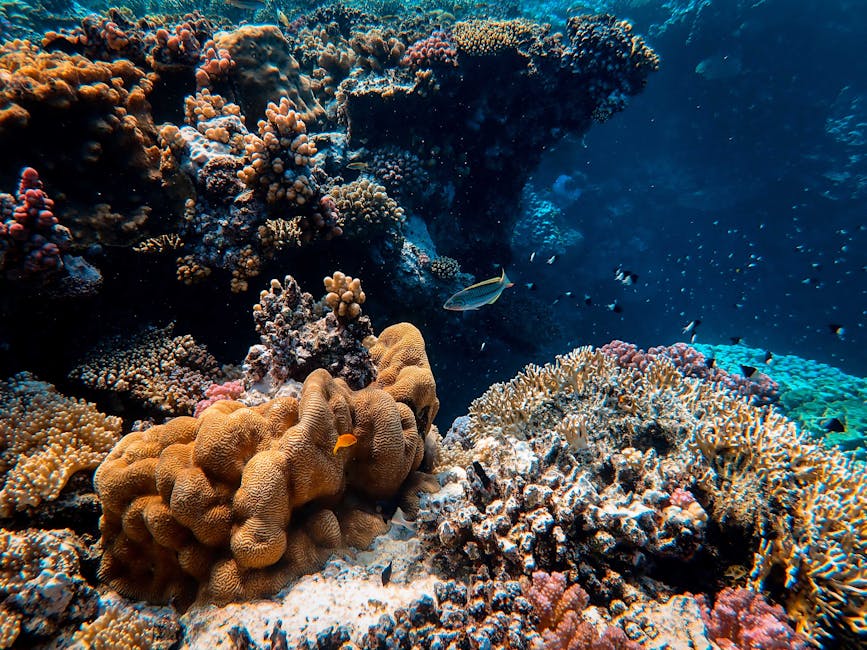
In a surprising turn of events, coral reefs in the remote Houtman Abrolhos Islands have been found to have shrugged off a massive heatwave that occurred in 2025, with the coral reefs emerging virtually unharmed. This discovery has left scientists stunned, as it was expected that the prolonged extreme heatwave would have a devastating impact on the delicate ecosystem. The findings have significant implications for the conservation of coral reefs worldwide, as they may reveal new strategies for protecting these vital ecosystems from the impacts of climate change.
The Resilience of Coral Reefs

The Houtman Abrolhos Islands, located off the coast of Western Australia, are home to some of the most pristine and diverse coral reefs in the world. The coral reefs in this region are considered to be particularly vulnerable to the impacts of climate change, due to their remote location and limited connectivity to other reef systems. However, the recent discovery that these coral reefs were able to survive a prolonged extreme heatwave has raised important questions about the resilience of these ecosystems and how they are able to cope with the stresses imposed by climate change. The fact that the coral reefs in the Houtman Abrolhos Islands were able to withstand the heatwave with minimal damage suggests that there may be factors at play that are not yet fully understood.
Uncovering the Secrets of Coral Reef Resilience

The heatwave that occurred in 2025 was one of the most extreme on record, with sea temperatures rising to unprecedented levels. The coral reefs in the Houtman Abrolhos Islands were exposed to these high temperatures for an extended period, and it was expected that this would lead to widespread coral bleaching and habitat destruction. However, when scientists visited the reefs after the heatwave, they were surprised to find that the coral reefs had suffered minimal damage. The reefs were found to be healthy and thriving, with no significant signs of bleaching or habitat destruction. This unexpected discovery has sparked a new wave of research into the factors that contribute to the resilience of coral reefs, with scientists seeking to understand the mechanisms that allowed the coral reefs in the Houtman Abrolhos Islands to survive the heatwave.
Understanding the Causes of Coral Reef Resilience
Researchers are now working to understand the causes of the unexpected resilience of the coral reefs in the Houtman Abrolhos Islands. One theory is that the reefs may have been protected by a combination of factors, including the presence of certain species of coral that are more resistant to heat stress, as well as the unique oceanographic conditions in the region. The Houtman Abrolhos Islands are located in a area of high oceanic productivity, which may have provided the coral reefs with a source of nutrients and energy that helped them to cope with the stresses imposed by the heatwave. Further research is needed to fully understand the mechanisms that contributed to the resilience of the coral reefs, but the discovery has already provided important insights into the complex interactions between coral reefs and their environment.
Implications for Coral Reef Conservation
The discovery that the coral reefs in the Houtman Abrolhos Islands were able to survive a prolonged extreme heatwave has significant implications for the conservation of coral reefs worldwide. Coral reefs are some of the most diverse and valuable ecosystems on the planet, providing important habitat for a wide range of marine species and supporting the livelihoods of millions of people. However, coral reefs are facing numerous threats, including climate change, overfishing, and pollution, which are causing widespread habitat destruction and loss of biodiversity. The fact that the coral reefs in the Houtman Abrolhos Islands were able to withstand the heatwave with minimal damage suggests that there may be strategies that can be employed to protect other coral reefs from the impacts of climate change.
Expert Perspectives
Scientists are hailing the discovery as a major breakthrough in the field of coral reef conservation. “This finding has significant implications for our understanding of coral reef resilience and our ability to protect these ecosystems from the impacts of climate change,” said one researcher. “It suggests that there may be ways to enhance the resilience of coral reefs, and that we should be focusing on identifying and protecting those reefs that are most likely to survive in a warming world.” However, other experts are more cautious, noting that the discovery is not a guarantee that all coral reefs will be able to withstand the impacts of climate change. “While this finding is certainly encouraging, it is essential that we do not become complacent,” said another scientist. “Coral reefs are still facing numerous threats, and it is essential that we continue to work to reduce our impact on these ecosystems and to protect them for future generations.”
As researchers continue to study the coral reefs in the Houtman Abrolhos Islands, they are likely to uncover even more secrets about the resilience of these ecosystems. One of the key questions that remains to be answered is what other factors may have contributed to the survival of the coral reefs, and how these factors can be replicated in other reef systems. Additionally, there is a need for further research into the long-term impacts of the heatwave on the coral reefs, and whether the reefs will be able to continue to thrive in a warming world. As the world continues to grapple with the challenges of climate change, the discovery of the resilient coral reefs in the Houtman Abrolhos Islands provides a glimmer of hope for the future of these vital ecosystems.