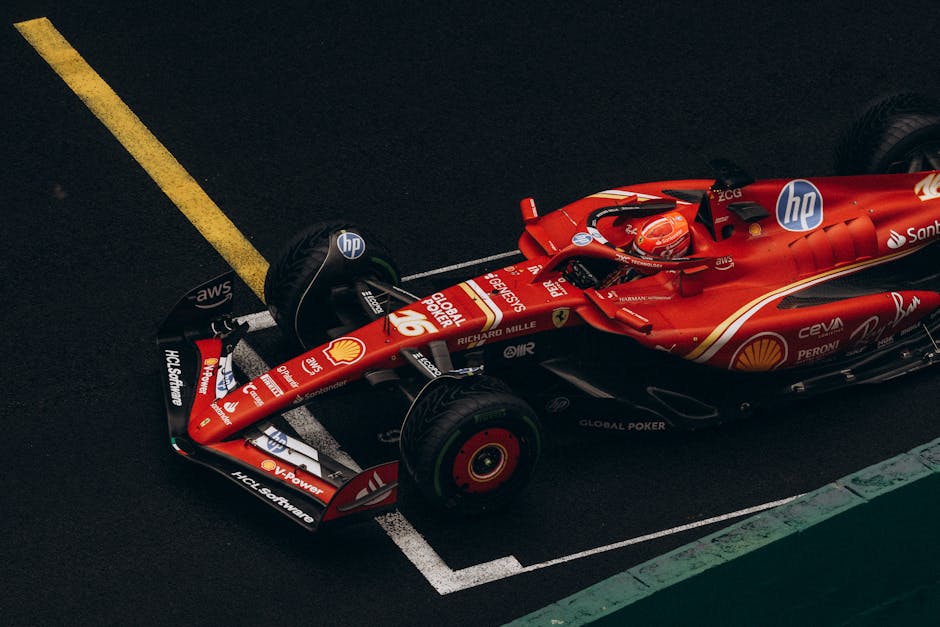
- Lewis Hamilton’s Mission 44 foundation is breaking barriers in F1 by recruiting talented individuals from disadvantaged backgrounds.
- The lack of representation of black people and those from underprivileged communities in motorsport has long been a pressing concern in F1.
- Mission 44 provides opportunities to those who have been historically excluded from the sport, promoting greater diversity and inclusion.
- By providing access to education, training, and employment opportunities, Mission 44 is helping to level the playing field in F1.
- Lewis Hamilton’s commitment to creating a more inclusive F1 industry is rooted in his own experiences as a black driver in a predominantly white sport.
Formula One, a sport dominated by wealth and privilege, is witnessing a significant shift with Lewis Hamilton’s Mission 44 foundation recruiting talented individuals from disadvantaged backgrounds. The lack of representation of black people and those from underprivileged communities in motorsport has long been a pressing concern, with only a handful of drivers from diverse backgrounds making it to the pinnacle of the sport. However, with Mission 44, Hamilton is determined to change this narrative, providing opportunities to those who have been historically excluded from the sport.
The Driving Force Behind Mission 44

Lewis Hamilton’s commitment to creating a more inclusive and diverse motorsport industry is rooted in his own experiences as a black driver in a predominantly white sport. Despite his unparalleled success on the track, Hamilton has consistently spoken out about the need for greater representation and equality in F1. Mission 44, which was launched in 2021, is a testament to his dedication to this cause, with the foundation working tirelessly to identify and nurture talent from underrepresented groups. By providing access to education, training, and employment opportunities, Mission 44 is helping to level the playing field and create a more meritocratic sport.
Breaking Down Barriers in F1

The recruitment of talented individuals from disadvantaged backgrounds to F1 is a significant step forward for the sport. Mission 44 has already made notable progress in this regard, with several recruits securing jobs with top F1 teams. These individuals, who may have otherwise been excluded from the sport due to their background or socioeconomic status, are now playing a crucial role in shaping the future of F1. From engineers and mechanics to marketing and communications professionals, Mission 44’s recruits are bringing a fresh perspective and new ideas to the sport, helping to drive innovation and progress.
Analysis and Impact
The impact of Mission 44 extends far beyond the confines of the F1 paddock. By addressing the lack of representation in motorsport, Hamilton’s foundation is helping to challenge systemic inequalities and promote greater diversity and inclusion across the sport. This, in turn, has the potential to inspire a new generation of young people from underrepresented backgrounds to pursue careers in motorsport, creating a positive feedback loop that will have far-reaching consequences for the sport. Furthermore, Mission 44’s work is also helping to highlight the importance of diversity and inclusion in the wider business community, demonstrating the benefits of a more inclusive and equitable approach to recruitment and talent development.
Implications and Next Steps
The success of Mission 44 has significant implications for the future of F1 and the wider sport. As the foundation continues to grow and expand its reach, it is likely to have a profound impact on the diversity and inclusivity of the sport, helping to create a more level playing field and providing opportunities for talented individuals from all backgrounds to succeed. With Hamilton’s unwavering commitment to this cause, it is clear that Mission 44 will remain a driving force for change in F1, pushing the sport to become more inclusive, diverse, and equitable.
Expert Perspectives
Experts in the field of motorsport and diversity and inclusion have praised Hamilton’s Mission 44 for its groundbreaking work in addressing the lack of representation in F1. According to Dr. Stefan Ludwig, a leading expert on diversity and inclusion in sport, “Mission 44 is a gamechanger for F1, providing a much-needed platform for talented individuals from underrepresented backgrounds to showcase their skills and pursue their passion for motorsport.” Meanwhile, F1 commentator and journalist, Will Buxton, has hailed Hamilton’s foundation as “a beacon of hope for a more inclusive and diverse F1,” highlighting the importance of Mission 44’s work in promoting greater equality and representation in the sport.
As Mission 44 continues to push the boundaries of what is possible in F1, the question on everyone’s mind is: what’s next for the foundation? With Hamilton’s unwavering commitment to this cause, it is likely that we will see even more innovative initiatives and programs aimed at promoting diversity and inclusion in the sport. One thing is certain, however: with Mission 44 at the forefront of this movement, the future of F1 has never looked brighter or more inclusive.