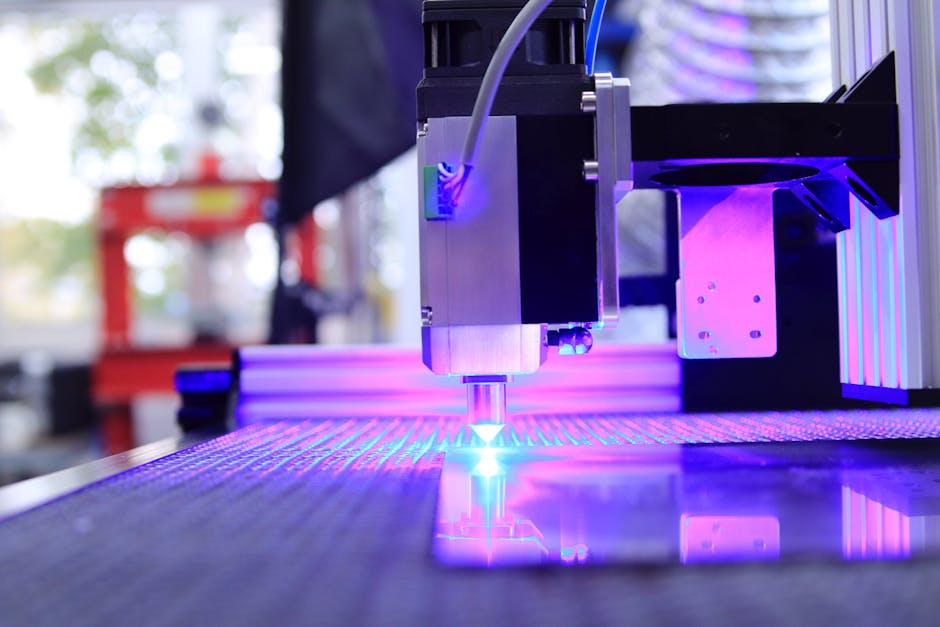
- Researchers at MIT have discovered a way to harness chaotic laser light to create a highly focused beam for brain imaging.
- This breakthrough has the potential to accelerate the development of treatments for neurological diseases.
- Chaotic laser light can spontaneously form a ‘pencil beam’ for rapid and detailed brain imaging.
- The technique has overcome the obstacle of the blood-brain barrier, enabling highly detailed 3D images.
- This discovery could lead to a deeper understanding of the human brain and its complexities.
A striking fact has emerged in the field of neuroscience: chaotic laser light, once considered a hindrance, can be harnessed to create a highly focused beam, revolutionizing brain imaging. Researchers at MIT have made a groundbreaking discovery, demonstrating that under the right conditions, chaotic laser light can spontaneously form a “pencil beam” that enables rapid and detailed imaging of the brain. This innovative technique has the potential to dramatically accelerate the development of treatments for neurological diseases, which affect millions of people worldwide. The implications of this breakthrough are profound, and the scientific community is abuzz with excitement.
Unveiling the Power of Chaotic Laser Light

The discovery of chaotic laser light’s potential in brain imaging is a significant milestone, and its importance cannot be overstated. For years, scientists have been searching for ways to improve brain imaging techniques, which are crucial for understanding the complexities of the human brain and developing effective treatments for neurological diseases. The blood-brain barrier, a highly selective semipermeable border that separates the brain from the bloodstream, has been a major obstacle in brain imaging. However, the MIT scientists’ breakthrough has overcome this hurdle, enabling the creation of highly detailed 3D images of the blood-brain barrier at unprecedented speeds. This achievement has far-reaching implications for our understanding of the brain and its functions.
Key Details of the Breakthrough

The MIT researchers’ innovative technique involves using chaotic laser light to create a highly focused beam that can penetrate the blood-brain barrier, allowing for rapid and detailed imaging of the brain. The “pencil beam” enabled the scientists to image the blood-brain barrier in 3D at speeds 25 times faster than existing techniques. This breakthrough has also enabled researchers to watch how drugs move into brain cells in real time, a capability that was previously unimaginable. The team’s discovery has the potential to revolutionize the field of neuroscience, enabling scientists to gain a deeper understanding of the brain and its functions. The researchers involved in the study are hailing the breakthrough as a major milestone, and their findings have been met with widespread acclaim.
Analysis of the Discovery
The causes and effects of the MIT scientists’ breakthrough are multifaceted and far-reaching. The discovery of chaotic laser light’s potential in brain imaging is a testament to the power of innovative thinking and cutting-edge technology. The use of chaotic laser light to create a highly focused beam has enabled the creation of highly detailed 3D images of the brain, which will be invaluable in the development of treatments for neurological diseases. Expert analysis suggests that this breakthrough could have a major impact on our understanding of the brain and its functions, enabling scientists to develop more effective treatments for a range of neurological disorders. The data generated by this technique will be crucial in advancing our knowledge of the brain and its functions, and the implications of this breakthrough are being closely watched by the scientific community.
Implications of the Breakthrough
The implications of the MIT scientists’ breakthrough are profound and far-reaching. The ability to image the blood-brain barrier in 3D at unprecedented speeds will enable researchers to gain a deeper understanding of the brain and its functions. This breakthrough has the potential to accelerate the development of treatments for neurological diseases, which affect millions of people worldwide. The use of chaotic laser light to create a highly focused beam will also enable researchers to watch how drugs move into brain cells in real time, a capability that was previously unimaginable. The people affected by this breakthrough will be numerous, and the potential benefits are vast. As the scientific community continues to explore the possibilities of this innovative technique, it is clear that the implications of this breakthrough will be felt for years to come.
Expert Perspectives
Experts in the field of neuroscience are hailing the MIT scientists’ breakthrough as a major milestone, and their findings have been met with widespread acclaim. The use of chaotic laser light to create a highly focused beam has the potential to revolutionize the field of neuroscience, enabling scientists to gain a deeper understanding of the brain and its functions. Contrasting viewpoints suggest that while this breakthrough is significant, more research is needed to fully realize its potential. However, the consensus is clear: this innovative technique has the potential to dramatically accelerate the development of treatments for neurological diseases, and its implications will be felt for years to come.
As the scientific community looks to the future, one question remains: what’s next for this innovative technique? The answer is clear: the possibilities are endless. The use of chaotic laser light to create a highly focused beam has the potential to enable rapid and detailed imaging of the brain, and its implications will be far-reaching. As researchers continue to explore the possibilities of this breakthrough, it is clear that the future of neuroscience has never been brighter. The MIT scientists’ discovery is a testament to the power of innovative thinking and cutting-edge technology, and its impact will be felt for years to come.