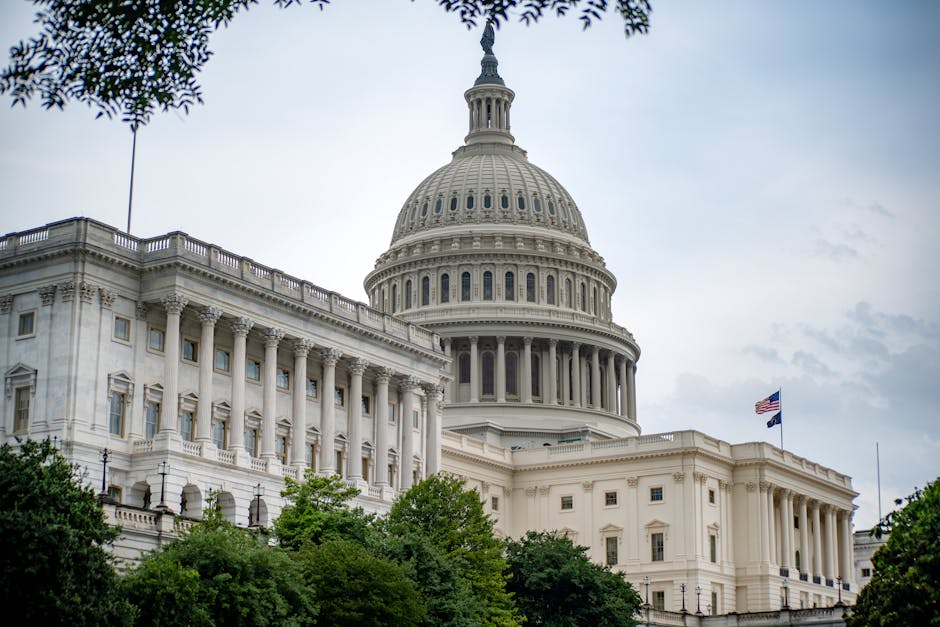
- The War Powers Act of 1973 limits presidential war powers, requiring congressional authorization after 60 days of conflict.
- President Trump’s options for continuing the Iran war may be severely limited due to the War Powers Act deadline.
- The War Powers Act aims to restrict the president’s ability to unilaterally commit the country to military conflicts.
- Congressional authorization is required under the War Powers Act for the president to continue a conflict beyond 60 days.
- The War Powers Act may pressure President Trump to seek a peaceful resolution in the Iran conflict.
The United States’ involvement in the Iran conflict has sparked intense debate about the limits of presidential war powers. A striking fact is that the War Powers Act of 1973 allows the president to wage war without congressional approval for 60 days, after which his options for continuing the conflict are severely limited. This deadline has significant implications for President Trump’s ability to continue the war in Iran, and it may ultimately pressure him to seek a peaceful resolution or risk facing congressional opposition.
Historical Context of the War Powers Act

The War Powers Act was passed in the aftermath of the Vietnam War, with the aim of restricting the president’s ability to unilaterally commit the country to military conflicts. The law requires the president to notify Congress within 48 hours of deploying troops into combat, and it mandates that the president obtain congressional authorization for the conflict within 60 days. If congressional authorization is not obtained, the president must withdraw the troops within 30 days. This law has been the subject of controversy and debate, with some arguing that it unconstitutionally restricts the president’s authority as commander-in-chief. Despite these challenges, the War Powers Act remains a crucial check on presidential power, and it may play a significant role in shaping the trajectory of the Iran conflict.
Key Developments in the Iran Conflict

The conflict in Iran has been marked by a series of escalating tensions and violent clashes. The US drone strike that killed top Iranian military commander Qasem Soleimani sparked a wave of retaliatory attacks, including a ballistic missile strike on a US military base in Iraq. The situation has been further complicated by the downing of a Ukrainian airliner, which was mistakenly shot down by Iranian air defenses. As the conflict continues to unfold, the US and Iran have engaged in a war of words, with both sides issuing threats and warnings. The involvement of other regional players, including Iraq and Saudi Arabia, has added to the complexity of the situation, and it has raised concerns about the potential for a broader regional conflict.
Analysis of the War Powers Act’s Impact
The War Powers Act has significant implications for the Iran conflict, as it limits the president’s ability to continue the war without congressional approval. If President Trump fails to obtain congressional authorization for the conflict, he will be required to withdraw US troops from the region within 30 days. This deadline has already sparked a heated debate in Congress, with some lawmakers arguing that the president has exceeded his authority and others arguing that he has the necessary powers to respond to the Iranian threat. The data suggests that the American public is also divided on the issue, with some polls indicating that a majority of Americans oppose further military action in Iran. As the situation continues to unfold, it is likely that the War Powers Act will play a crucial role in shaping the trajectory of the conflict, and it may ultimately force President Trump to re-evaluate his strategy in the region.
Implications of the War Powers Act for the Iran Conflict
The implications of the War Powers Act for the Iran conflict are far-reaching and significant. If President Trump is unable to obtain congressional authorization for the conflict, he will be forced to withdraw US troops from the region, which could have a major impact on the balance of power in the Middle East. The consequences of such a withdrawal are difficult to predict, but they could potentially embolden Iranian-backed militias and other extremist groups in the region. On the other hand, if President Trump is able to obtain congressional authorization for the conflict, it could provide him with the necessary legitimacy and support to continue the war effort. Either way, the War Powers Act has introduced a significant element of uncertainty into the conflict, and it has raised important questions about the limits of presidential power and the role of Congress in shaping US foreign policy.
Expert Perspectives
Experts are divided on the implications of the War Powers Act for the Iran conflict. Some argue that the law provides a necessary check on presidential power, while others argue that it unconstitutionally restricts the president’s ability to respond to emerging threats. According to Dr. John Mearsheimer, a professor of political science at the University of Chicago, ‘the War Powers Act is a crucial component of the US system of government, as it ensures that the president does not have unchecked power to commit the country to military conflicts.’ On the other hand, Dr. Michael Rubin, a resident scholar at the American Enterprise Institute, argues that ‘the War Powers Act is a relic of the past, and it does not reflect the realities of modern warfare.’ These contrasting viewpoints highlight the complexity and nuance of the issue, and they underscore the need for a thoughtful and informed debate about the role of the War Powers Act in shaping US foreign policy.
As the situation in Iran continues to unfold, it is likely that the War Powers Act will remain a central issue in the debate over US foreign policy. The open question is whether President Trump will be able to navigate the complexities of the law and obtain the necessary congressional authorization to continue the conflict, or whether he will be forced to withdraw US troops from the region. Either way, the War Powers Act has introduced a significant element of uncertainty into the conflict, and it has raised important questions about the limits of presidential power and the role of Congress in shaping US foreign policy. As the US and Iran continue to engage in a war of words, it is clear that the outcome of the conflict will have far-reaching implications for the region and the world.