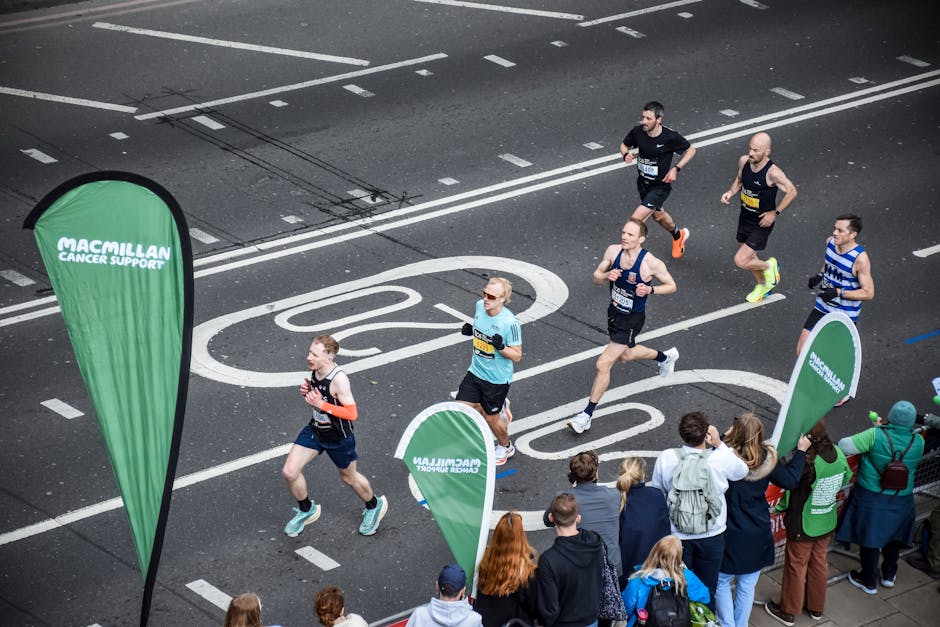
- Sebastian Sawe broke the London Marathon course record with a blistering time of 2:02:34, marking the second-fastest marathon time in history.
- The win sparked national pride in Kenya, with schools and elders celebrating and young athletes emulating Sawe’s achievement.
- The Rift Valley’s unique environment, including high altitude and lean diet, has systematically produced Olympic medalists and record-holders for over six decades.
- Distance running represents social mobility for many in the Rift Valley, providing a path out of poverty and access to education.
- Kenya’s dominance in endurance sports is a potent symbol of resilience, discipline, and altitude-forged excellence.
Sebastian Sawe crossed the finish line of the 2024 London Marathon in a blistering 2:02:34, slicing 27 seconds off the previous course record and marking the second-fastest marathon time in history. The moment he broke stride on Tower Bridge, arms raised and breath visible in the cool spring air, reverberated thousands of miles away in the highlands of Kenya’s Rift Valley. In villages like Iten and Kaptagat—perched at 8,000 feet and long revered as incubators of world-class distance runners—schools paused lessons, elders stood in doorways applauding, and young athletes sprinted barefoot down red-dirt tracks in emulation. For a nation that has produced 13 of the 20 fastest marathoners ever, Sawe’s triumph wasn’t just a personal victory; it was a reaffirmation of Kenya’s dominance in endurance sports and a potent symbol of resilience, discipline, and altitude-forged excellence.
A Legacy Forged in Altitude and Ambition

The Rift Valley’s influence on global distance running is unparalleled. For over six decades, this region has systematically produced Olympic medalists, world champions, and record-holders, from Kipchoge Keino to Eliud Kipchoge. Its high-altitude terrain, lean diet, and deeply ingrained culture of running—where children often run 10 kilometers to school—create an environment uniquely suited to aerobic development. But beyond physiology, the sport represents social mobility: a path out of poverty, access to education, and international recognition. Sawe’s win arrives at a time when Kenya faces growing scrutiny over athlete welfare, training conditions, and the commercialization of talent. His success, achieved under a modest training group in Kaptagat rather than a high-profile international camp, underscores the enduring power of homegrown systems and grassroots dedication.
From Humble Beginnings to Global Podium

Sebastian Sawe, 29, began running competitively while attending a secondary school in Elgeyo-Marakwet County, where he balanced studies with 20-kilometer daily commutes on foot. He rose through national ranks with quiet consistency, finishing fourth in the 2022 Berlin Marathon and third in Tokyo the following year. Unlike some of his peers who sign lucrative contracts with foreign management, Sawe remained with the Kaptagat-based Global Sports Communication affiliate, training under coach Renato Canova. His London strategy was both bold and disciplined: joining the lead pack early, resisting surges until mile 20, then accelerating with a 2:50/km closing stretch that left defending champion Tamirat Tola of Ethiopia behind. His 2:02:34 time now stands as the fastest marathon ever recorded outside of Berlin, where ideal flat courses and pacing conditions have facilitated record-breaking runs.
Breaking Barriers, Not Just Records

Sawe’s performance reflects broader shifts in elite marathon dynamics. While Eliud Kipchoge’s sub-two-hour marathon in 2019 was a controlled, non-record-eligible event, Sawe’s time was achieved in official competition, under standard conditions. His split times—particularly the 61:50 half-marathon mark—suggest a new level of sustained speed among African runners, driven by improved nutrition, data-driven training, and mental conditioning. According to BBC Sport analysis, Sawe’s pacing was nearly flawless, deviating less than 1.2% from optimal velocity—a testament to strategic planning. Experts also note rising competition from Ethiopian and Japanese runners, which may be pushing Kenyan athletes to refine their tactics. Yet Kenya still holds 14 of the top 25 all-time marathon performances, a dominance rooted in both biological and sociocultural factors.
Impact Beyond the Track

Sawe’s victory resonates far beyond athletics. In rural Kenya, where unemployment among youth exceeds 30%, success in running offers a rare, visible ladder to prosperity. His win has already prompted discussions in Parliament about increasing funding for athletic academies and medical support for retired runners. Families in the Rift Valley now see Sawe as a model—not just for speed, but for humility and perseverance. International sponsors are expected to take notice; Nike and Adidas have long invested in Kenyan talent, but local brands are also emerging. Still, challenges remain: inadequate infrastructure, lack of post-career planning, and exploitation by unlicensed agents continue to plague the system. Sawe’s rise through a reputable training group offers a blueprint for sustainable development in the sport.
Expert Perspectives
“Sawe’s win is a triumph of consistency over hype,” says Dr. Catherine Kiprop, a sports sociologist at Moi University. “He didn’t chase fame; he chased improvement.” Conversely, some analysts warn against overemphasizing individual success. “Kenya needs systemic reform, not just heroes,” argues Nairobi-based journalist Wambui Njuguna. “We celebrate winners, but what about the thousands who train just as hard and fade into obscurity?” Meanwhile, IAAF performance analysts note that sub-2:03 times are becoming more common, suggesting the marathon is entering a new era of speed.
As the athletics world looks ahead to the Paris 2024 Olympics, all eyes will be on whether Sawe can replicate his London form on the demanding urban course along the Seine. More importantly, his journey raises questions about how Kenya can sustain its running legacy amid changing global dynamics. Can grassroots talent pipelines be protected from commercial exploitation? Will emerging athletes have access to sports science and mental health support? Sebastian Sawe’s run was more than a race—it was a statement. And in Kenya, it may just inspire the next generation to run faster, smarter, and with purpose.
Source: The New York Times