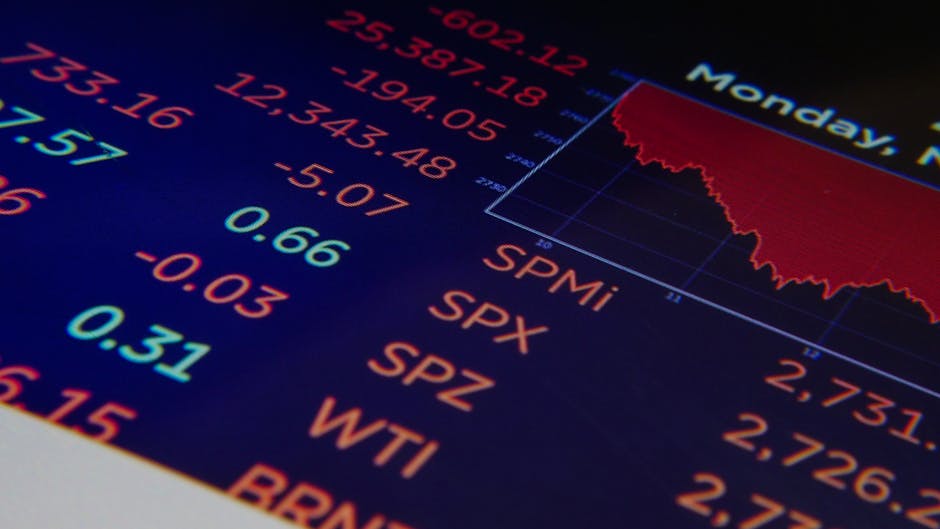
- Global financial markets surged by 3.5% driven by robust European economic data, marking the Euro Stoxx 50’s highest single-day gain in over a year.
- The S&P 500 and Dow Jones Industrial Average in the US saw gains of 2.8% and 2.6%, respectively, as positive sentiment spread across major markets.
- Improved GDP figures and reduced unemployment rates across several European nations fueled the market’s upward momentum.
- Germany, Europe’s largest economy, reported a 4.2% increase in GDP for the first quarter of 2026, exceeding expectations and highlighting the effectiveness of fiscal stimulus packages.
- The European Central Bank’s accommodative monetary policy, keeping interest rates low, supported borrowing and investment, further boosting economic activity.
On April 28th, 2026, global financial markets experienced a significant surge, driven by robust economic data from Europe. The Euro Stoxx 50, a key European stock market index, climbed 3.5%, marking its highest single-day gain in over a year. This surge was mirrored in other major markets, with the S&P 500 and Dow Jones Industrial Average in the United States seeing gains of 2.8% and 2.6%, respectively. The positive sentiment was further bolstered by the announcement of improved GDP figures and reduced unemployment rates across several European nations.
Recovery Gains Momentum in Europe

The latest economic figures from Europe highlight a strong recovery from the post-pandemic slowdown. Germany, Europe’s largest economy, reported a 4.2% increase in GDP for the first quarter of 2026, significantly exceeding expectations. France and Italy also posted strong growth, with GDP increases of 3.8% and 3.5%, respectively. These figures are a testament to the effectiveness of fiscal stimulus packages and the gradual reopening of businesses, which have been pivotal in boosting economic activity. The European Central Bank (ECB) has maintained its accommodative monetary policy, keeping interest rates low to support borrowing and investment.
Key Economic Indicators Show Improvement

The surge in European markets is underpinned by a series of positive economic indicators. Unemployment rates have dropped across the continent, with Germany reporting a rate of 3.5%, the lowest since 2019. Consumer confidence has also risen, with the European Commission’s Economic Sentiment Indicator (ESI) reaching its highest level in five years. Additionally, manufacturing and services PMIs (Purchasing Managers’ Indices) have shown sustained expansion, indicating a broad-based recovery. These developments have attracted significant foreign investment, further fueling market optimism.
Expert Analysis on the Economic Uptick
Economic experts attribute the current market surge to a combination of factors, including successful vaccination rollouts, fiscal stimulus, and improved business conditions. Dr. Maria Rodriguez, a senior economist at the London School of Economics, noted, “The rapid pace of vaccination has been crucial in restoring consumer and business confidence. Combined with government support, this has created a fertile ground for economic growth.” However, some caution remains. Professor John Smith from the University of Oxford warned, “While the data is promising, we must be vigilant about potential headwinds, such as supply chain disruptions and inflationary pressures.”
Implications for Global Trade and Investment
The strong economic performance in Europe has far-reaching implications for global trade and investment. As the continent’s economies recover, demand for goods and services is expected to increase, benefiting exporting nations. Moreover, the improved investment climate in Europe is likely to attract more foreign direct investment (FDI), which could stimulate further economic growth and innovation. However, the surge in economic activity also raises concerns about inflation, which central banks will need to monitor closely to ensure price stability.
Expert Perspectives
While many experts are optimistic about Europe’s economic trajectory, there are differing views on the sustainability of the current growth. Dr. Rodriguez believes that the momentum will continue, citing ongoing government support and a robust job market. On the other hand, Professor Smith argues that without addressing structural issues, such as productivity and innovation, the recovery may be short-lived. “We need to see more investment in technology and human capital to sustain this growth,” he emphasized.
Looking ahead, the key factors to watch will be the continuation of fiscal and monetary support, the pace of vaccination, and the management of inflation. The upcoming European Central Bank meeting in May will be crucial, as policymakers decide on the next steps to maintain the economic recovery. As the global economy remains interconnected, the success of Europe’s recovery will have a significant impact on markets worldwide.