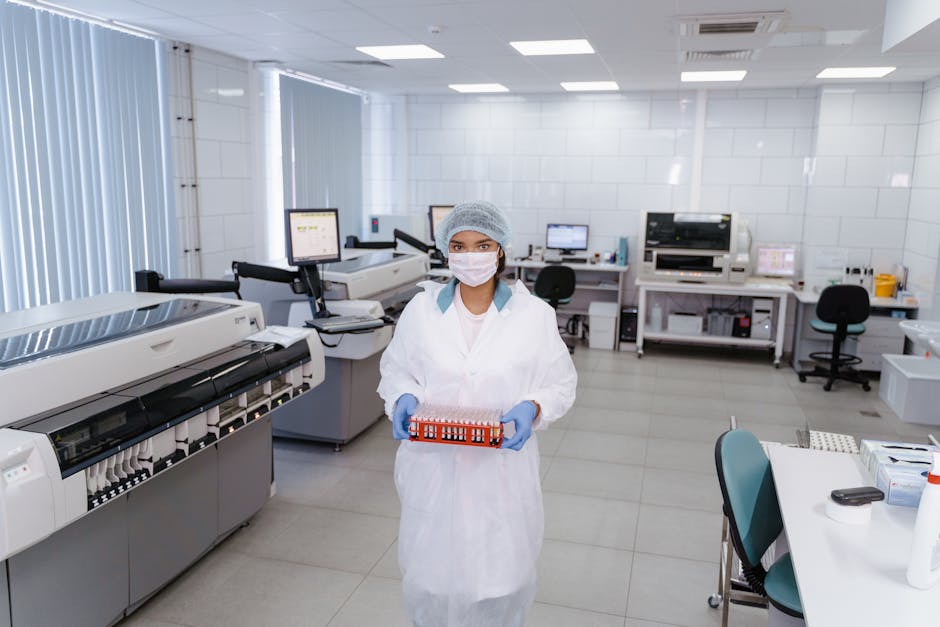
- Environmental DNA (eDNA) studies are predominantly conducted in high-income countries, excluding biodiversity-rich regions in the Global South.
- The use of eDNA technology poses a growing equity paradox in conservation science, where the benefits are not being equitably shared.
- eDNA offers a powerful, non-invasive method to detect rare and elusive organisms through genetic traces in water, soil, and air.
- The control of ecological data raises urgent questions about who gets left behind in the race to understand and protect life on Earth.
- The expansion of eDNA technology has not been globally inclusive, exacerbating existing inequities in conservation science.
More than 90% of all published environmental DNA (eDNA) studies originate from just ten high-income countries, primarily in North America and Western Europe, despite the fact that the most biodiverse regions on Earth are located in the Global South. This stark imbalance reveals a growing equity paradox in conservation science: the very tool poised to revolutionize biodiversity monitoring is being used predominantly outside the ecosystems that need it most. As species vanish at an accelerating rate — with the UN estimating one million at risk of extinction — eDNA offers a powerful, non-invasive method to detect rare and elusive organisms through genetic traces in water, soil, and air. Yet, its benefits are not being equitably shared, raising urgent questions about who controls ecological data and who gets left behind in the race to understand and protect life on Earth.
The Promise and Peril of Genetic Surveillance

eDNA technology allows scientists to identify species present in an ecosystem without ever seeing or capturing them, simply by analyzing genetic material shed into the environment. This has proven invaluable in detecting invasive species, monitoring endangered populations, and assessing ecosystem health with far greater speed and lower cost than traditional field surveys. In wealthy nations, eDNA is already integrated into national biodiversity strategies, guiding policy and restoration efforts. However, its expansion has not been globally inclusive. The infrastructure required — from high-throughput sequencing labs to bioinformatics expertise — remains largely inaccessible in low- and middle-income countries, where biodiversity is richest but resources are scarcest. This creates a feedback loop: the lack of local data leads to underrepresentation in global assessments, which in turn reduces funding and political attention for conservation in these regions.
Who Is Doing the Sequencing — and Who Isn’t

A 2026 analysis published in Nature reveals that researchers from institutions in the United States, Germany, France, Canada, and Australia dominate the eDNA literature, while nations in the Amazon Basin, Southeast Asia, and sub-Saharan Africa — home to over 70% of global biodiversity — contribute minimally. This disparity is not due to lack of interest or expertise on the ground, but rather to systemic barriers: restricted access to sequencers, prohibitive reagent costs, limited internet bandwidth for data transfer, and restrictive international regulations on genetic sample export. In some cases, samples collected in biodiverse countries are shipped abroad for analysis, leading to what some scientists call ‘biocolonialism’ — where genetic data is generated and controlled by foreign institutions, with little benefit or collaboration returned to source countries.
Breaking Down the Barriers to Equity

The root causes of this eDNA divide are both technical and political. While portable sequencers like Oxford Nanopore’s MinION have made field-based genomics more feasible, they still require training, maintenance, and reagents that are often too expensive or logistically challenging for sustained use in remote areas. Moreover, global frameworks like the Nagoya Protocol, designed to ensure fair benefit-sharing of genetic resources, have inadvertently slowed research by adding layers of bureaucracy without adequate support for compliance in developing nations. Experts argue that true equity requires more than technology transfer — it demands long-term investment in local scientific capacity, open-access data platforms with sovereign control, and equitable research partnerships. Initiatives like the African Biosystematics Initiative and the Southeast Asia Biodiversity Research Institute are showing promise, but remain underfunded compared to their Northern counterparts.
Who Bears the Cost of Incomplete Data

When biodiversity monitoring is dominated by a narrow set of actors, the resulting data gaps can have real-world consequences. Conservation policies shaped by incomplete or biased datasets may misallocate resources, overlook critical habitats, or fail to detect emerging threats in time. Indigenous and local communities, who often steward the most biodiverse landscapes, are particularly affected — their traditional knowledge is sidelined in favor of high-tech methods they cannot access. Furthermore, international funding bodies like the Global Environment Facility and the World Bank rely on such data to prioritize investments, perpetuating a cycle where underrepresented regions remain underfunded. Without inclusive eDNA monitoring, global biodiversity targets such as those set under the Kunming-Montreal Global Biodiversity Framework risk being built on flawed foundations.
Expert Perspectives
“The eDNA revolution cannot be complete if it only happens in labs in Geneva or Boston,” says Dr. Amina Jallow, a molecular ecologist at the University of Dakar. “We need to decolonize environmental genomics by investing in African-led research networks.” In contrast, some Western scientists caution that rapid decentralization without quality control could compromise data reliability. “Standardization is crucial,” argues Dr. Erik Wahlstrom of the University of Copenhagen, “but it shouldn’t come at the expense of inclusion.” The challenge lies in balancing rigor with equity — ensuring data is both globally comparable and locally relevant.
Looking ahead, the integration of eDNA into global biodiversity monitoring hinges on whether the scientific community can overcome its structural inequities. Emerging efforts to establish regional sequencing hubs, coupled with AI-driven data analysis tools that reduce computational demands, offer hope. But without binding commitments to technology sharing, capacity building, and fair data governance, the eDNA revolution risks becoming another chapter in the long history of scientific exclusion. The question is no longer just whether we can monitor biodiversity — but who gets to do it, and for whom.
Source: Nature