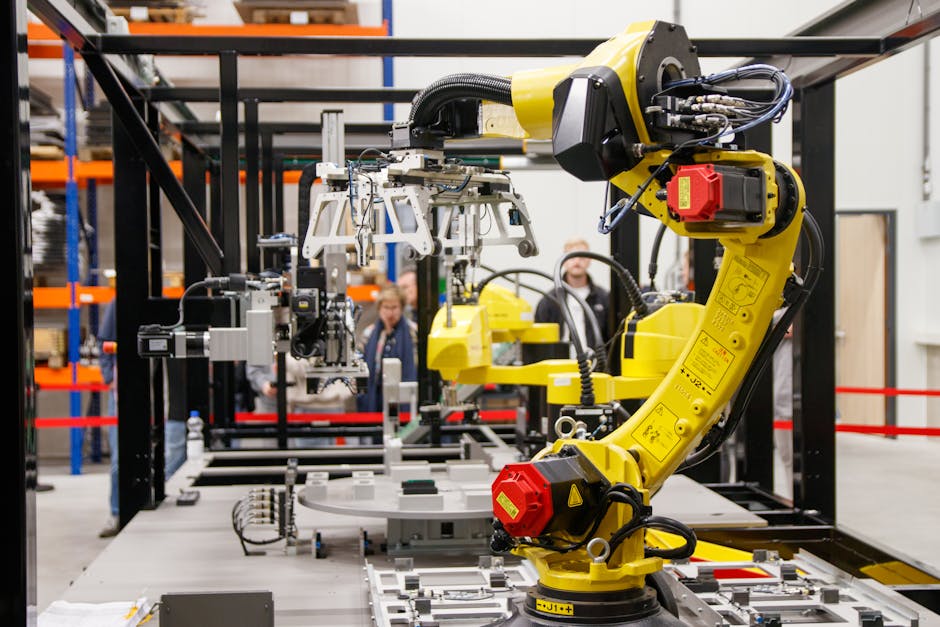
- China is leading the world in robotics development with 500 new startups emerging in the past year.
- Autonomous humanoid robots are being developed for various tasks, including manufacturing, logistics, healthcare, and education.
- Government support, investment in R&D, and a large talent pool are driving China’s robotics growth.
- The ‘Made in China 2025’ plan is upgrading the country’s manufacturing capabilities through robotics and AI adoption.
- China’s robotics ecosystem is becoming increasingly sophisticated with innovation hubs and research institutions.
China is on the cusp of a robotics revolution, with the country witnessing an unprecedented surge in the development and deployment of autonomous humanoid robots. According to recent estimates, over 500 new robotics startups have emerged in China in the past year alone, with many of these companies focused on creating robots that can perform a wide range of tasks, from manufacturing and logistics to healthcare and education. As the world moves closer to realizing the sci-fi vision of autonomous humanoid robots, China is increasingly at the forefront of this technological shift, with its robotics sector experiencing rapid growth and innovation.
China’s Robotics Ecosystem

The growth of China’s robotics industry is not an isolated phenomenon, but rather the result of a combination of factors, including government support, investment in research and development, and a large pool of talented engineers and technicians. The Chinese government has been actively promoting the development of the robotics sector, with initiatives such as the Made in China 2025 plan, which aims to upgrade the country’s manufacturing capabilities through the adoption of advanced technologies, including robotics and artificial intelligence. As a result, China’s robotics ecosystem is becoming increasingly sophisticated, with a growing number of companies, research institutions, and innovation hubs.
Key Players and Innovations

Some of the key players in China’s robotics revolution include companies such as DJI, UBTECH, and Jaka Robotics, which are pushing the boundaries of robotics innovation. For example, DJI, the world’s largest drone manufacturer, has been investing heavily in the development of autonomous robots for applications such as surveillance, inspection, and package delivery. Meanwhile, UBTECH has been focusing on the creation of humanoid robots that can perform tasks such as assembly, welding, and material handling. These companies, along with many others, are driving innovation in China’s robotics sector and helping to establish the country as a global leader in the field.
Analysis and Implications

The implications of China’s robotics revolution are far-reaching and multifaceted. On the one hand, the growth of the robotics sector is creating new opportunities for economic growth, job creation, and innovation. According to a report by the Reuters, the global robotics market is expected to reach $135 billion by 2025, with China accounting for a significant share of this growth. On the other hand, the increasing use of robots and artificial intelligence is also raising concerns about job displacement, privacy, and security.
Global Impact

The impact of China’s robotics revolution will not be limited to the country itself, but will also be felt globally. As Chinese companies continue to innovate and expand their presence in the global robotics market, they will increasingly compete with established players in the United States, Europe, and Japan. This competition is likely to drive innovation and lower prices, but it also raises concerns about intellectual property protection, trade barriers, and the potential for job displacement in other countries.
Expert Perspectives
Experts in the field of robotics and artificial intelligence have differing opinions about the implications of China’s robotics revolution. Some, such as Nature editor, David Cyranoski, believe that the growth of the robotics sector in China is a positive development that will drive innovation and economic growth. Others, such as robotics engineer, BBC contributor, Noel Sharkey, are more cautious, highlighting the potential risks and challenges associated with the increasing use of robots and artificial intelligence.
As the world watches China’s robotics revolution unfold, one thing is clear: the country is poised to play a major role in shaping the future of robotics and artificial intelligence. With its unique combination of government support, investment in research and development, and a large pool of talented engineers and technicians, China is well-positioned to drive innovation and growth in the global robotics market. The question on everyone’s mind is: what will be the long-term implications of this revolution, and how will it change the world as we know it?
Source: The Guardian