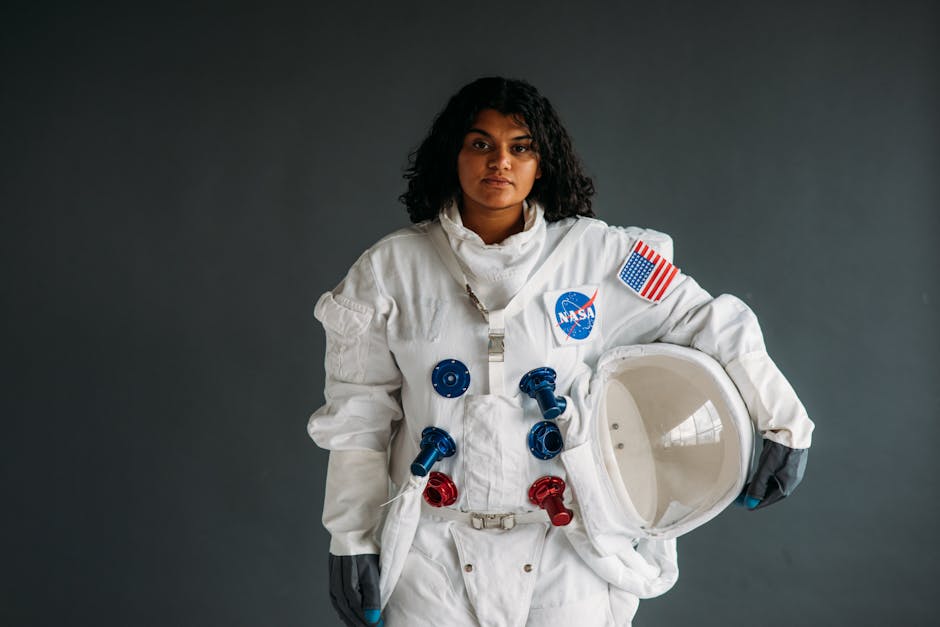
- The Artemis II mission crew formed a strong bond during their 10-day lunar flyby, describing themselves as ‘best friends’ upon return.
- The mission marked a significant milestone in space exploration, reigniting global interest in lunar exploration and deep space travel.
- The Artemis II crew successfully tested the Orion spacecraft’s life-support systems, navigation, and communication under real conditions.
- The crew endured the physical and emotional rigors of deep space travel, showcasing the psychological resilience required for such missions.
- The mission paved the way for future lunar missions, including Artemis III, which aims to land the first woman and next man on the lunar surface by 2026.
In the quiet vastness beyond Earth’s atmosphere, 370,000 kilometers from home, four astronauts circled the Moon and, in doing so, became more than a crew—they became family. Nearly a week after splashing down in the Pacific Ocean, the Artemis II mission team made their first public appearance, recounting not just milestones in space exploration, but deeply personal transformations. Commander Reid Wiseman of NASA, pilot Victor Glover, mission specialist Christina Hammock Koch, and Canadian Space Agency astronaut Jeremy Hansen faced reporters with a shared smile and a palpable sense of unity. “We left as friends,” Wiseman said, “but we came back as best friends.” Their 10-day mission, the first crewed flight beyond low Earth orbit since Apollo 17 in 1972, has reignited global interest in lunar exploration and underscored the psychological resilience required for deep space travel.
A Mission Years in the Making

Artemis II was never just about testing hardware or rehearsing maneuvers—it was about proving that humans can endure the physical and emotional rigors of deep space. The mission, a critical precursor to Artemis III, which aims to land the first woman and next man on the lunar surface by 2026, validates the Orion spacecraft’s life-support systems, navigation, and communication under real conditions. With Earth visible as a distant blue marble and the Moon looming large in their windows, the crew performed a precise lunar flyby, coming within 128 kilometers of the lunar surface. This trajectory tested navigation protocols essential for future landings and provided invaluable data on radiation exposure, crew health, and spacecraft performance. As humanity prepares for longer stays on the Moon and eventual missions to Mars, Artemis II serves as both a technological and human benchmark—answering not only if we can reach the Moon, but whether we can thrive in the void between worlds.
The Crew Behind the Mission

The four astronauts represent a new era of inclusivity and international cooperation in space. Commander Reid Wiseman, a veteran of the International Space Station, led the mission with steady composure. Victor Glover, making history as the first Black astronaut on a lunar mission, piloted Orion with precision during critical maneuvers. Christina Hammock Koch, already renowned for her record-breaking 328-day ISS mission, became the first woman to travel to lunar distance. Jeremy Hansen, the first Canadian on a deep space mission, symbolized the global partnership underpinning Artemis, with the European Space Agency and Japan also contributing to future phases. Their diverse backgrounds—military, engineering, science, and diplomacy—created a dynamic team capable of handling unexpected challenges. According to NASA psychologists, the crew’s cohesion was evident in their communication patterns, with minimal conflict and high emotional intelligence observed throughout the mission.
Unity in Isolation: The Human Factor

What emerged most powerfully from the press conference was not the technical success, but the emotional transformation of the crew. Floating in microgravity, confined in a capsule smaller than a minivan, the astronauts developed an almost telepathic rapport. They described shared moments—watching Earthrise, reading messages from their children, celebrating a quiet birthday for Hansen—as profoundly bonding experiences. “There’s a humility that comes when you see Earth without borders,” Koch reflected. “It changes how you see humanity.” Studies from NASA’s Human Research Program show that such experiences often lead to the “overview effect,” a cognitive shift in awareness reported by astronauts. The crew’s emphasis on unity may also signal a strategic shift in mission design, where psychological compatibility is weighed as heavily as technical expertise—especially as future missions could last years, not days.
Implications for the Future of Spaceflight

The success of Artemis II has immediate and far-reaching implications. For NASA, it clears a major hurdle toward sustainable lunar exploration. For international partners, it strengthens commitments to the Artemis Accords, now signed by over 30 nations. But perhaps most importantly, it redefines the astronaut experience for the 21st century. As space missions grow longer and more complex, crew dynamics will be as critical as propulsion systems. The emotional resilience demonstrated by Wiseman, Glover, Koch, and Hansen suggests that future crews may be selected not just for skill, but for empathy, adaptability, and emotional intelligence. Their journey also inspires a new generation, particularly young women and underrepresented communities, showing that space is no longer the domain of a select few, but a shared human frontier.
Expert Perspectives
Space psychologists and mission planners have long debated the ideal crew composition for deep space. Dr. Nick Kanas, a psychiatrist who has studied astronaut behavior on the ISS, noted that the Artemis II crew’s cohesion is “rare but replicable” with proper training. Others, like Dr. Sara Langston of the Secure World Foundation, caution that long-term missions will require more than camaraderie—”we need conflict resolution frameworks, mental health protocols, and real-time psychological support.” Meanwhile, engineers at ScienceDaily highlight that while technology can be tested on the ground, human behavior in deep space remains unpredictable. The consensus is clear: as we venture farther, the human element becomes the mission’s most complex variable.
As the world celebrates the safe return of the Artemis II crew, attention now turns to the next challenge: landing on the Moon. With Artemis III on the horizon, questions remain about funding, spacecraft readiness, and international coordination. But one thing is certain—the bond forged by four astronauts in lunar orbit may prove as vital to future missions as any piece of hardware. Their message of unity, hope, and shared purpose could very well be humanity’s most important payload.
Source: BBC