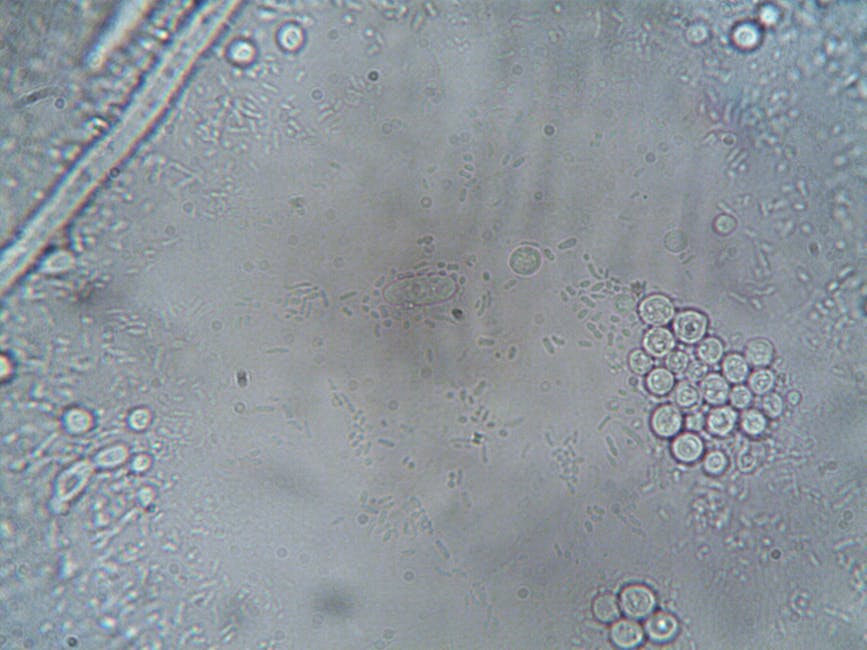
- Commensal yeast has been found to significantly boost the virulence of Salmonella Typhimurium by up to 30 percent.
- The relationship between yeast and bacteria is complex and plays a crucial role in shaping human health.
- This discovery highlights the need for further research into the dynamics of microbial communities and their impact on disease.
- The human microbiome is a complex ecosystem where interactions between microorganisms can have significant implications for health.
- Understanding the interactions between yeast and bacteria is crucial for developing effective prevention and treatment strategies.
A striking fact has emerged in the realm of microbiology: commensal yeast, a type of fungus that coexists with other microorganisms in the human body, has been found to promote the virulence of Salmonella Typhimurium, a leading cause of food poisoning. This discovery, published in a recent study, has significant implications for our understanding of the complex interactions between microorganisms and their hosts. The study reveals that the presence of commensal yeast can increase the virulence of Salmonella Typhimurium by up to 30 percent, highlighting the need for further research into the dynamics of microbial communities.
Uncovering the Relationship Between Yeast and Bacteria

The relationship between commensal yeast and Salmonella Typhimurium is a complex one, and its significance extends beyond the realm of microbiology. As our understanding of the human microbiome continues to evolve, it has become increasingly clear that the interactions between different microorganisms play a crucial role in shaping our overall health. The discovery that commensal yeast can promote the virulence of Salmonella Typhimurium highlights the need for a more nuanced understanding of these interactions and their impact on human health. With the rise of antibiotic resistance and the growing recognition of the importance of the human microbiome, this research has timely and far-reaching implications.
Key Findings: The Role of Yeast in Salmonella Infections

The study, which was conducted by a team of researchers, found that commensal yeast can promote the virulence of Salmonella Typhimurium by enhancing its ability to adhere to and invade host cells. The researchers used a combination of in vitro and in vivo experiments to demonstrate the role of commensal yeast in Salmonella infections. Their findings show that the presence of commensal yeast can increase the expression of virulence genes in Salmonella Typhimurium, leading to a more severe infection. The study’s authors suggest that this discovery could have significant implications for the development of new treatments for Salmonella infections, which affect millions of people worldwide each year.
Analysis: Understanding the Mechanisms Behind Yeast-Promoted Virulence
To understand the mechanisms behind yeast-promoted virulence, the researchers conducted a series of experiments to investigate the interactions between commensal yeast and Salmonella Typhimurium. Their analysis revealed that commensal yeast can produce compounds that enhance the ability of Salmonella Typhimurium to adhere to and invade host cells. The researchers also found that the presence of commensal yeast can modulate the host’s immune response, creating an environment that favors the growth and survival of Salmonella Typhimurium. These findings provide new insights into the complex interactions between microorganisms and their hosts, highlighting the need for further research into the dynamics of microbial communities.
Implications: The Impact on Human Health
The discovery that commensal yeast can promote the virulence of Salmonella Typhimurium has significant implications for human health. Salmonella infections are a leading cause of food poisoning, and the rise of antibiotic resistance has made treatment increasingly challenging. The study’s findings suggest that targeting commensal yeast could provide a new approach to treating Salmonella infections, potentially reducing the risk of severe illness and death. Furthermore, the study highlights the need for a more nuanced understanding of the human microbiome and the complex interactions between microorganisms and their hosts.
Expert Perspectives
Experts in the field have welcomed the study’s findings, highlighting the need for further research into the dynamics of microbial communities. “This study provides new insights into the complex interactions between microorganisms and their hosts,” said one expert. “The discovery that commensal yeast can promote the virulence of Salmonella Typhimurium highlights the need for a more nuanced understanding of the human microbiome and its impact on human health.” Another expert noted that the study’s findings could have significant implications for the development of new treatments for Salmonella infections, potentially reducing the risk of severe illness and death.
As researchers continue to explore the complex interactions between microorganisms and their hosts, one question remains: what other secrets lie hidden in the human microbiome? The answer to this question could hold the key to unlocking new treatments for a range of diseases, from infections to autoimmune disorders. As the study’s authors note, further research is needed to fully understand the implications of their findings and to explore the potential applications of this discovery.