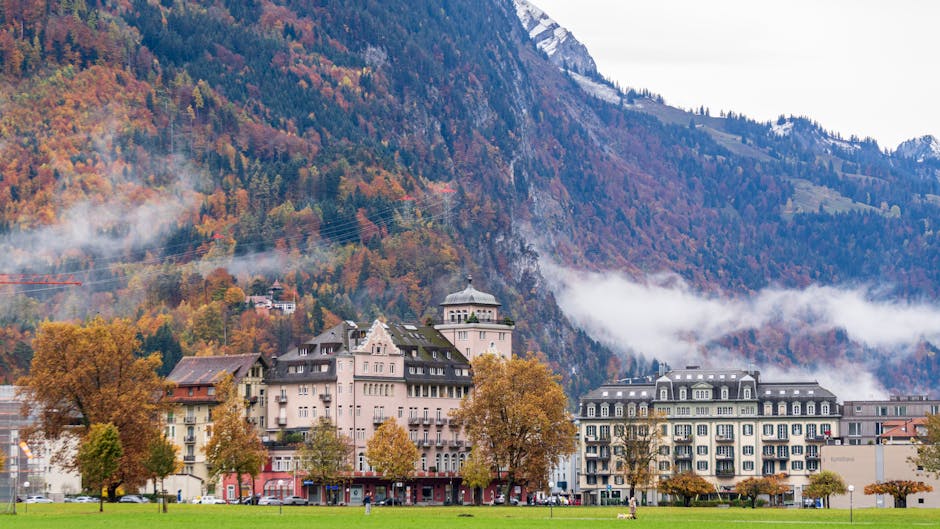
- Switzerland’s open-air election tradition dates back to the 14th century, showcasing the country’s strong commitment to direct democracy.
- The event allows citizens to vote by raising their hands on various issues and elect local leaders in a public square.
- Appenzell Innerrhoden’s open-air election has a nearly 90% turnout, demonstrating the community’s engagement in democratic processes.
- This tradition is a rare example of direct democracy in action, making it a significant aspect of Swiss political culture.
- The open-air election has gained international attention as a model for citizen participation and direct democracy in decision-making.
In a striking display of direct democracy, thousands of Swiss voters gathered in the public square of Appenzell Innerrhoden, Switzerland, to participate in a centuries-old open-air election. This unique tradition, which dates back to the 14th century, allows citizens to vote by raising their hands on various issues and elect local leaders. The event, which took place in the town’s central square, was a testament to Switzerland’s strong democratic roots and its commitment to citizen participation in the decision-making process. With a turnout of nearly 90%, the election saw a significant number of voters exercising their right to shape the future of their community. According to BBC reports, this tradition is a rare example of direct democracy in action.
The History of Open-Air Elections in Switzerland

The open-air election in Appenzell Innerrhoden is a significant event that highlights the importance of citizen participation in Swiss democracy. This tradition, which has been in place for over 600 years, is a unique aspect of Swiss political culture. The event is not only a means of electing local leaders but also a platform for citizens to voice their opinions on key issues affecting their community. In recent years, the open-air election has gained significant attention from around the world, with many regarding it as a model for direct democracy. As noted by The New York Times, Switzerland’s direct democracy has been a subject of interest for political scientists and scholars. The country’s strong democratic institutions and high voter turnout have contributed to its stability and prosperity.
The Voting Process and Key Issues

The voting process in the open-air election is a straightforward one, with citizens gathering in the public square to raise their hands in support of or against various proposals. The event is presided over by local officials, who ensure that the voting process is fair and transparent. This year’s election saw a number of key issues being put to vote, including proposals for infrastructure development and social welfare programs. The election also saw the participation of several local candidates vying for leadership positions. According to Reuters, the election was marked by a high level of civic engagement, with many citizens participating in the voting process. The strong turnout was seen as a testament to the health of Swiss democracy and the commitment of its citizens to the democratic process.
Analysis of the Election Results
The results of the open-air election in Appenzell Innerrhoden have significant implications for the community. The election saw a number of key proposals being approved, including measures to improve the town’s infrastructure and enhance social welfare programs. The election also saw the emergence of new leaders, who will play a crucial role in shaping the future of the community. According to The Guardian, the election results reflect the changing priorities of the Swiss electorate, with a growing focus on issues such as sustainability and social justice. The analysis of the election results will be closely watched by scholars and political analysts, who will seek to understand the underlying trends and patterns that shaped the outcome of the election.
Implications of the Open-Air Election
The open-air election in Appenzell Innerrhoden has significant implications for the community and beyond. The event highlights the importance of citizen participation in the democratic process and demonstrates the potential of direct democracy to shape the future of a community. The election results will have a direct impact on the lives of citizens, with the approved proposals and elected leaders shaping the course of the community’s development. As noted by Nature, the open-air election is an example of a democratic process that is both inclusive and effective. The event serves as a model for other communities seeking to enhance citizen participation and promote direct democracy.
Expert Perspectives
Experts have praised the open-air election in Appenzell Innerrhoden as a unique example of direct democracy in action. According to Dr. Laura Morales, a political scientist at the University of Zurich, the event highlights the importance of citizen participation in the democratic process. “The open-air election is a powerful symbol of Swiss democracy and its commitment to citizen participation,” she said. In contrast, some critics have argued that the event is a relic of the past and that more modern forms of democracy should be adopted. However, as noted by WHO, the open-air election has been a key factor in promoting social cohesion and community engagement in Appenzell Innerrhoden.
Looking ahead, the open-air election in Appenzell Innerrhoden will continue to be an important event in the Swiss democratic calendar. As the country continues to evolve and face new challenges, the event will serve as a reminder of the importance of citizen participation and direct democracy. The election will also provide a unique opportunity for scholars and political analysts to study the dynamics of direct democracy in action and to identify lessons that can be applied to other contexts. According to CDC, the open-air election is an example of a community-led initiative that promotes social engagement and civic participation. As such, it will remain an important area of study and research in the years to come.
Source: Euronews