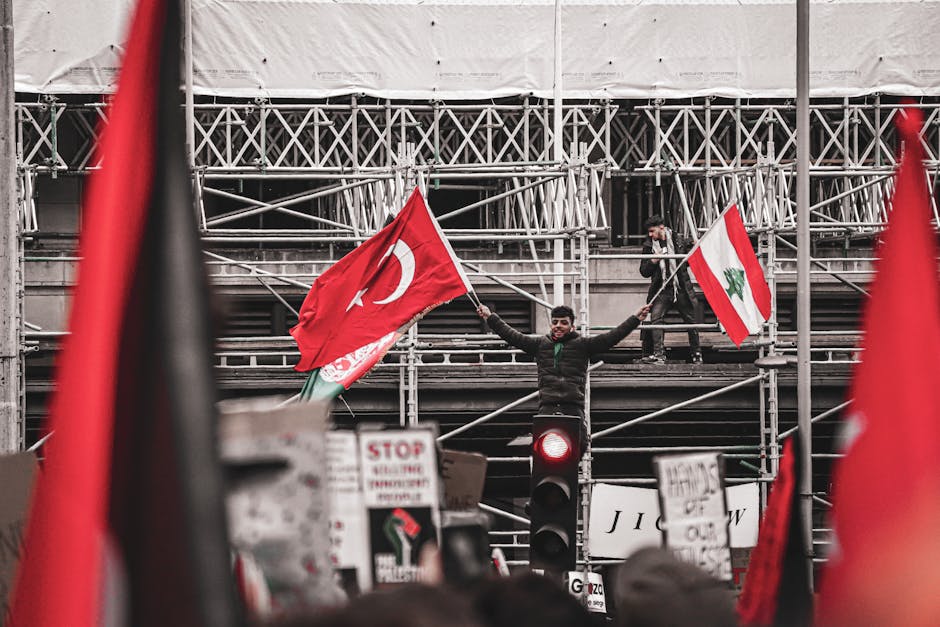
- A fragile cease-fire between Israel and Hezbollah is hanging by a thread, with recent violence escalating tensions.
- The conflict dates back to the 2006 Lebanon War, resulting in over 1,000 deaths and widespread destruction in Lebanon.
- Disagreements over border demarcations and alleged Hezbollah tunnels into Israel have fueled recent tensions.
- The international community is scrambling to find a lasting solution to the conflict.
- Residents in southern Lebanon have grown accustomed to the sound of gunfire and explosions due to the ongoing violence.
The recent surge in violence along the Israel-Lebanon border has left many in Lebanon wondering if the cease-fire ever truly existed. Despite talks in Washington aimed at extending the fragile truce, Israel and Hezbollah have continued to trade attacks, plunging the region into uncertainty. The situation is particularly dire in southern Lebanon, where residents have grown accustomed to the sound of gunfire and explosions. With the cease-fire hanging by a thread, the international community is scrambling to find a lasting solution to the conflict.
Background to the Conflict

The roots of the current conflict date back to the 2006 Lebanon War, which saw Israel and Hezbollah engage in a devastating 34-day battle. The war resulted in the deaths of over 1,000 people and caused widespread destruction in Lebanon. Since then, the two sides have observed a fragile cease-fire, punctuated by periodic outbreaks of violence. The recent escalation in tensions has been fueled by a combination of factors, including disagreements over border demarcations and the discovery of alleged Hezbollah tunnels into Israel. As the situation continues to deteriorate, many are left wondering if the cease-fire can be salvaged.
Recent Developments

In recent days, the conflict has escalated significantly, with both Israel and Hezbollah trading attacks across the border. The violence has been characterized by exchanges of artillery fire, with both sides accusing the other of provocation. The Israeli military has reported numerous instances of Hezbollah gunfire and rocket attacks, while Hezbollah has accused Israel of conducting airstrikes against its positions. The situation has been further complicated by the involvement of other actors, including the Lebanese military and United Nations peacekeepers. As the conflict continues to unfold, it remains unclear what the ultimate outcome will be.
Analysis of the Situation
Analysts point to a range of factors contributing to the current escalation in violence. One key issue is the ongoing dispute over border demarcations, which has seen both sides accusing the other of encroaching on their territory. Additionally, the discovery of alleged Hezbollah tunnels into Israel has raised concerns about the group’s intentions and capabilities. The situation has been further complicated by the involvement of external actors, including Iran and the United States. As the conflict continues to evolve, it is likely that these factors will play an increasingly important role in shaping the outcome.
Implications of the Conflict
The implications of the conflict are far-reaching, with the potential to affect not only the parties directly involved but also the broader region. One key concern is the potential for the conflict to draw in other actors, including Iran and the United States. This could have significant consequences, including the potential for a wider regional war. Additionally, the conflict has the potential to destabilize the fragile Lebanese government, which is already facing significant challenges. As the situation continues to unfold, it is likely that the international community will be called upon to play a key role in mediating a resolution.
Expert Perspectives
Experts are divided on the best course of action to resolve the conflict. Some argue that a negotiated settlement is the only way to achieve a lasting peace, while others believe that a more robust military response is necessary to deter Hezbollah. According to one analyst, “the key to resolving the conflict lies in addressing the underlying issues, including the dispute over border demarcations and the role of external actors.” Others, however, believe that a more nuanced approach is required, taking into account the complex web of interests and alliances in the region.
As the situation continues to evolve, one thing is clear: the international community will be watching closely. The question on everyone’s mind is what the future holds for the region. Will the cease-fire be salvaged, or will the conflict continue to escalate? Only time will tell, but one thing is certain: the stakes are high, and the consequences of failure could be catastrophic. As the world waits with bated breath, the people of Lebanon can only hope that a lasting peace is on the horizon.