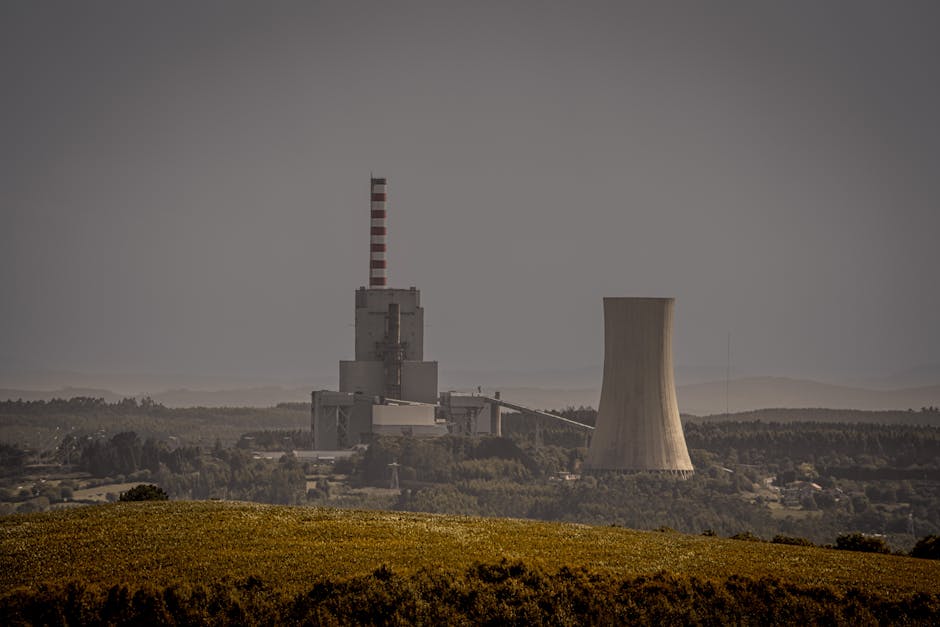
- A hyperscale data center in Utah is projected to consume 3 times the state’s power output by 2030, highlighting the growing energy needs of AI computing.
- The Utah data center’s energy demands will surpass the state’s current peak power demand, underscoring a growing crisis in AI’s insatiable appetite for electricity.
- AI’s exponential growth in computing demands is driving the development of large-scale infrastructure projects like the Utah data center.
- The increasing power needs of AI models are becoming a critical bottleneck and a looming environmental challenge for utilities, regulators, and tech firms.
- As AI models grow larger and training cycles longer, the infrastructure to support them is becoming a major sustainability concern.
A single data center complex under development in Utah is expected to generate and consume more than 15 gigawatts of electricity—surpassing the entire state’s current peak power demand of approximately 12.5 gigawatts. Known as a “hyperscale” facility, the project is designed to support next-generation artificial intelligence workloads requiring unprecedented computational power. If completed as planned, it would represent one of the most energy-intensive infrastructure projects ever undertaken in the United States. The scale of consumption underscores a growing crisis: AI’s insatiable appetite for electricity is outpacing grid capacity, forcing utilities, regulators, and tech firms to confront the sustainability of digital expansion. As AI models grow larger and training cycles longer, the infrastructure to support them is becoming a critical bottleneck—and a looming environmental challenge.
The AI Power Surge Reshaping Energy Markets

The urgency behind the Utah project stems from the exponential growth in AI computing demands. Modern large language models, such as those developed by OpenAI, Google, and Meta, require thousands of specialized processors running continuously for weeks or months during training. Each processor can draw hundreds of watts, and when aggregated into massive clusters, the power needs become astronomical. According to a 2023 study published in Nature, AI data centers’ global electricity consumption could reach 1,000 terawatt-hours by 2030—roughly equivalent to Japan’s annual usage. The Utah complex, reportedly backed by a consortium including major tech firms and private equity investors, aims to consolidate AI infrastructure in one high-efficiency, vertically integrated site. However, its projected output and intake mean it would function almost like a self-contained energy ecosystem, raising questions about redundancy, resilience, and its impact on local and regional power networks.
Behind the Massive Utah Infrastructure Push

The hyperscale facility is being developed on a 2,000-acre site near Salt Lake City, formerly an industrial zone with access to decommissioned power plants and robust transmission lines. Developers plan to deploy modular nuclear reactors, solar arrays, and battery storage systems to generate power on-site, aiming for energy independence while minimizing reliance on Utah’s public grid. Despite these efforts, the project will still draw from regional infrastructure during peak loads and feed excess supply back during low-demand periods. The primary tenants are believed to include AI startups, cloud providers, and defense contractors working on autonomous systems. While the exact names remain undisclosed, filings with the Federal Energy Regulatory Commission (FERC) indicate that at least three Fortune 500 tech firms are involved in financing and technical planning. Construction is expected to begin in 2025, with phased operations starting in 2027.
Energy, Economics, and Environmental Trade-offs
The core tension surrounding the Utah project lies in balancing technological advancement with environmental responsibility. On one hand, concentrating AI infrastructure in a single, highly efficient location could reduce overall carbon emissions compared to scattered, less optimized data centers. On the other, the sheer volume of energy required—even if generated from low-carbon sources—raises concerns about thermal pollution, water usage for cooling, and long-term grid stability. A 2024 report by the International Energy Agency warned that unregulated growth in AI computing could add 250 million tons of CO2 annually by 2030 if fossil fuels remain part of the energy mix. In Utah, where coal still accounts for nearly 40% of electricity generation, the risk is particularly acute. Moreover, economists caution that such concentrated energy use could distort regional markets, potentially driving up electricity prices for residential and industrial consumers.
Who Bears the Cost of AI’s Energy Boom?
The implications of the Utah project extend far beyond its physical footprint. Local communities may face increased utility costs and environmental degradation, while state regulators grapple with how to oversee a private energy ecosystem that operates parallel to public infrastructure. Utilities fear that if multiple hyperscale centers emerge nationwide, they could destabilize regional grids already strained by climate change and aging equipment. Meanwhile, policymakers in Washington are under pressure to establish national standards for AI energy use, possibly including efficiency mandates or carbon pricing for data centers. Globally, the project sets a precedent: if one facility can out-consume an entire state, then the current model of decentralized energy planning may be obsolete. The question is no longer just about building more power—but about how society allocates it in the age of artificial intelligence.
Expert Perspectives
Opinions among energy and AI experts are sharply divided. Dr. Elena Rodriguez, a senior researcher at the National Renewable Energy Laboratory, argues that “strategic consolidation of AI workloads in green-powered, isolated data centers could be the most sustainable path forward.” In contrast, Dr. Raj Patel, an economist at MIT specializing in digital infrastructure, warns that “privatizing energy at this scale risks creating technological fiefdoms that bypass public oversight and equity considerations.” Some analysts suggest that without regulatory intervention, the race for AI supremacy could lead to a “tragedy of the commons” in energy resources, where individual corporate gains undermine collective stability.
Looking ahead, the Utah project will serve as a critical test case for whether AI growth can be reconciled with energy sustainability. Key indicators to watch include the final power mix used, regulatory approvals for on-site generation, and the response from other states considering similar developments. The unresolved question remains: as AI reshapes the digital economy, can the physical world keep up—without burning through its resources?
Source: Reddit