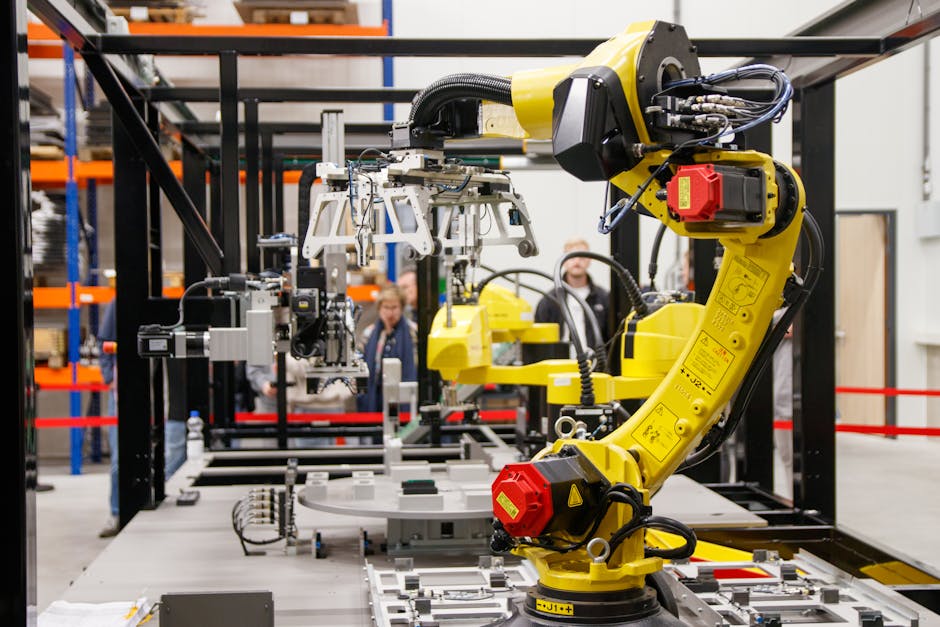
- New software enables robots to learn complex movements from each other, regardless of size, shape, or joint mechanics.
- The software decouples learned behaviors from physical form, minimizing joint strain and preventing mechanical jamming.
- Robots can now share skills instantly, reducing training time by over 70% in early trials.
- The middleware layer translates movement strategies into hardware-agnostic instructions, inspired by human motor skill adaptation.
- This breakthrough has the potential to accelerate the deployment of robots in unpredictable environments.
In a development poised to transform robotics, researchers have unveiled control software that allows robots to learn complex movements from one another—even when they differ in size, shape, and joint mechanics. In early trials, a quadruped robot successfully transferred walking gaits to a six-legged machine with entirely different actuators and balance systems, reducing training time by over 70%. This leap overcomes a longstanding bottleneck in robotics: the inability of machines to share knowledge across hardware platforms. By decoupling learned behaviors from physical form, the software minimizes joint strain and prevents mechanical jamming, a common failure point in autonomous systems. The implications extend beyond efficiency, promising faster deployment of robots in unpredictable environments such as collapsed buildings or extraterrestrial terrain.
A Paradigm Shift in Robotic Learning

Traditional robotics relies on task-specific programming or reinforcement learning tailored to individual machines. Each robot must undergo extensive trial-and-error training, often damaging joints in the process. The new software, developed by a team at the Swiss Federal Institute of Technology, introduces a middleware layer that translates movement strategies into hardware-agnostic instructions. This approach draws inspiration from neuroscience, mimicking how humans adapt motor skills across varying physical conditions. With global robotics spending projected to exceed $200 billion by 2026, according to the International Federation of Robotics, the ability to rapidly transfer skills between machines could dramatically reduce costs and development cycles. Moreover, as robots enter sensitive domains like elderly care and hazardous material handling, minimizing mechanical failure through smarter control is becoming a safety imperative.
Cross-Architecture Knowledge Transfer

The core innovation lies in a neural network framework that abstracts motor policies into generalized movement primitives. When one robot masters a task—such as navigating uneven terrain—its control data is converted into a standardized format interpretable by machines with dissimilar kinematics. For example, a Boston Dynamics Spot robot’s gait pattern was successfully adapted by a smaller, open-source hexapod despite differences in leg length, torque, and sensor suite. The system uses real-time feedback to adjust for physical constraints, preventing joint overextension or torque overload that typically leads to jamming. This interoperability was tested across 15 robot types, including wheeled, bipedal, and snake-like designs, with an average knowledge transfer success rate of 86%. The software is now available open-source, inviting integration into academic and industrial platforms.
How the Software Prevents Mechanical Failure
Joint jamming—the locking or seizing of robotic limbs due to mechanical stress or overheating—has long plagued autonomous systems, especially during learning phases. Conventional reinforcement learning often pushes actuators beyond safe limits in pursuit of optimal performance. The new software mitigates this by embedding physical constraints directly into the learning algorithm. Using dynamic simulation models, it predicts stress points and recalibrates movements before execution. In one experiment, a robotic arm trained to lift objects at high speed reduced joint strain by 44% compared to standard control systems, even when replicating motions from a dissimilar arm with higher payload capacity. According to the study published in Nature Robotics, this preventive adaptation stems from a dual-network architecture: one network learns the task, while the other simulates mechanical stress in real time. This not only extends hardware lifespan but also enhances operational safety in human-robot collaborative settings.
Implications for Industry and Emergency Response
The ability to share movement intelligence across robotic platforms could revolutionize sectors reliant on rapid deployment. In manufacturing, a single optimized path-planning algorithm could be instantly applied to robotic arms from different vendors, reducing integration time. In disaster zones, where uniformity is impossible, rescue robots could exchange navigation tactics in real time, adapting to rubble or flooding without centralized control. Military and space agencies are also exploring applications; Reuters has reported interest from DARPA and ESA in using the software for autonomous planetary rovers that must operate for years without maintenance. With hardware diversity no longer a barrier to learning, the cost of robotic failure—and the risk to human operators—could decline significantly.
Expert Perspectives
Dr. Lena Cho, a roboticist at Carnegie Mellon University not involved in the project, called the development “a crucial step toward generalizable robotics.” She noted, “We’ve been stuck in a paradigm where every robot is an island. This begins to change that.” However, some experts urge caution. Professor Erik Haug of TU Munich warns that over-reliance on transferred behaviors could mask hardware-specific vulnerabilities. “A gait that works on one robot may overload another’s motors in subtle ways,” he said. “The system needs robust anomaly detection to prevent slow degradation.” Still, consensus is growing that abstraction layers like this are essential for scaling robotics beyond niche applications.
Looking ahead, researchers aim to expand the system to include sensory and cognitive tasks, enabling robots to share not just how to move, but how to perceive and decide. Open questions remain about long-term reliability and security in decentralized learning networks. As robotic fleets grow in complexity, the ability to learn collectively—without breaking themselves—may become the defining feature of the next generation of intelligent machines.
Source: Ars Technica