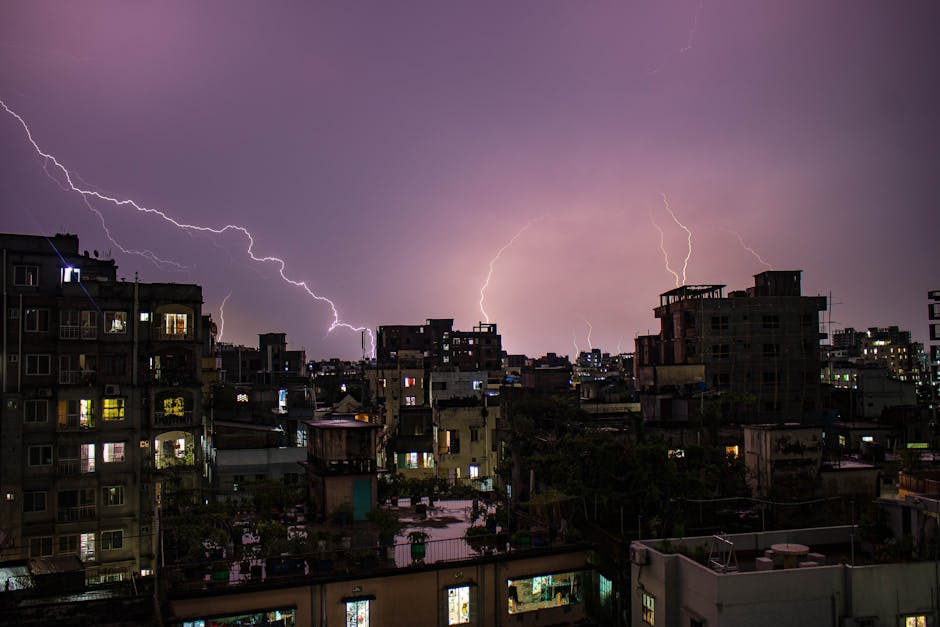
- Lightning strikes in rural Bangladesh claimed 14 lives in a single day, highlighting the country’s vulnerability to extreme weather events.
- Bangladesh experiences over 300 thunderstorm days annually, with lightning killing an average of 300 people each year.
- The pre-monsoon season, from March to May, is particularly hazardous due to volatile atmospheric conditions that trigger frequent lightning strikes.
- Rising land and sea surface temperatures have intensified convective activity, contributing to more violent and unpredictable storms in Bangladesh.
- Infrastructure gaps and limited public awareness hinder the effectiveness of government efforts to prevent lightning-related deaths in rural areas.
In a devastating natural incident, lightning strikes across rural Bangladesh have claimed the lives of 14 people in a single day, including a 10-year-old boy caught in a storm while returning from a village school. The fatalities occurred in scattered districts across the northern and central regions of the country, where open agricultural fields and limited access to safe shelter amplify the risks during sudden thunderstorms. According to data from the Bangladesh Meteorological Department, the nation experiences over 300 thunderstorm days annually, with lightning killing an average of 300 people each year—though unofficial estimates suggest the toll may be significantly higher due to underreporting in remote areas.
Seasonal Peril in a Climate-Vulnerable Nation

Bangladesh, a low-lying delta nation of 170 million, faces escalating threats from extreme weather events as climate patterns shift. The pre-monsoon season—from March to May—is particularly hazardous, marked by volatile atmospheric conditions that trigger frequent lightning strikes. This year, rising land and sea surface temperatures have intensified convective activity, contributing to more violent and unpredictable storms. With over 70% of the population engaged in agriculture, many rural workers remain exposed in open fields during peak lightning hours. Despite government efforts to install lightning arresters and issue early warnings, infrastructure gaps and limited public awareness hinder effective protection, leaving vulnerable communities at continued risk.
Tragedy Unfolds Across Multiple Districts

The recent fatalities were reported across six districts, with the highest death toll in Rangpur and Mymensingh, where five and four people died respectively. Among the victims was young Arif Hossain, a fifth-grade student who was struck near his home in Netrokona district while seeking shelter under a tree during a sudden downpour. Local authorities confirmed that most of the deceased were farmers or day laborers caught in open fields when the storms hit without warning. Emergency medical teams transported the injured to nearby health centers, though several succumbed to cardiac arrest caused by electric shock. Village leaders described scenes of panic as families rushed to makeshift clinics, underscoring the lack of immediate medical response in remote areas.
Climate Change and Infrastructure Deficits
Experts attribute the rising frequency and intensity of lightning strikes in Bangladesh to a combination of climate change and environmental degradation. A 2022 study published in Nature Climate Change found that warming temperatures are increasing atmospheric instability, leading to more frequent thunderstorms in tropical regions. In Bangladesh, deforestation and the loss of tree cover have further reduced natural protection, while urbanization and the proliferation of metal structures may inadvertently increase electrical conductivity during storms. The government launched a National Lightning Protection Program in 2020, aiming to install 5,000 lightning rods in high-risk zones, but progress has been slow. As of early 2024, fewer than 1,800 have been deployed, leaving vast areas unprotected.
Human Cost in Rural Communities
The impact of lightning fatalities extends far beyond the immediate loss of life, deeply affecting families and local economies. In agrarian communities, the death of a primary breadwinner can plunge households into long-term poverty, while children may be forced to abandon education to support their families. Psychological trauma is also widespread, with survivors often suffering from anxiety and post-traumatic stress following such events. Women and children, who frequently accompany male relatives to fields, are increasingly among the victims. The tragedy highlights systemic vulnerabilities—poor infrastructure, limited healthcare access, and inadequate disaster preparedness—that continue to expose millions to preventable risks in one of the world’s most climate-exposed nations.
Expert Perspectives
Dr. Saleemul Huq, a leading climate scientist and director of the International Centre for Climate Change and Development in Dhaka, emphasized that “lightning is no longer just a seasonal hazard—it’s a symptom of a warming planet impacting the most vulnerable.” Conversely, some meteorologists caution against overstating climate links without localized data, noting that improved reporting may partially explain rising statistics. However, consensus is growing that adaptation measures—such as early warning systems, public education campaigns, and safe shelters—are urgently needed to reduce mortality.
As Bangladesh prepares for an increasingly volatile climate future, the question remains whether national and international efforts can scale quickly enough to protect rural populations. With the next pre-monsoon season approaching, authorities are under pressure to accelerate lightning protection initiatives and integrate them into broader climate resilience strategies. Monitoring storm patterns, expanding rural infrastructure, and investing in community-based disaster response could save hundreds of lives annually—if implemented decisively.
Source: News