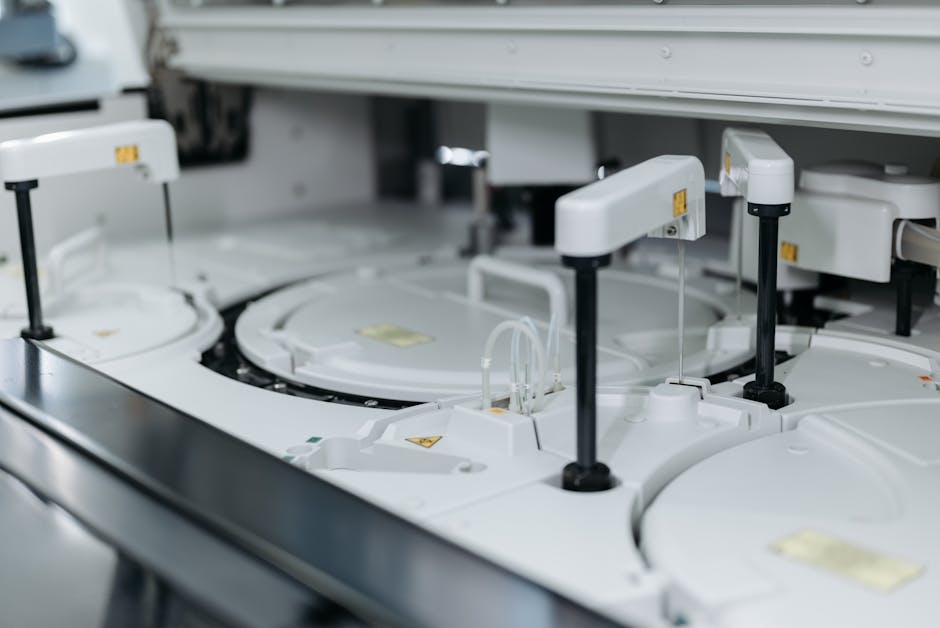
- Chemists can now rely on an autonomous lab with a 90% success rate to optimize product synthesis.
- The lab uses advanced technology to streamline the experimentation process, saving time and resources.
- Autonomous labs can automate the search for perfect chemical reactions, a task that previously took years.
- This breakthrough has the potential to revolutionize the field of chemistry, making it more efficient and cost-effective.
- The lab’s low cost and high success rate make it an attractive solution for industries such as pharmaceuticals and energy.
A striking fact in the world of chemistry is that the process of finding the perfect reaction can be a tedious and time-consuming task, with some experiments taking years to complete. However, a recent breakthrough has changed the game with the introduction of a chemistry lab that can essentially run itself. This autonomous system has the ability to optimize the synthesis of a wide variety of products, making it a potential game-changer in the field of chemistry. With a success rate of over 90%, this low-cost system is set to revolutionize the way chemists work, making the process faster, more efficient, and more cost-effective.
The Rise of Autonomous Laboratories

The concept of autonomous laboratories is not new, but the recent advancements in technology have made it possible to create a system that can optimize synthesis with high accuracy. The reason why this matters now is that the demand for new materials and products is increasing rapidly, and the traditional methods of experimentation are no longer sufficient. The ability to automate the process of finding the perfect reaction can save time, reduce costs, and increase productivity, making it an attractive solution for industries such as pharmaceuticals, energy, and manufacturing. As the world becomes increasingly dependent on technology, the need for autonomous systems that can optimize complex processes is becoming more pressing.
Key Details of the Autonomous System

The autonomous system consists of a network of sensors, robots, and artificial intelligence algorithms that work together to optimize the synthesis of products. The system can analyze data from previous experiments, identify patterns, and make predictions about the best conditions for a reaction to occur. The robots can then adjust the parameters of the experiment, such as temperature, pressure, and concentration of reactants, to create the optimal conditions for the reaction. The system can also learn from its mistakes and adapt to new situations, making it a highly efficient and effective way of finding the perfect reaction. The team of researchers behind the system has demonstrated its capabilities by optimizing the synthesis of a wide variety of products, including pharmaceuticals, catalysts, and materials.
Analysis of the Autonomous System
The analysis of the autonomous system reveals that it has the potential to revolutionize the field of chemistry. The system’s ability to optimize synthesis with high accuracy can lead to the discovery of new materials and products, which can have a significant impact on various industries. The data generated by the system can also be used to develop new theories and models of chemical reactions, which can further advance our understanding of chemistry. Furthermore, the autonomous system can be used to optimize processes that are currently difficult or impossible to achieve with traditional methods, such as the synthesis of complex molecules or the creation of new materials with specific properties. The expert angle on this topic suggests that the autonomous system has the potential to democratize access to chemistry research, enabling smaller laboratories and industries to conduct complex experiments that were previously only possible in large, well-funded institutions.
Implications of the Autonomous System
The implications of the autonomous system are far-reaching and can affect various industries and communities. The ability to optimize synthesis with high accuracy can lead to the development of new products and materials that can improve our daily lives. For example, the system can be used to optimize the synthesis of pharmaceuticals, which can lead to the creation of new medicines that can cure diseases that are currently untreatable. The system can also be used to optimize the synthesis of materials, which can lead to the creation of new technologies that can reduce our carbon footprint and improve our environment. The individuals who are affected by this technology include chemists, researchers, and industries that rely on chemical synthesis, as well as the general public who can benefit from the new products and materials that are developed using this technology.
Expert Perspectives
Experts in the field of chemistry have contrasting viewpoints on the autonomous system. Some believe that it has the potential to revolutionize the field of chemistry and enable the discovery of new materials and products. Others are more cautious, highlighting the potential risks and challenges associated with the use of autonomous systems in chemistry research. For example, there is a risk that the system can be used to create new materials or products that can be used for malicious purposes. However, the majority of experts agree that the autonomous system has the potential to make a significant impact on the field of chemistry and that it is an exciting development that warrants further research and investment.
The forward look for this technology is exciting, with many potential applications and implications. As the technology continues to evolve, we can expect to see new breakthroughs and innovations that can transform the field of chemistry. One open question is how the autonomous system will be integrated into existing research institutions and industries, and how it will be regulated to ensure that it is used safely and responsibly. Another question is how the system will be made accessible to smaller laboratories and industries, and how it will be used to address some of the world’s most pressing challenges, such as climate change and disease. As the autonomous system continues to advance, we can expect to see significant developments in the field of chemistry, and it will be exciting to watch how this technology unfolds and transforms the world around us.