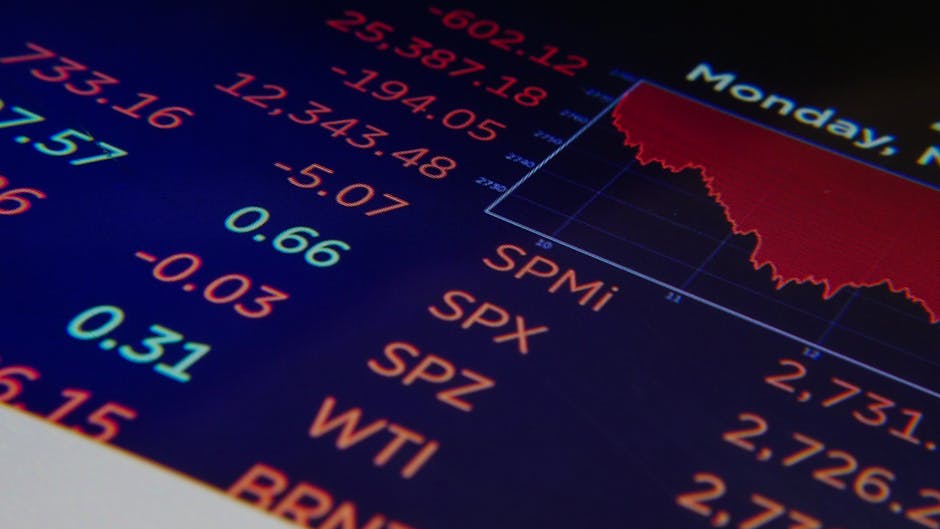
- Intel’s share price surged 40% over three months, outperforming the semiconductor sector and defying years of skepticism.
- Artificial intelligence, government manufacturing investments, and a revamped product roadmap are driving Intel’s resurgence.
- Intel is regaining credibility and positioning itself as a cornerstone of the AI infrastructure race.
- The company’s IDM 2.0 strategy combines internal manufacturing revival with a new foundry business to rival TSMC.
- Intel’s latest chip architectures and foundry ambitions are capturing Wall Street’s attention.
Intel’s share price has rocketed nearly 40% over the past three months, outperforming the broader semiconductor sector and defying years of skepticism. Once dismissed as a fading legacy player in the chip industry, the Santa Clara-based giant is now at the center of a high-stakes resurgence, driven by artificial intelligence, government-backed manufacturing investments, and a reinvigorated product roadmap. The rally marks a dramatic reversal for a company that, as recently as 2022, was losing market share to rivals like AMD and Nvidia and struggling with production delays. Now, Intel is not only regaining credibility but positioning itself as a cornerstone of the AI infrastructure race, with its latest chip architectures and foundry ambitions capturing Wall Street’s attention.
The Long Road Back to Relevance

For over a decade, Intel grappled with a series of self-inflicted setbacks, most notably its prolonged struggles to scale below 10-nanometer process technology. While TSMC and Samsung advanced rapidly into 5nm and 3nm chips, Intel’s delays allowed competitors to dominate the high-performance computing and data center markets. The turning point came in 2020 with the appointment of Pat Gelsinger, a former Intel engineer and VMware CEO, as the company’s new leader. Gelsinger unveiled a bold vision: IDM 2.0, a strategy that combined internal manufacturing revival with a new foundry business to rival TSMC. This shift, coupled with $200 billion in planned investments across Arizona, Ohio, and Germany, signaled a return to semiconductor sovereignty—a move that aligned perfectly with U.S. industrial policy under the CHIPS and Science Act.
AI Becomes the Catalyst
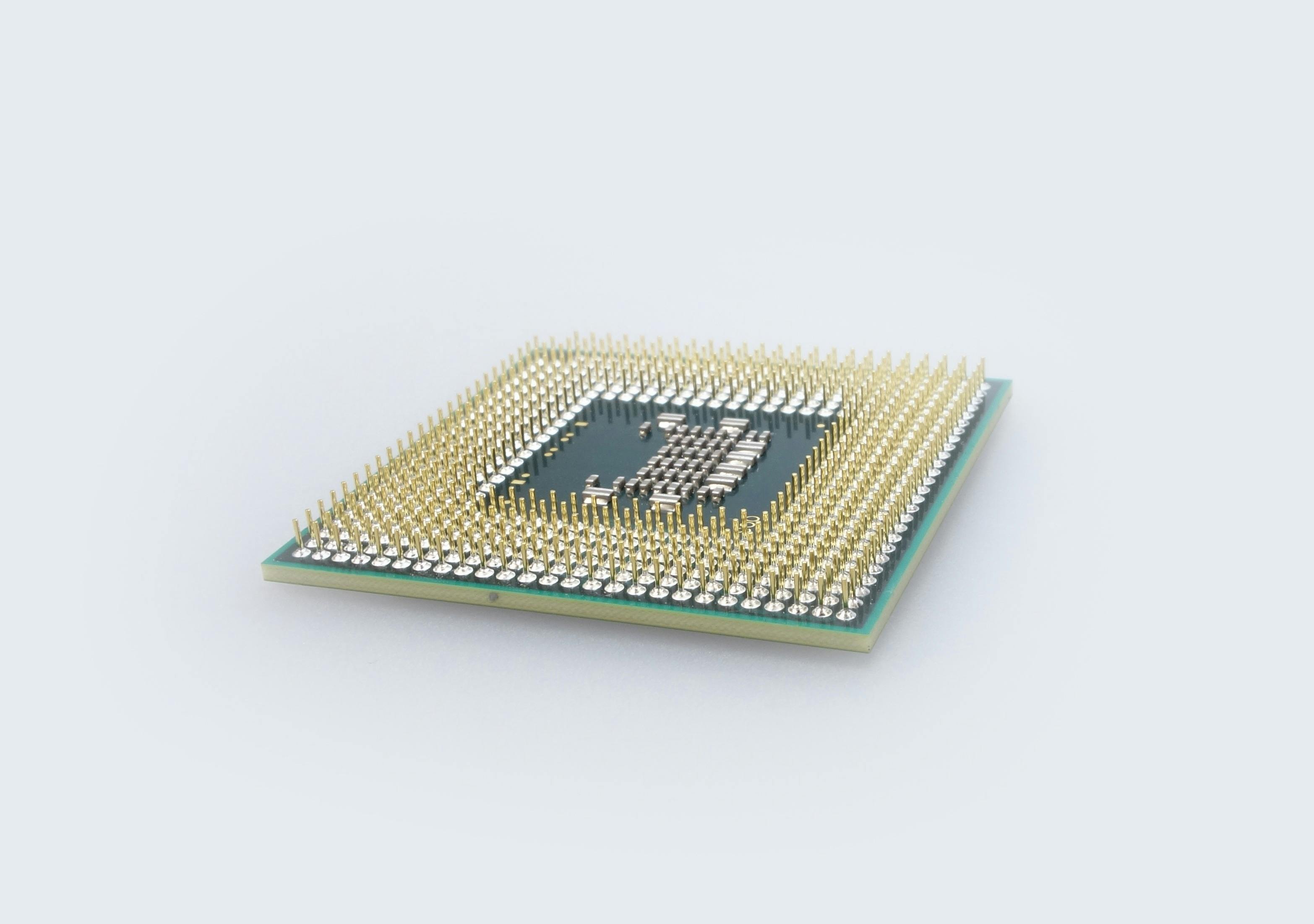
What ultimately unlocked investor enthusiasm was Intel’s aggressive entry into the AI hardware market. While Nvidia has dominated AI accelerators with its GPUs, Intel has targeted the space with a diversified portfolio, including its Gaudi AI processors, next-generation Xeon CPUs with built-in AI acceleration, and FPGA-based solutions. The company’s recent launch of the Gaudi 3 chip, which Intel claims offers 1.5x better performance than Nvidia’s H100 in large language model training, has sparked renewed interest from cloud providers. Microsoft, for instance, has begun deploying Gaudi-powered systems in its Azure data centers, a major validation for Intel’s AI ambitions. These developments have coincided with a broader realization: the AI boom requires more than just GPUs, and Intel is uniquely positioned to supply CPUs, networking, and storage silicon that underpins AI workloads.
Manufacturing Ambitions and Global Strategy
Intel’s foundry division, Intel Foundry Services (IFS), has become a critical pillar of its turnaround. In a striking reversal, the company—once purely an integrated device manufacturer—is now inviting external clients to produce chips on its advanced nodes. IFS has signed agreements with Qualcomm, Amazon, and even Nvidia, with the latter planning to manufacture certain chips on Intel 18A process technology by 2025. This shift is supported by over $8 billion in direct U.S. government grants under the CHIPS Act, aimed at reshoring semiconductor production. Analysts at Reuters note that Intel’s foundry plans could reduce America’s reliance on Asian chipmakers, a strategic imperative for national security and supply chain resilience. However, the path is fraught with challenges: building leading-edge fabs is capital-intensive, and IFS must prove it can match TSMC’s yield and reliability.
Market Reaction and Competitive Pressures
The financial markets have responded with cautious optimism. Intel’s valuation has improved, but it still trades at a lower multiple than Nvidia or AMD, reflecting lingering doubts about execution. Yet, data from the first half of 2024 shows a 12% year-over-year increase in data center revenue and a 35% jump in AI-related product sales. The company’s gross margins, long under pressure, are stabilizing as higher-value chips enter production. Still, competition remains fierce. Nvidia continues to innovate at pace, while AMD’s MI300 series poses a direct threat in AI accelerators. Moreover, TSMC’s dominance in manufacturing gives its customers a process advantage. Intel must not only deliver on its technology roadmap but also convince customers that its U.S.-based manufacturing offers tangible benefits in speed, security, and supply continuity.
Expert Perspectives
“Intel is no longer just playing defense,” says Stacy Rasgon, semiconductor analyst at Bernstein Research. “They’re making credible progress on multiple fronts—technology, manufacturing, and customer acquisition.” Others remain skeptical. Linley Gwennap, founder of The Linley Group, warns that “Intel has promised turnaround before. What matters now is sustained execution over the next three to five years.” The debate centers on whether Intel can maintain momentum amid the astronomical costs of semiconductor innovation and rapidly evolving AI workloads that favor specialized architectures.
Looking ahead, Intel’s success will hinge on its ability to scale IFS profitably, deliver consistent process improvements, and capture meaningful AI market share. Key milestones to watch include the 2025 rollout of Intel 18A chips and the company’s ability to secure additional foundry customers. The broader implication extends beyond Intel: a successful turnaround could reshape the global semiconductor landscape, reinforcing the viability of U.S.-based advanced manufacturing in an era of technological competition.
Source: Fortune