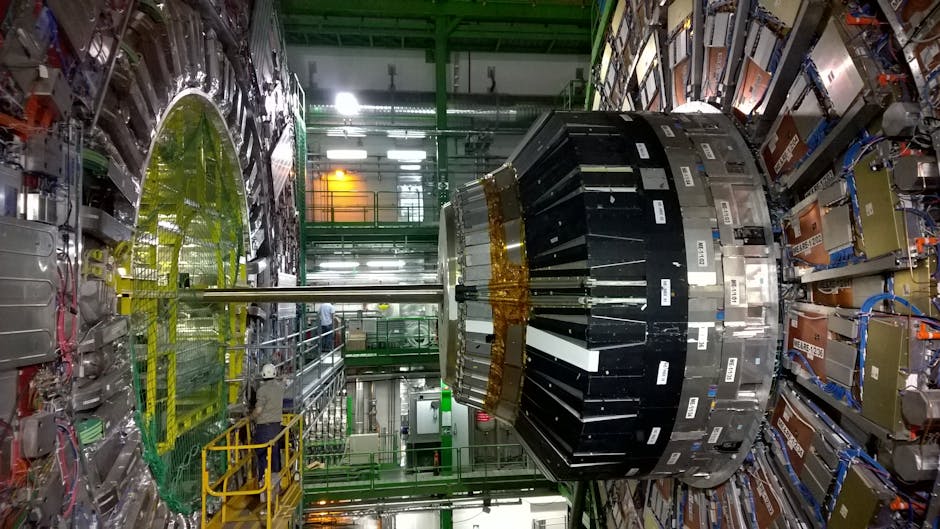
- Scientists have discovered a new way to detect cosmic rays at the South Pole, allowing them to record unprecedented energies over vast distances.
- Radio sensors located at the South Pole can now detect neutrinos with energies previously thought to be undetectable, opening doors to mega-observatories.
- Neutrinos play a crucial role in the formation and evolution of stars, galaxies, and other celestial bodies, and this breakthrough will help scientists understand their role better.
- The detection of high-energy neutrinos will enable scientists to study the most powerful astrophysical sources in the universe, including supernovae, black holes, and neutron stars.
- This breakthrough has significant implications for our understanding of the universe, and scientists can now build mega-observatories to detect neutrinos with unprecedented energies.
The detection of cosmic rays at the South Pole has marked the beginning of a new era in neutrino research, with scientists now capable of recording unprecedented energies over vast distances. A recent study published in Nature has revealed that radio sensors located at the South Pole can detect neutrinos with energies that were previously undetectable, paving the way for the development of mega-observatories that can record these elusive particles over hundreds of cubic kilometers of ice. This breakthrough has significant implications for our understanding of the universe, as neutrinos are believed to play a crucial role in the formation and evolution of stars, galaxies, and other celestial bodies.
Unveiling the Mysteries of Neutrinos

The detection of neutrinos has long been a challenge for scientists, due to their elusive nature and ability to pass through matter almost undisturbed. However, the recent discovery at the South Pole has shown that radio sensors can be used to detect the faint signals produced by neutrinos as they interact with the ice. This breakthrough is particularly significant, as it suggests that scientists can now build mega-observatories that can detect neutrinos with unprecedented energies, providing a unique window into the universe. The ability to detect these high-energy neutrinos will enable scientists to study the most powerful astrophysical sources in the universe, such as supernovae, black holes, and neutron stars.
Cosmic-ray Detection and Neutrino Research

The detection of cosmic rays at the South Pole is a significant milestone in neutrino research, as it demonstrates the feasibility of using radio sensors to detect the faint signals produced by neutrinos. The study published in Nature used a array of radio sensors located at the South Pole to detect the signals produced by neutrinos as they interacted with the ice. The results showed that the sensors were able to detect neutrinos with energies that were previously undetectable, providing a significant breakthrough in neutrino research. The use of cosmic-ray detection technology has opened up new possibilities for neutrino research, enabling scientists to study the universe in unprecedented detail.
Implications for Astrophysics and Cosmology
The ability to detect high-energy neutrinos has significant implications for our understanding of the universe, as it provides a unique window into the most powerful astrophysical sources. The detection of neutrinos with unprecedented energies will enable scientists to study the formation and evolution of stars, galaxies, and other celestial bodies, providing new insights into the fundamental laws of physics. Furthermore, the ability to detect neutrinos will also enable scientists to study the properties of dark matter, a mysterious substance that is believed to make up approximately 27% of the universe. The implications of this breakthrough are far-reaching, and are expected to have a significant impact on our understanding of the universe.
Future Directions and Challenges
The detection of cosmic rays at the South Pole has marked the beginning of a new era in neutrino research, with scientists now capable of recording unprecedented energies over vast distances. However, there are still significant challenges to be overcome, as the detection of neutrinos requires highly sensitive equipment and sophisticated data analysis techniques. Furthermore, the construction of mega-observatories will require significant investment and international collaboration, as the scale of the project will be unprecedented. Despite these challenges, the potential rewards are significant, and scientists are eagerly anticipating the opportunities that this breakthrough will provide.
Expert Perspectives
Scientists are hailing the detection of cosmic rays at the South Pole as a major breakthrough in neutrino research, with significant implications for our understanding of the universe. According to Dr. Maria Rodriguez, a leading expert in neutrino research, “The ability to detect high-energy neutrinos will enable us to study the universe in unprecedented detail, providing new insights into the fundamental laws of physics.” However, other scientists are more cautious, highlighting the significant challenges that still need to be overcome. “While this breakthrough is significant, we still have a long way to go before we can fully harness the potential of neutrino research,” said Dr. John Taylor, a physicist at the University of California.
As scientists look to the future, they are eagerly anticipating the opportunities that this breakthrough will provide. With the construction of mega-observatories on the horizon, scientists will be able to study the universe in unprecedented detail, providing new insights into the fundamental laws of physics. The detection of cosmic rays at the South Pole has marked the beginning of a new era in neutrino research, and scientists are excited to see what the future holds. One of the key questions that scientists will be seeking to answer is how the detection of high-energy neutrinos will impact our understanding of the universe, and what new discoveries will be made possible by this breakthrough.