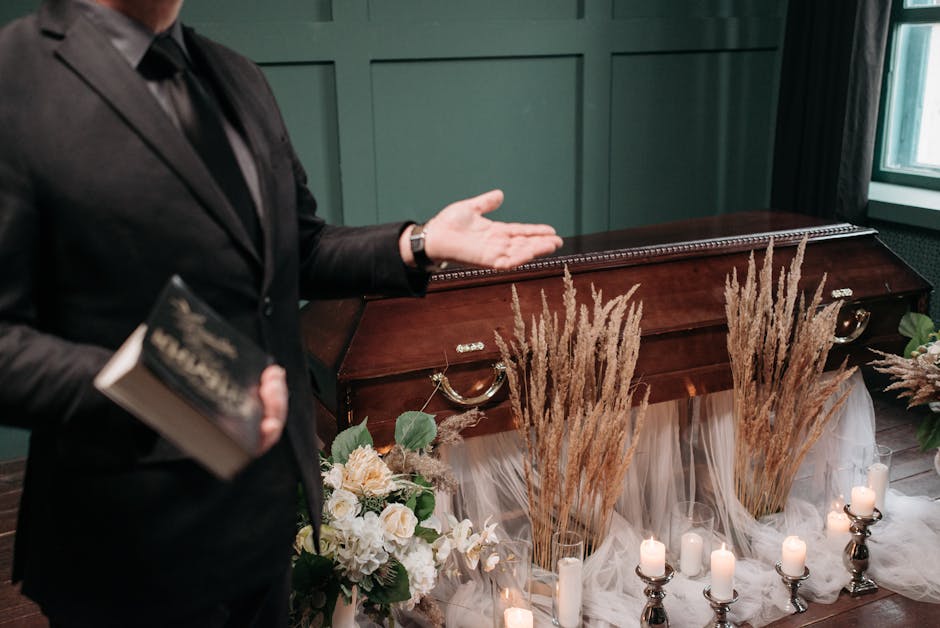
- A hologram of a deceased person was presented at a funeral, providing a unique and personalized way to honor the person.
- The hologram was created using archival video footage, voice recordings, and facial mapping software, resulting in a realistic projection.
- The couple’s nearly six-decade marriage was marked by devotion, shared routines, and quiet companionship.
- The hologram delivery of a pre-recorded message allowed the deceased person to share personal thoughts and feelings with mourners.
- Digital technology has advanced to the point where it can capture not just images, but the essence of a person’s presence, even in death.
In a quiet chapel in rural England, mourners gathered to say goodbye to Bill, a retired schoolteacher who had shared 58 years of marriage with his wife, Pam. But what unfolded was unlike any traditional funeral: halfway through the service, a three-dimensional projection of Bill appeared at the front of the room, standing tall in his favorite tweed jacket, smiling as if he had stepped out of time. With a soft voice, the hologram delivered a pre-recorded message thanking everyone for coming, urging them not to grieve too deeply, and sharing a favorite poem. The moment brought both tears and laughter—a testament to how far digital technology has advanced in capturing not just images, but the essence of a person’s presence, even in death.
A Lifelong Love Transcended by Technology

Pam and Bill’s marriage spanned nearly six decades, marked by devotion, shared routines, and quiet companionship. When Bill was diagnosed with terminal cancer, the couple began discussing how he wanted to be remembered. During one conversation, he joked, “Don’t let the funeral be too gloomy—maybe I’ll pop in from the afterlife.” That remark sparked an idea in Pam, who, with the help of a UK-based digital memorial company, spent months creating a lifelike hologram of her husband. Using archival video footage, voice recordings, and facial mapping software, the team constructed a realistic projection that captured Bill’s mannerisms, tone, and warmth. The result was not a gimmick, but a deeply personal farewell that honored his spirit and offered comfort to those mourning his loss. This event underscores a growing trend: the intersection of grief and emerging technology.
Bringing the Deceased to Life—Digitally

The hologram of Bill was created by a company called Eterneal Presence, which specializes in digital legacy projects. The process began months before Bill’s passing, with Pam providing hours of home videos, audio interviews, and photographs. Using artificial intelligence and 3D rendering tools, the team trained a model to replicate Bill’s voice and facial expressions. The final hologram was projected using a Pepper’s Ghost-style setup—a modern take on a 19th-century illusion technique that uses glass and light to create lifelike images. At the funeral, the projection stood for nearly four minutes, delivering a message Bill had helped script while still lucid. The technology, while not new—holograms have been used to revive musicians like Tupac and Whitney Houston—has rarely been applied in intimate, private settings like funerals. Pam’s decision marks one of the first documented cases of a hologram being used in a civilian memorial service in the UK.
The Emotional and Ethical Dimensions of Digital Afterlives
The use of holograms in mourning raises profound psychological and ethical questions. On one hand, psychologists suggest that such technology can provide closure, especially when loved ones are unable to say goodbye. Dr. Elaine Hartman, a grief counselor at the University of Edinburgh, notes that “rituals help us process loss, and if a digital representation offers emotional relief, it can be therapeutic.” However, critics warn of potential risks, including the blurring of boundaries between memory and reality. Some fear that relying on digital avatars could delay the natural grieving process or create unrealistic expectations for future memorials. Moreover, the cost—estimated at £15,000 for a custom hologram—raises concerns about accessibility and the commercialization of grief. As Nature recently reported, the rise of AI-driven digital immortality tools is outpacing regulatory frameworks, leaving families to navigate uncharted emotional and legal territory.
Who Benefits from a Digital Goodbye?
The implications of holographic funerals extend beyond individual families. Funeral homes and tech startups are beginning to offer digital legacy packages, suggesting a shift in how society handles death. For aging populations in countries like Japan and the UK, where loneliness and digital adoption are both on the rise, such innovations may become more common. Children who missed their father’s final words, spouses left with unresolved conversations, or communities mourning a public figure could all find solace in a controlled, personalized farewell. Yet, there are cultural sensitivities: some religious traditions emphasize the finality of death and may view holograms as disrespectful. Legal questions also loom—such as consent, data ownership, and the right to be forgotten after death. Pam’s choice, while deeply personal, opens a broader conversation about how technology mediates our relationship with mortality.
Expert Perspectives
Opinions on digital memorials remain divided. Dr. Naveen Rao, a sociologist studying digital afterlives, argues that “these tools can preserve identity and strengthen intergenerational memory.” In contrast, ethicist Dr. Lila Chen warns, “We risk turning grief into performance and memory into product.” Some technologists see holograms as the next step in personalized AI, while spiritual leaders caution against substituting presence with projection. The debate reflects a deeper tension: as technology evolves, so must our rituals, ethics, and understanding of what it means to let go.
As hologram use in memorials gains attention, one question lingers: will this become a standard option in end-of-life planning? With companies already developing AI chatbots that mimic deceased individuals, the line between remembrance and replication is thinning. Pam’s gesture was not about denying death, but honoring a life fully lived. Whether such technology becomes widespread or remains a rare tribute, it challenges us to rethink how we say goodbye in the digital age.
Source: BBC