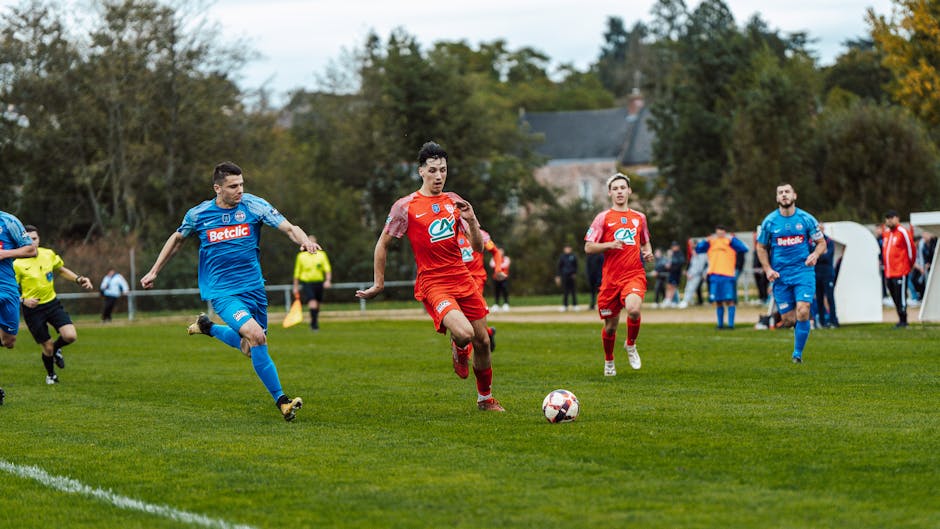
- The International Football Association Board (IFAB) will trial new rules to prevent time-wasting in football matches.
- Goalkeepers’ deliberate time-wasting tactics, including feigning injury, have become increasingly prevalent in recent years.
- The average football match now features over 10 minutes of stoppage time, with much attributed to tactical timeouts.
- Time-wasting undermines the integrity, sportsmanship, and fair play of the sport, frustrating fans and players.
- Leagues will be able to select from a series of trials to address the issue of time-wasting in football.
The beautiful game of football has long been plagued by the frustrating phenomenon of ‘tactical timeouts’, where goalkeepers deliberately waste time to run down the clock and preserve a lead. This practice has led to widespread criticism from fans, players, and coaches alike, who argue that it undermines the integrity of the game. In response to these concerns, the International Football Association Board (IFAB) has announced that it will allow leagues to select from a series of trials aimed at preventing this type of time-wasting. According to recent statistics, the average football match now features over 10 minutes of stoppage time, with much of this attributed to tactical timeouts.
The Problem of Time-Wasting

The issue of time-wasting in football is not a new one, but it has become increasingly prevalent in recent years. With the rise of more defensive-minded teams and the growing importance of preserving leads, goalkeepers have begun to exploit the rules to waste time. This can involve everything from taking an inordinate amount of time to take goal kicks to feigning injury in order to delay the game. The consequences of this practice are twofold: not only does it lead to a less exciting and less fluid game, but it also undermines the sportsmanship and fair play that are supposed to be at the heart of the sport. As a result, fans and players are growing increasingly frustrated with the lack of action being taken to address this issue.
Proposed Solutions

In response to these concerns, the IFAB has proposed four different methods for preventing tactical timeouts. The first of these involves the introduction of a ‘sin bin’ system, where players who are found to be guilty of time-wasting are temporarily suspended from the game. The second proposal involves the use of a ‘timekeeper’ who is responsible for monitoring the game clock and adding on additional time for any stoppages. The third proposal suggests that goalkeepers should be forced to take goal kicks within a certain time limit, while the fourth proposal involves the introduction of a ‘shot clock’ that limits the amount of time that players have to take shots or free kicks. Each of these proposals has its advantages and disadvantages, and it will be up to individual leagues to decide which one to implement.
Analysis of the Proposals
So, which of these proposals is most likely to be effective in preventing tactical timeouts? According to experts, the introduction of a ‘sin bin’ system is likely to be the most effective deterrent, as it would provide a clear and immediate punishment for players who are found to be guilty of time-wasting. However, this system would also require significant changes to the existing rules and regulations of the game, and it may be difficult to implement consistently. The use of a ‘timekeeper’ or a ‘shot clock’ may be more straightforward to implement, but it could also lead to controversy and disputes over the accuracy of the timing. Ultimately, the success of any of these proposals will depend on the ability of referees and other officials to enforce them consistently and fairly.
Implications for the Game
The implications of these proposals for the game of football are significant. If successfully implemented, they could lead to a faster-paced and more exciting game, with less time-wasting and more emphasis on attacking play. They could also help to improve the sportsmanship and fair play of the game, by reducing the incentives for players to engage in time-wasting tactics. However, there is also a risk that the proposals could lead to unintended consequences, such as an increase in controversy and disputes over the rules. As a result, it will be important for leagues and governing bodies to monitor the impact of the proposals closely and make any necessary adjustments.
Expert Perspectives
Experts are divided on the likely effectiveness of the proposals, with some arguing that they do not go far enough to address the problem of time-wasting. According to one expert, ‘the key to preventing tactical timeouts is to introduce a system that provides a clear and immediate punishment for players who are found to be guilty of time-wasting’. Others argue that the proposals are a step in the right direction, but that they will require careful implementation and monitoring in order to be successful. As one expert noted, ‘the devil is in the details, and it will be important to ensure that the rules are enforced consistently and fairly’.
As the football world looks to the future, one thing is clear: something needs to be done to address the problem of tactical timeouts. With the IFAB’s proposals set to be trialed in the coming season, fans and players will be watching with interest to see whether they are successful in preventing time-wasting and improving the game. The question on everyone’s mind is: will these proposals be enough to solve the problem, or will more radical action be needed to restore the integrity and excitement of the beautiful game?