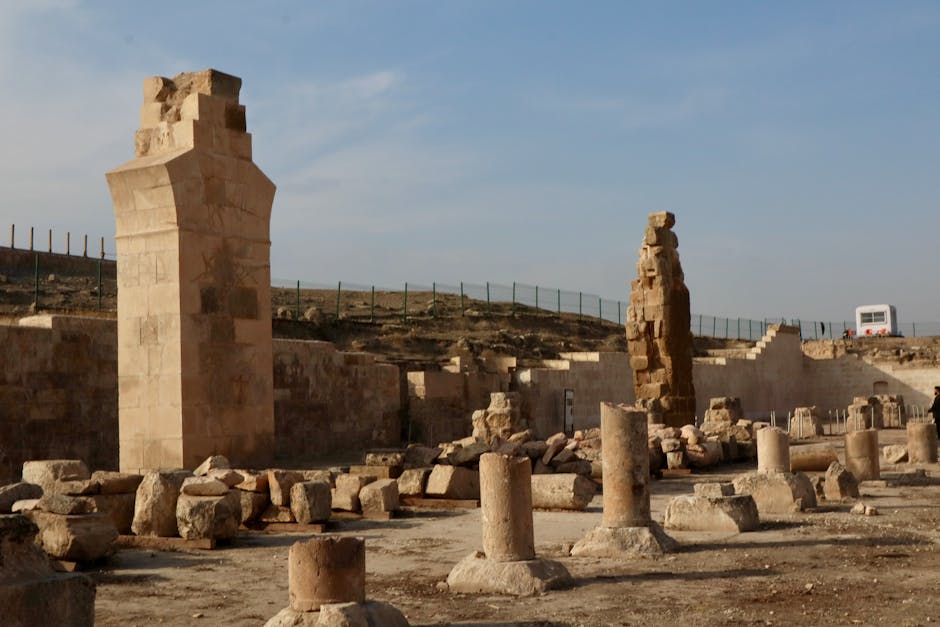
- Raqqa, once a thriving metropolis, has suffered greatly under successive rule and now lies in ruins.
- The city’s strategic location has made it a prize for various empires and dynasties throughout history.
- Raqqa’s rich cultural heritage has been shaped by its complex and often tumultuous past.
- The city has been repeatedly fought over and occupied by different groups, causing significant damage.
- Despite its history, Raqqa is slowly beginning to rebuild and its residents hope for a brighter future.
The city of Raqqa, once a thriving metropolis on the banks of the Euphrates River, has borne the brunt of Syria’s tumultuous past. With a history dating back to the 3rd century BC, Raqqa was a major center of trade and culture, attracting scholars, merchants, and travelers from all over the ancient world. However, in recent years, the city has suffered greatly under the successive rule of various groups, including the Islamic State, which has left deep scars on its infrastructure, economy, and social fabric. Today, as the city slowly begins to rebuild, its residents are hoping for a brighter future, one that is free from the shackles of conflict and instability.
A City’s Rich History

Raqqa’s strategic location at the confluence of the Euphrates River and several important trade routes made it an attractive prize for various empires and dynasties throughout history. From the Abbasid Caliphate to the Ottoman Empire, each successive ruler left its mark on the city, contributing to its rich cultural heritage. However, this very strategic importance has also been the source of the city’s troubles, as it has been repeatedly fought over and occupied by different groups, each seeking to exploit its resources and control its population. As a result, Raqqa’s history is a complex and often tumultuous one, marked by periods of great prosperity and cultural achievement, as well as times of war, destruction, and displacement.
The Road to Devastation

The most recent chapter in Raqqa’s history began in 2014, when the city was captured by the Islamic State, a militant group that sought to establish a caliphate based on its extreme interpretation of Islamic law. During its three-year rule, the group imposed harsh restrictions on the city’s residents, destroying many of its historical and cultural landmarks, and engaging in widespread human rights abuses. The city’s infrastructure was also severely damaged, with many of its buildings, roads, and utilities destroyed or degraded. In 2017, a coalition of Kurdish and Arab forces, backed by the United States, launched a campaign to retake the city, which ultimately succeeded in driving out the Islamic State. However, the victory came at a great cost, with much of the city lying in ruins and its residents forced to flee or live in squalid conditions.
Rebuilding and Recovery
Today, as the city begins to rebuild, its residents are facing numerous challenges, from restoring basic services such as electricity and water, to rebuilding homes and businesses. The process is being hindered by a lack of resources, as well as the presence of unexploded ordnance and other hazards. Despite these challenges, there are signs of hope, with many residents returning to the city and beginning to rebuild their lives. The city’s market is once again filled with the sounds of merchants and traders, and its streets are bustling with activity. However, much work remains to be done, and the city’s recovery will likely take many years, if not decades. Furthermore, the legacy of the Islamic State’s rule continues to cast a shadow over the city, with many residents still traumatized by their experiences and struggling to come to terms with the past.
A Fragile Future
The future of Raqqa remains uncertain, with the city’s residents facing numerous challenges, from rebuilding their homes and businesses, to restoring their sense of security and stability. The city’s economy is still in shambles, and many of its residents are struggling to make ends meet. Additionally, the city’s infrastructure is still in a state of disrepair, with many of its basic services, such as healthcare and education, still not fully functional. As a result, the city’s residents are likely to face many difficulties in the months and years ahead, and it will require a sustained effort from the international community, as well as the Syrian government, to support the city’s recovery and ensure its long-term stability.
Expert Perspectives
Experts warn that the road to recovery will be long and difficult, requiring a comprehensive approach that addresses the city’s physical, economic, and social needs. “The city’s recovery will require a sustained effort from the international community, as well as the Syrian government,” says one expert. “It will also require a commitment to supporting the city’s residents, many of whom have been traumatized by their experiences and are struggling to rebuild their lives.” Others emphasize the need for a more nuanced approach, one that takes into account the city’s complex history and cultural heritage. “Raqqa’s recovery is not just about rebuilding physical infrastructure, but also about restoring the city’s social fabric and promoting reconciliation among its residents,” notes another expert.
As the city looks to the future, many questions remain unanswered. What will be the role of the international community in supporting the city’s recovery? How will the Syrian government balance the need for stability and security with the need for reconciliation and accountability? And what will be the fate of the city’s residents, many of whom are still struggling to come to terms with the past? These are just a few of the questions that will need to be answered in the months and years ahead, as Raqqa slowly begins to rebuild and recover from the devastating effects of war and conflict.