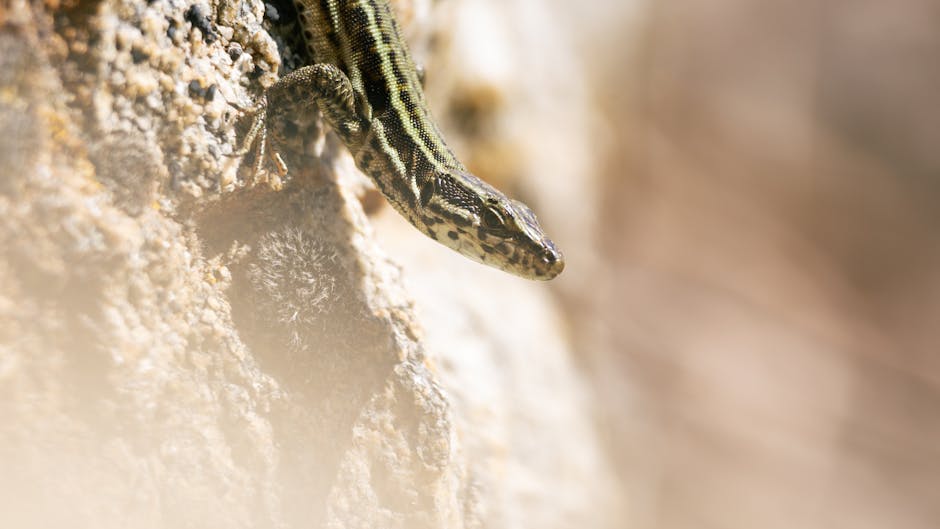
- A powerful green variant of the wall lizard, dubbed the ‘Hulk’ lizard, is outcompeting and replacing its yellow and orange counterparts.
- The ‘Hulk’ lizard’s aggressive behavior and dominant traits are causing a dramatic shift in the ecosystem and rewriting the rules of evolution.
- The emergence of the ‘Hulk’ lizard is threatening to wipe out millions of years of evolutionary history in the wall lizard population.
- The yellow and orange morphs of wall lizards are on the brink of extinction due to the rise of the ‘Hulk’ lizard.
- Scientists are re-examining their assumptions about the pace and nature of evolution in light of the ‘Hulk’ lizard’s rapid rise to dominance.
A striking fact has emerged in the world of evolutionary biology, as a powerful green variant of the wall lizard, dubbed the “Hulk” lizard, is rapidly outcompeting and replacing its yellow and orange counterparts, threatening to wipe out millions of years of evolutionary history in the process. This phenomenon has left scientists stunned, as the once-distinct color types, each with its own unique strategy for survival, are now on the brink of extinction. The “Hulk” lizards, with their aggressive behavior and dominant traits, are taking over, causing a dramatic shift in the ecosystem that is rewriting the rules of evolution as we know it.
The Complex History of Wall Lizards

For ages, wall lizards have coexisted in three distinct color types, each with its own strategy for survival, a testament to the incredible diversity and adaptability of life on Earth. The yellow, orange, and green morphs have evolved over millions of years, developing unique characteristics that allowed them to thrive in their environments. However, with the emergence of the “Hulk” lizard, this delicate balance is being disrupted, and the very survival of the yellow and orange morphs is under threat. As scientists scramble to understand the implications of this sudden shift, they are also being forced to re-examine their assumptions about the pace and nature of evolution.
The Rise of the “Hulk” Lizard

The “Hulk” lizard, with its aggressive behavior and dominant traits, is at the center of this evolutionary storm, outcompeting the other morphs for resources and mates. As the green variant spreads, it is causing a decline in the populations of the yellow and orange lizards, which are struggling to adapt to the changing environment. The reasons behind the “Hulk” lizard’s sudden dominance are complex and multifaceted, involving a combination of genetic and environmental factors that have given it a decisive advantage over its competitors. As researchers delve deeper into the mystery of the “Hulk” lizard’s rise, they are uncovering a fascinating story of evolution in action.
Unpacking the Science Behind the “Hulk” Lizard
Scientists are working to understand the causes and effects of the “Hulk” lizard’s dominance, and the data is revealing a complex interplay of factors. The green morph’s aggressive behavior, for example, is being driven by a combination of genetic and environmental factors, including the availability of food and the presence of predators. As the “Hulk” lizard spreads, it is also altering the ecosystem in subtle but significant ways, from the types of plants that grow in the area to the types of insects that are present. By analyzing these changes, researchers are gaining a deeper understanding of the intricate web of relationships that exists within ecosystems and the ways in which evolution can shape and be shaped by these interactions.
Implications of the “Hulk” Lizard’s Rise
The implications of the “Hulk” lizard’s rise are far-reaching and profound, with significant consequences for our understanding of evolution and the natural world. As the yellow and orange morphs disappear, the genetic diversity of the wall lizard population is being reduced, making it more vulnerable to extinction. This, in turn, has significant implications for the ecosystem as a whole, as the loss of one species can have a ripple effect throughout the entire food chain. The “Hulk” lizard’s dominance is a stark reminder of the ever-changing nature of evolution and the importance of preserving and protecting the natural world.
Expert Perspectives
Experts in the field are weighing in on the significance of the “Hulk” lizard’s rise, with some hailing it as a fascinating example of evolution in action and others warning of the potential consequences of this sudden shift. While some scientists see the “Hulk” lizard as a testament to the incredible adaptability of life on Earth, others are concerned about the impact that this dominant species could have on the ecosystem. As researchers continue to study the “Hulk” lizard and its effects on the environment, they are also highlighting the need for further research and conservation efforts to protect the natural world.
As the story of the “Hulk” lizard continues to unfold, one question remains: what does the future hold for this dominant species and the ecosystem it inhabits? Will the “Hulk” lizard continue to thrive, or will other factors intervene to alter its trajectory? The answer, much like the process of evolution itself, remains uncertain, and scientists will be watching with great interest as this drama plays out in the years to come.