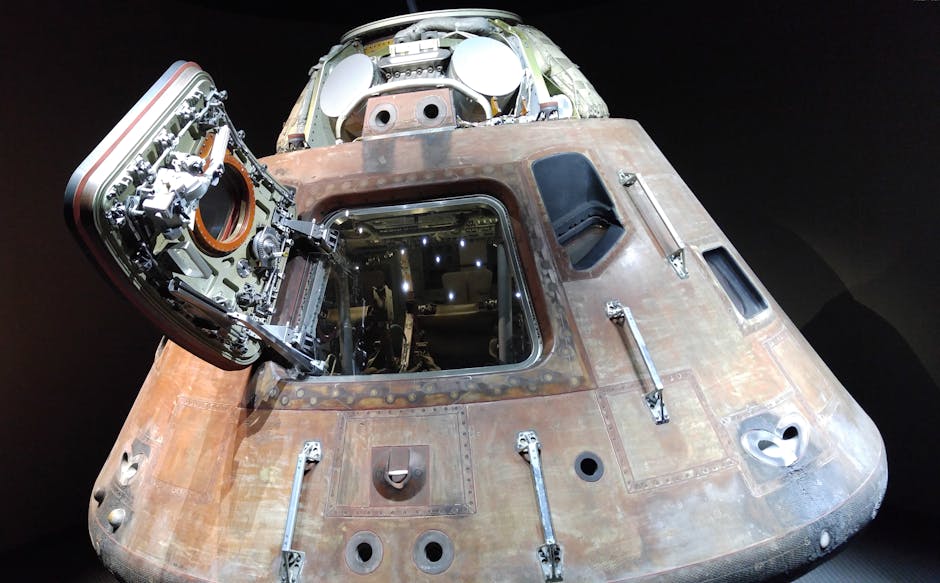
- Artemis II has broken a 50-year-old distance record set by Apollo 10, showcasing NASA’s advancements in space exploration.
- The mission’s success represents a significant leap forward in human spaceflight capabilities, paving the way for future lunar and deep space missions.
- Artemis II’s achievement demonstrates the robustness of the Orion spacecraft and sets the stage for more ambitious missions to the Moon and Mars.
- The mission is part of NASA’s Artemis program, a years-long effort involving cutting-edge technology and international collaboration.
- Artemis II’s milestone highlights the progress in space technology and the enduring spirit of exploration that drives humanity.
Artemis II, NASA’s latest mission to the Moon, has surpassed a distance record set over 50 years ago by Fred Haise during the Apollo 10 mission. The spacecraft, carrying four astronauts, traveled 248,655 miles from Earth, breaking the previous record of 248,622 miles. Haise, now 88, remains unfazed by the milestone, stating, “It wasn’t a big deal. It just coincided with the fact that the Moon was farther away from the Earth.” This achievement underscores the technological advancements and renewed ambitions in space exploration, setting the stage for future lunar and deep space missions.
The Significance of Artemis II

The success of Artemis II is more than just a numerical achievement; it represents a significant leap forward in human spaceflight capabilities. NASA’s mission to return humans to the Moon, part of the Artemis program, has been years in the making, involving cutting-edge technology and international collaboration. The record-breaking distance traveled by Artemis II not only demonstrates the robustness of the Orion spacecraft but also paves the way for more ambitious missions, including potential crewed landings on the Moon and eventual journeys to Mars. This milestone is a testament to the progress in space technology and the enduring spirit of exploration that has driven humanity for decades.
Background of the Record

During the Apollo 10 mission in 1969, Fred Haise and his crewmates, Thomas Stafford and John Young, set the record for the farthest distance traveled by humans from Earth, reaching 248,622 miles. At the time, the mission was a crucial dress rehearsal for the Apollo 11 Moon landing, testing the Lunar Module in lunar orbit. The record stood for over five decades, a symbol of the early achievements in the Space Race. Artemis II’s surpassing of this distance is a poignant reminder of how far space exploration has come and the new frontiers that are now within reach.
Details of the Mission
Artemis II launched on November 16, 2023, from Kennedy Space Center in Florida. The spacecraft, consisting of the Orion capsule and the Space Launch System (SLS) rocket, carried astronauts Reid Wiseman, Christina Koch, Victor Glover, and Jeremy Hansen. The mission’s primary objectives include testing the Orion spacecraft’s systems, conducting scientific experiments, and preparing for future crewed landings on the Moon. The record-breaking distance was achieved during the spacecraft’s closest approach to the Moon, where it performed a series of critical maneuvers to enter a distant retrograde orbit (DRO). This orbit is designed to test the spacecraft’s long-duration capabilities and ensure its readiness for more extended missions.
Analysis of the Achievement
The breaking of Haise’s distance record by Artemis II is a result of significant technological advancements and a renewed focus on lunar exploration. The Orion spacecraft, equipped with state-of-the-art navigation and communication systems, has proven its reliability and endurance. Data from the mission will be crucial for refining future spacecraft designs and mission planning. Experts like Dr. Jim Head, a planetary geologist at Brown University, emphasize the importance of this achievement: “Artemis II’s success is a critical step in our journey to establish a sustainable presence on the Moon and beyond. It showcases the progress we’ve made and sets the stage for even more ambitious endeavors.”
Implications for Space Exploration
The implications of Artemis II’s record-breaking distance are far-reaching. It not only cements the United States’ leadership in space exploration but also highlights the collaborative efforts between NASA and international partners, including the European Space Agency (ESA) and the Canadian Space Agency (CSA). The mission’s success could spur increased investment in space technology and infrastructure, potentially leading to more frequent and diverse missions. For astronauts and space enthusiasts, this milestone is a source of inspiration and a reminder of the potential for human exploration in the cosmos. The breaking of records like Haise’s is a testament to the continuous push for innovation and discovery.
Expert Perspectives
While Fred Haise remains philosophical about the record being broken, other experts in the field are more effusive. Dr. Emily Lakdawalla, a planetary scientist and science communicator, notes, “This is a historic moment that marks the beginning of a new era in human spaceflight.” Conversely, Dr. Jonathan McDowell, an astrophysicist at the Harvard-Smithsonian Center for Astrophysics, cautions, “We must ensure that the focus on breaking records doesn’t overshadow the scientific and safety aspects of these missions.” Both viewpoints highlight the complex nature of space exploration and the need for a balanced approach.
As Artemis II continues its journey, the next critical phase will be its return to Earth. The mission’s success in this final stage will be a crucial indicator of the spacecraft’s overall reliability and the readiness of the Artemis program for future missions. What to watch for in the coming days includes the spacecraft’s re-entry and splashdown, which will provide valuable data on the durability of the Orion capsule. The success of Artemis II raises the question: What will be the next major milestone in human space exploration, and how will it impact our understanding of the universe?