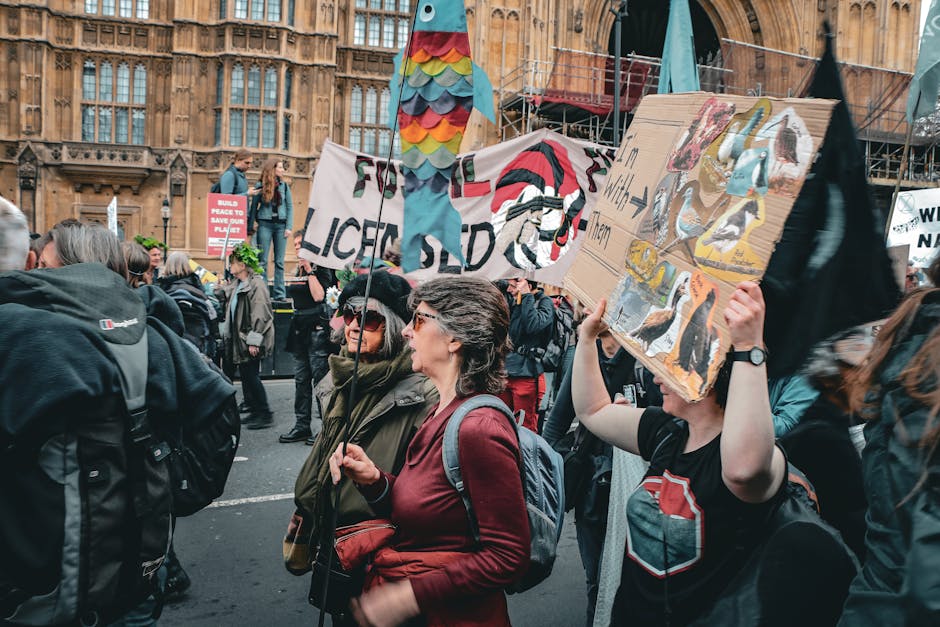
- 85% of UK climate activists remain undeterred by arrests and fines, with many viewing them as a source of strength.
- Criminalisation of nonviolent climate protests may actually increase the likelihood of more disruptive and covert actions.
- The UK government’s approach to managing climate protests has been deemed ineffective in deterring activists.
- A comprehensive study of 1,300 UK climate activists reveals the unintended consequences of criminalisation.
- The rise of climate activism in the UK has led to increased tensions between protesters and authorities.
A striking 85% of climate activists surveyed stated that criminalisation, including arrests and fines, has only strengthened their resolve to take direct action against climate change. This finding emerges from a comprehensive study of 1,300 campaigners in the UK, shedding light on the unintended consequences of the government’s approach to managing climate protests. The research suggests that the criminalisation of nonviolent direct action not only fails to deter activists but may also radicalise them, potentially leading to more disruptive and covert actions in the future.
The Rise of Climate Activism in the UK

The criminalisation of climate protests in the UK has become a contentious issue, with many arguing that it undermines the fundamental right to peaceful assembly and free speech. As the climate crisis deepens, protests have become increasingly common, with activists employing a range of tactics from road blockages to property damage. The government’s response has been to introduce stricter laws and enforce harsher penalties, aiming to quell the disruptions. However, the recent study indicates that this strategy may be misguided, as it overlooks the underlying motivations and determination of climate activists.
Key Findings: The Impact of Criminalisation

The study’s key findings are sobering, suggesting that the use of arrests, fines, and jail terms against nonviolent climate protesters may actually increase their determination to continue with direct action. Of the 1,300 campaigners surveyed, a significant majority reported that their experiences with the criminal justice system had not deterred them from participating in future protests. Instead, many stated that the process had radicalised them, making them more likely to engage in disruptive demonstrations. This response challenges the conventional wisdom that criminalisation is an effective means of controlling protest and highlights the need for a more nuanced approach to managing climate activism.
Analysis: Causes, Effects, and Expert Insights
Experts argue that the criminalisation of climate protests is not only counterproductive but also reflects a deeper misunderstanding of the drivers behind climate activism. The climate crisis is a complex, multifaceted issue that requires comprehensive and immediate action. Activists, driven by a sense of urgency and moral obligation, are pushing for radical changes in policy and practice. By criminalising their actions, the government may inadvertently create martyrs and galvanise public support for the movement. Furthermore, the focus on criminalisation diverts attention and resources away from addressing the root causes of the climate crisis, potentially exacerbating the problem.
Implications: Who is Affected and How
The implications of criminalising climate protests are far-reaching, affecting not only the activists themselves but also the broader movement and societal attitudes towards climate change. By framing climate activism as a criminal rather than a political issue, the government risks alienating a segment of the population that is deeply concerned about the future of the planet. This approach may also undermine trust in institutions and reinforce the perception that the government is more interested in maintaining the status quo than in addressing the climate crisis. As public awareness and concern about climate change continue to grow, the criminalisation of protests may become an increasingly contentious and divisive issue.
Expert Perspectives
Experts in the field of environmental activism and human rights are divided on the issue, with some arguing that nonviolent direct action is a necessary response to the climate emergency, while others believe that such tactics can be alienating and counterproductive. Dr. Maria Rodriguez, a leading researcher on climate activism, notes, “The criminalisation of climate protests reflects a fundamental misunderstanding of the nature of the climate crisis and the motivations of those fighting against it. It’s not about personal gain or political ideology; it’s about the future of our planet.” In contrast, Professor John Taylor suggests that while the intention behind direct action is admirable, the methods can sometimes be misguided, leading to unnecessary conflict and division.
Looking forward, the question remains as to how the government will respond to the growing wave of climate activism. Will it continue down the path of criminalisation, or will it seek a more constructive engagement with activists and the broader public? As the climate crisis intensifies, finding an effective and sustainable approach to managing protests while addressing the underlying issues will become increasingly crucial. The future of climate policy, and indeed the planet, may depend on it.