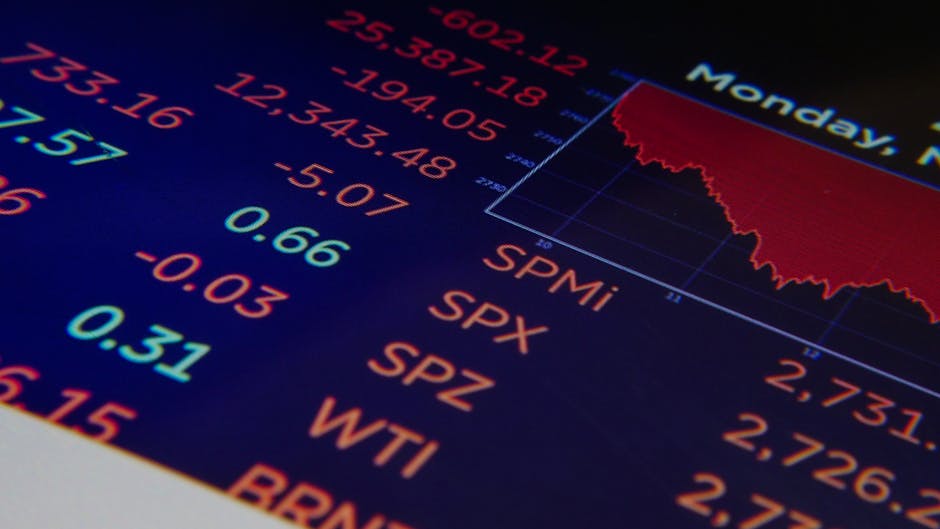
- The Bank of England’s deputy governor warns that the stock market is overvalued and due for a correction.
- A market correction could be triggered by global challenges such as rising inflation, trade tensions, and geopolitical uncertainty.
- Investors are advised to exercise caution and reassess their portfolios to mitigate potential losses.
- The deputy governor’s statement is unusual as senior Bank figures typically avoid commenting on market trends.
- The global economy is facing numerous challenges that could impact the stability of financial markets.
The stock market has experienced an unprecedented surge in recent years, with many investors enjoying substantial returns on their investments. However, according to the Bank of England’s deputy governor, this trend is not sustainable and a correction is imminent. In a rare and candid statement, the deputy governor warned that stock markets are overvalued and due for a fall, sparking concern among investors and prompting a reevaluation of investment strategies. This striking admission has significant implications for the global economy and raises important questions about the stability of financial markets. With the Bank of England’s deputy governor sounding the alarm, investors are advised to exercise caution and reassess their portfolios to mitigate potential losses.
Understanding the Context

The Bank of England’s warning on stock market movements is unusual, as senior figures at the Bank typically avoid making public statements on market trends. This reticence is due to the potential impact of such statements on market sentiment and the desire to maintain a neutral stance. However, the deputy governor’s decision to speak out suggests that the Bank is increasingly concerned about the sustainability of current market valuations. The global economy is facing numerous challenges, including rising inflation, trade tensions, and geopolitical uncertainty, all of which could potentially trigger a market correction. As investors navigate this complex landscape, it is essential to consider the potential risks and consequences of a stock market downturn.
Key Developments

The Bank of England’s warning on stock markets is not an isolated incident, as other central banks and financial institutions have also expressed concerns about market valuations. The International Monetary Fund (IMF) has warned about the risks of a global economic slowdown, while the US Federal Reserve has signaled its intention to maintain a cautious approach to monetary policy. These developments suggest that the global financial community is becoming increasingly wary of the potential for a market correction. The Bank of England’s deputy governor has emphasized the need for investors to be vigilant and prepared for a potential downturn, highlighting the importance of diversification and risk management in investment portfolios.
Analyzing the Data
A closer examination of the data reveals that the stock market’s recent surge is not entirely justified by economic fundamentals. While corporate earnings have been strong, the pace of growth is slowing, and inflation is rising, which could erode profit margins. Additionally, the current market valuations are historically high, with price-to-earnings ratios exceeding their long-term averages. These factors suggest that the market is due for a correction, as investors reassess their expectations and adjust their portfolios accordingly. The Bank of England’s warning has highlighted the need for investors to carefully evaluate the data and consider the potential risks and consequences of a market downturn.
Implications and Consequences
The potential implications of a stock market correction are far-reaching and could have significant consequences for investors, businesses, and the broader economy. A downturn in the stock market could lead to a decline in consumer spending, as investors become more cautious and reduce their exposure to risk. This, in turn, could have a negative impact on economic growth, as businesses experience reduced demand and lower profits. The Bank of England’s warning has emphasized the need for investors to be prepared for a potential downturn and to take steps to mitigate potential losses. By diversifying their portfolios and adopting a cautious approach to investment, investors can reduce their exposure to risk and protect their assets in the event of a market correction.
Expert Perspectives
Experts are divided on the potential impact of a stock market correction, with some arguing that it could be a buying opportunity, while others warn of a more severe downturn. According to some analysts, a correction could be a chance for investors to purchase high-quality assets at discounted prices, potentially generating long-term returns. However, others are more cautious, warning that a market correction could be a precursor to a more significant economic downturn. As investors navigate this complex landscape, it is essential to consider multiple perspectives and evaluate the potential risks and consequences of a market correction.
Looking ahead, the key question is what investors should watch for in the coming months. Will the stock market continue to defy gravity, or will the Bank of England’s warning prove prescient? As investors await the answer, they would be wise to maintain a cautious approach, diversifying their portfolios and preparing for potential losses. By staying informed and adapting to changing market conditions, investors can reduce their exposure to risk and protect their assets in the event of a market correction. The Bank of England’s warning has served as a timely reminder of the importance of vigilance and risk management in investment portfolios, and investors would be well-advised to heed this warning and prepare for a potential downturn.