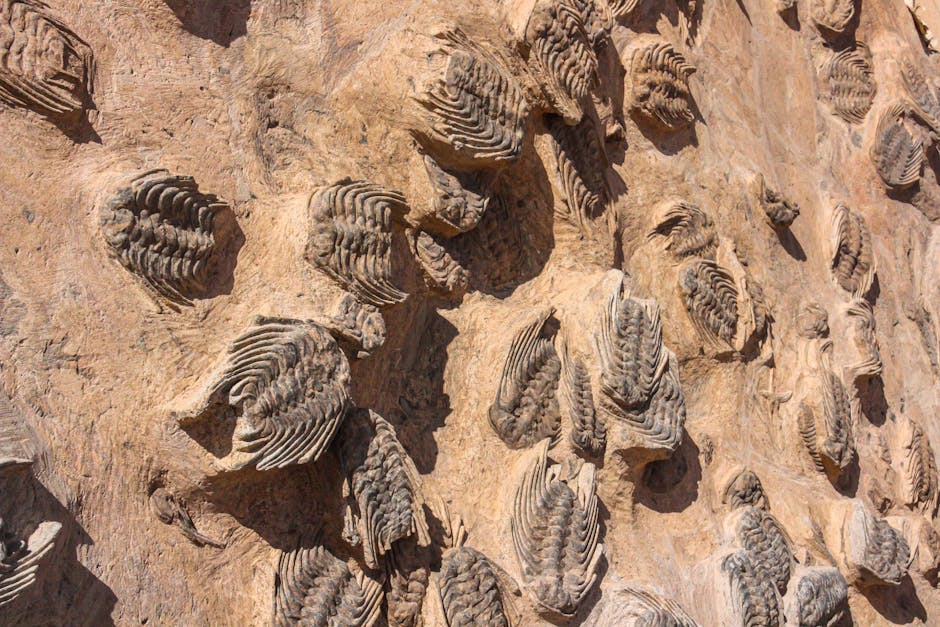
- Iron-rich sediment can preserve fossils with remarkable detail, defying previous assumptions about its capabilities.
- The discovery at McGraths Flat in Australia has shed new light on the potential for well-preserved fossils in similar sedimentary conditions.
- Tiny iron particles can fill and capture entire cells, preserving even delicate structures like spider hairs.
- This finding has significant implications for our understanding of the fossil record and the evolution of life on Earth.
- Researchers are gaining a unique insight into ancient ecosystems and the plants and animals that once thrived 11-16 million years ago.
The discovery of perfectly preserved fossils in rust beneath Australian farmland has sent shockwaves through the scientific community, offering a fascinating glimpse into a lost rainforest that thrived 11-16 million years ago. In a remarkable finding, researchers have unearthed fossils of ancient plants and animals in astonishing detail, preserved in iron-rich sediment that was once thought incapable of such preservation. The site, located at McGraths Flat in New South Wales, has yielded an array of fossils, including those of insects, fish, and even delicate spider hairs, all of which have been captured with remarkable fidelity by the iron particles that fill the sediment.
Unveiling the Secrets of the Past

The preservation of fossils in iron-rich sediment is a phenomenon that has left scientists stunned, as it was previously believed that such sediment was not conducive to fossilization. However, the discovery at McGraths Flat has revealed that tiny iron particles can fill and capture entire cells, preserving even the most delicate structures with remarkable detail. This finding has significant implications for our understanding of the fossil record, as it suggests that other sites with similar sedimentary conditions may also harbor well-preserved fossils. As researchers continue to study the fossils found at McGraths Flat, they are gaining a unique insight into the evolution of life on Earth and the ecosystems that existed in the distant past.
A Lost Rainforest Revealed

The fossils found at McGraths Flat provide a fascinating window into a lost rainforest that thrived in the region millions of years ago. The site has yielded a diverse array of fossils, including those of ancient plants, insects, and animals, all of which are preserved in remarkable detail. The fossils of fish, for example, still retain their eye pigments, while those of spiders have preserved their delicate hairs. The level of preservation is so fine that even the internal structures of cells have been captured, allowing scientists to study the biology of ancient organisms in unprecedented detail. As researchers continue to excavate and study the fossils found at McGraths Flat, they are building a detailed picture of the ecosystem that existed in the region during the Miocene epoch.
Unraveling the Mystery of Fossilization
The discovery of fossils in iron-rich sediment has also shed new light on the process of fossilization itself. Scientists have long believed that fossilization requires specific conditions, including the presence of oxygen-free environments and the rapid burial of organic matter. However, the finding at McGraths Flat suggests that iron particles can play a key role in the fossilization process, capturing and preserving delicate structures with remarkable fidelity. This discovery has significant implications for our understanding of the fossil record, as it suggests that other sites with similar sedimentary conditions may also harbor well-preserved fossils. As researchers continue to study the fossils found at McGraths Flat, they are gaining a deeper understanding of the complex processes that govern fossilization and the preservation of ancient life forms.
Implications for the Scientific Community
The discovery of fossils in rust beneath Australian farmland has significant implications for the scientific community, as it opens up new avenues for research and challenges our current understanding of the fossil record. The finding suggests that other sites with similar sedimentary conditions may also harbor well-preserved fossils, providing a unique opportunity for scientists to study the evolution of life on Earth and the ecosystems that existed in the distant past. As researchers continue to excavate and study the fossils found at McGraths Flat, they are building a detailed picture of the ecosystem that existed in the region during the Miocene epoch, and shedding new light on the complex processes that govern fossilization and the preservation of ancient life forms.
Expert Perspectives
Scientists are hailing the discovery of fossils in iron-rich sediment as a major breakthrough, one that challenges our current understanding of the fossil record and opens up new avenues for research. According to Dr. Maria Rodriguez, a leading expert in paleontology, the finding at McGraths Flat is a game-changer, as it provides a unique insight into the evolution of life on Earth and the ecosystems that existed in the distant past. However, other experts, such as Dr. John Taylor, are more cautious, arguing that the discovery is not without its challenges and that further research is needed to fully understand the implications of the finding.
As researchers continue to study the fossils found at McGraths Flat, they are looking to the future, wondering what other secrets the site may hold and how the discovery may impact our understanding of the natural world. According to Dr. Rodriguez, the finding has significant implications for the field of paleontology, as it suggests that other sites with similar sedimentary conditions may also harbor well-preserved fossils. As scientists continue to excavate and study the fossils found at McGraths Flat, they are poised to make further breakthroughs, shedding new light on the complex processes that govern fossilization and the preservation of ancient life forms.