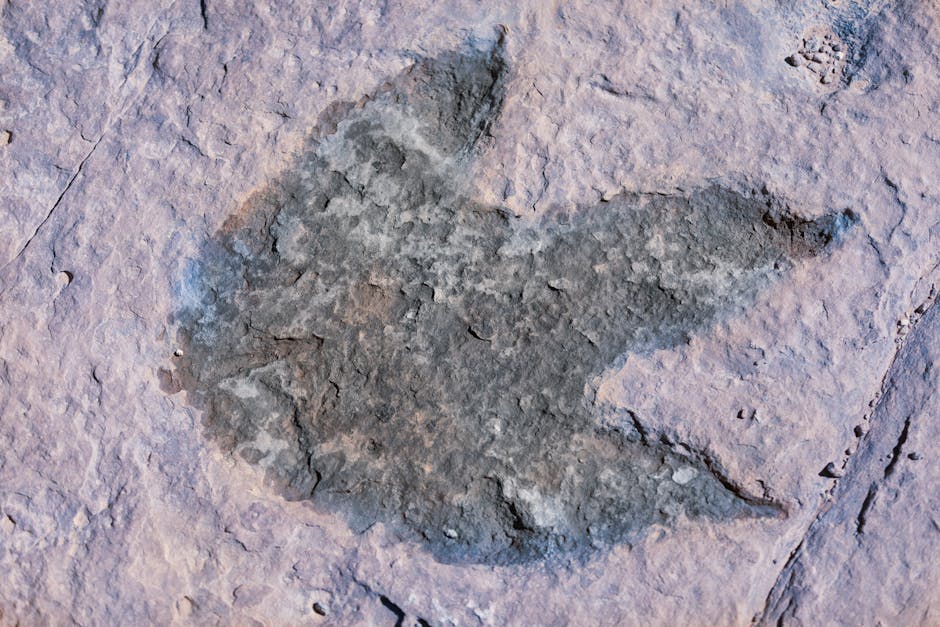
For decades, the fossil record in southern Africa has been a puzzle with missing pieces. The region, known for its rich prehistoric heritage, experienced massive lava flows approximately 182 million years ago, which were believed to have obliterated most evidence of dinosaur life. However, a recent discovery along the Western Cape coast near Knysna has turned this assumption on its head. Dozens of dinosaur tracks, estimated to be around 132 million years old, have been found in a small stretch of rock, making them the youngest ever discovered in southern Africa and opening new avenues for scientific exploration.
The Mystery of the Missing Tracks

The discovery of these tracks is significant because it challenges a long-held belief in the paleontological community. For years, scientists have puzzled over the apparent absence of dinosaur fossils in southern Africa during the Jurassic and early Cretaceous periods. The massive lava flows, which covered vast areas of the landscape, were thought to have erased any trace of dinosaur activity. This gap in the fossil record has been a source of frustration and speculation, leading researchers to question the region’s role in the broader narrative of dinosaur evolution. The new tracks provide a crucial piece of evidence that dinosaurs did indeed continue to thrive in the area, despite the volcanic activity.
A Breakthrough in Knysna

The tracks were discovered by a team of international researchers led by Dr. Emese Bordy from the University of Cape Town. The team was exploring a remote coastal area near Knysna when they stumbled upon a small stretch of rock that contained numerous well-preserved footprints. These tracks, which are about 132 million years old, belong to both large and small dinosaurs, including sauropods (long-necked herbivores) and theropods (carnivorous dinosaurs). The discovery not only confirms the presence of dinosaurs in the region during the early Cretaceous period but also provides valuable insights into the types of dinosaurs that inhabited the area.
Unraveling the Past
The analysis of these tracks has revealed several important details about the dinosaurs that left them. The footprints suggest that the sauropods were likely large, slow-moving herbivores, while the theropods were smaller, faster, and possibly predatory. The tracks also indicate that these dinosaurs were living in a coastal environment, which adds to our understanding of the region’s ancient geography and climate. Dr. Bordy and her team have used advanced imaging techniques to study the tracks in detail, uncovering patterns and characteristics that can help identify the specific species. This meticulous analysis is crucial for piecing together the puzzle of southern Africa’s prehistoric ecosystem.
Implications for Paleontology
The discovery of these tracks has far-reaching implications for the field of paleontology. It challenges the notion that the massive lava flows effectively erased all evidence of dinosaur life in southern Africa, suggesting that some areas may have remained unaffected or that the tracks were preserved in a way that protected them from the volcanic activity. This finding could lead to a reevaluation of other regions that were similarly affected by volcanic events, potentially uncovering more hidden fossil records. For the scientific community, this discovery not only fills a gap in the fossil record but also provides a new perspective on the resilience and adaptability of dinosaur species in challenging environments.
Expert Perspectives
While the discovery is widely celebrated, some experts caution against over-interpreting the findings. Dr. Paul Barrett, a paleontologist at the Natural History Museum in London, notes that while the tracks are undeniably significant, they are just one piece of a much larger puzzle. “These tracks are a fantastic find, but we need more fossil evidence to fully understand the ecosystem and the species that lived there,” Barrett said. Dr. Anthony Martin, a trace fossil expert from Emory University, agrees, adding that the tracks provide a unique window into the behavior and movement of these ancient creatures.
Looking ahead, the discovery opens up new research opportunities and questions. Scientists are now focusing on identifying the specific species that left these tracks and exploring the broader ecological context in which they lived. The team led by Dr. Bordy plans to conduct further excavations in the area, hoping to uncover more tracks and possibly even skeletal remains. As the scientific community continues to unravel the mysteries of southern Africa’s prehistoric past, the implications of this discovery could extend far beyond the region, contributing to our global understanding of dinosaur evolution and behavior.