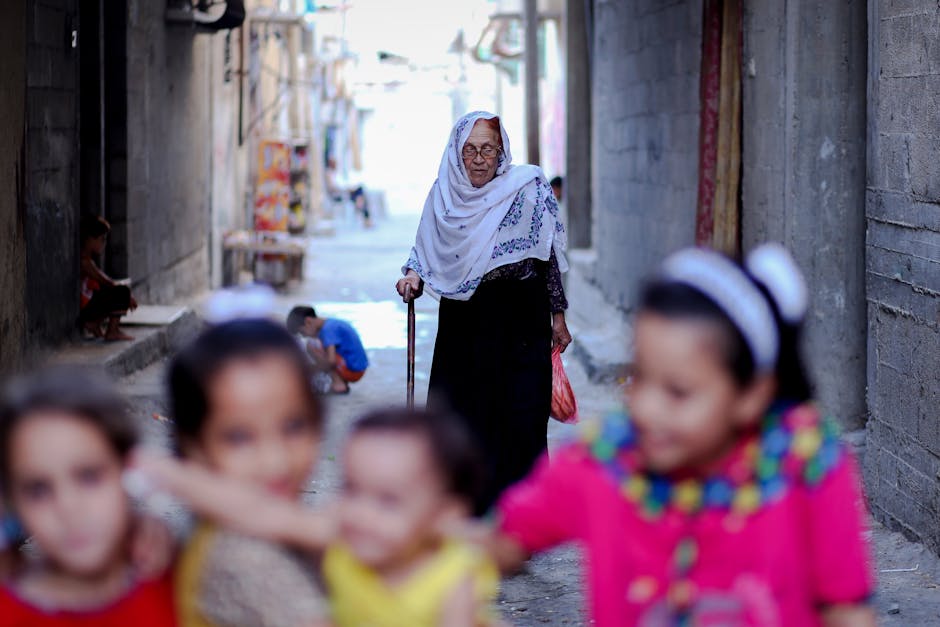
- Gaza is holding its first local election in nearly 20 years, a significant step for the territory’s democratic process.
- The election in Deir al-Balah will allow voters to choose representatives for the municipal council to address issues like poverty and unemployment.
- Hamas, which has controlled Gaza since 2007, has decided not to participate, citing disagreements with Fatah over the election terms.
- Deir al-Balah, like much of Gaza, faces severe economic challenges, including high unemployment and a lack of basic services.
- This election is seen as a chance for residents to take control of their communities and elect officials who can improve their living conditions.
The Gaza Strip is poised to hold its first local election in nearly two decades, with residents in the city of Deir al-Balah set to cast their ballots this weekend. The election, which will see voters choose representatives for the municipal council, is being hailed as a long-awaited opportunity for residents to address the city’s myriad problems, including poverty, unemployment, and a lack of basic services. Despite the significance of the election, Hamas, the Islamist group that has controlled Gaza since 2007, has announced that it will not be participating, citing disagreements with its rival, Fatah, over the terms of the election.
A City in Crisis

The decision to hold local elections in Gaza comes at a time of great need for the beleaguered territory. Years of conflict, coupled with a crippling blockade imposed by Israel and Egypt, have left Gaza’s economy in tatters, with unemployment soaring and poverty rampant. The city of Deir al-Balah, which is located in the central Gaza Strip, has been particularly hard hit, with residents struggling to access basic services such as electricity, water, and healthcare. The election, which will see 15 candidates compete for 11 seats on the municipal council, is being seen as a chance for residents to take control of their own destiny and elect representatives who can address the city’s pressing problems.
A Boycott by Hamas

Hamas’s decision to boycott the election has been met with disappointment from some residents, who had hoped that the group would participate and allow for a more representative outcome. However, Hamas has cited disagreements with Fatah, which is led by Palestinian President Mahmoud Abbas, over the terms of the election, including the voting system and the eligibility of candidates. The boycott has also been seen as a reflection of the deeper divisions between Hamas and Fatah, which have been at odds since Hamas seized control of Gaza in 2007. Despite the boycott, residents in Deir al-Balah remain hopeful that the election will still be a success and that the newly elected council will be able to make a positive impact on the city.
Analyze the Situation
Analysts say that the election in Deir al-Balah is significant not only because it is the first local election to be held in Gaza in nearly two decades, but also because it represents a rare opportunity for residents to participate in the democratic process. The election is also being seen as a test of the Palestinian Authority’s ability to hold free and fair elections, which is a key condition of international aid and support. According to experts, the election will also provide valuable insights into the political leanings of Gaza’s residents, who have been subject to strict control by Hamas for many years. The outcome of the election will be closely watched by observers, who will be looking for signs of whether the newly elected council will be able to make a positive impact on the city and its residents.
Implications of the Election
The implications of the election in Deir al-Balah are far-reaching, with the potential to impact not only the city and its residents but also the wider region. A successful election could pave the way for further democratic reforms in Gaza, which could in turn lead to greater stability and security in the territory. On the other hand, a failed election could exacerbate tensions between Hamas and Fatah, leading to further conflict and instability. Residents in Deir al-Balah are also hoping that the election will lead to tangible improvements in their daily lives, including better access to basic services such as electricity, water, and healthcare.
Expert Perspectives
Experts are divided on the significance of the election in Deir al-Balah, with some hailing it as a major breakthrough for democracy in Gaza, while others are more skeptical. According to some analysts, the election represents a rare opportunity for residents to participate in the democratic process and to hold their leaders accountable. Others, however, are more cautious, pointing out that the election is taking place in a highly controlled environment, with Hamas still exerting significant influence over the territory. Despite these differences in opinion, all experts agree that the election is an important development that will be closely watched by observers in the region and beyond.
Looking ahead, the key question is what the outcome of the election will mean for the future of Gaza and its residents. Will the newly elected council be able to make a positive impact on the city, or will it be hindered by the ongoing divisions between Hamas and Fatah? As residents in Deir al-Balah prepare to cast their ballots, they are hoping that the election will mark the beginning of a new era of democracy and stability in Gaza, one that will bring tangible improvements to their daily lives and a brighter future for generations to come.