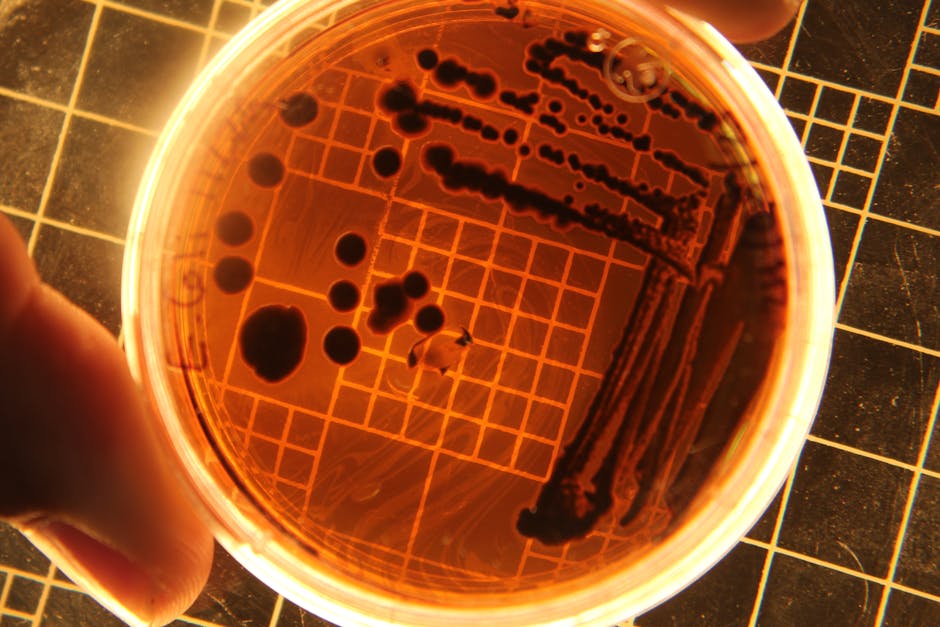
- Commensal yeast can increase the virulence of Salmonella Typhimurium by up to 30%, making it a significant public health concern.
- The relationship between yeast and bacteria is complex, with both organisms coexisting in the same environment and playing crucial roles in maintaining host health.
- Disrupting the balance of yeast and bacteria in the human gut can lead to severe consequences, including increased infection and disease.
- The study sheds new light on the mechanisms underlying the phenomenon of yeast-promoted virulence in Salmonella Typhimurium.
- Further research is needed to understand the complex interactions between microorganisms and their hosts.
A striking fact has emerged in the field of microbiology: commensal yeast can promote the virulence of Salmonella Typhimurium, a leading cause of food poisoning worldwide. According to a recent study published in Nature, the presence of commensal yeast can increase the virulence of Salmonella Typhimurium by up to 30%, making it a significant public health concern. This finding has far-reaching implications for our understanding of the complex interactions between microorganisms and their hosts, and highlights the need for further research into the mechanisms underlying this phenomenon.
The Complex Relationship Between Yeast and Bacteria

The relationship between yeast and bacteria is a complex one, with both organisms often coexisting in the same environment. In the human gut, for example, yeast and bacteria form a delicate balance, with each playing a crucial role in maintaining the health of the host. However, when this balance is disrupted, the consequences can be severe. The recent study sheds new light on this relationship, revealing that commensal yeast can promote the growth and virulence of Salmonella Typhimurium, leading to increased infection and disease. This finding has significant implications for our understanding of the microbiome and its role in human health.
Uncovering the Mechanisms of Yeast-Promoted Virulence

The study found that commensal yeast promotes the virulence of Salmonella Typhimurium by enhancing its ability to adhere to and invade host cells. The yeast produces certain compounds that increase the expression of virulence genes in the bacteria, making it more aggressive and better equipped to cause infection. Furthermore, the yeast also provides a physical niche for the bacteria to grow and multiply, allowing it to reach higher densities and increase its chances of causing disease. The researchers used a combination of in vitro and in vivo experiments to uncover the mechanisms underlying this phenomenon, and their findings have significant implications for the development of new therapeutic strategies.
Implications for Public Health
The discovery that commensal yeast promotes the virulence of Salmonella Typhimurium has significant implications for public health. Salmonella Typhimurium is a leading cause of food poisoning worldwide, and the finding that yeast can increase its virulence by up to 30% makes it a major concern. The study highlights the need for further research into the mechanisms underlying this phenomenon, as well as the development of new therapeutic strategies to prevent and treat Salmonella Typhimurium infections. Additionally, the finding has implications for the food industry, where the presence of yeast and bacteria can have significant consequences for food safety and quality.
Expert Perspectives
Experts in the field have welcomed the study, highlighting its significance for our understanding of the complex interactions between microorganisms and their hosts. “This study sheds new light on the complex relationship between yeast and bacteria, and highlights the need for further research into the mechanisms underlying this phenomenon,” said one expert. “The finding that commensal yeast can promote the virulence of Salmonella Typhimurium has significant implications for public health, and highlights the need for new therapeutic strategies to prevent and treat Salmonella Typhimurium infections.” Another expert noted that the study has implications for the development of new probiotics and prebiotics, which could be used to prevent and treat Salmonella Typhimurium infections.
As researchers continue to unravel the complex interactions between microorganisms and their hosts, one question remains: what other secrets lie hidden in the microbiome, waiting to be uncovered? The answer to this question will require further research and investigation, but one thing is certain: the discovery that commensal yeast promotes the virulence of Salmonella Typhimurium is just the beginning of a new era of understanding and discovery in the field of microbiology. As we look to the future, it is clear that the microbiome will play an increasingly important role in shaping our understanding of human health and disease, and that further research into this fascinating field will be crucial for the development of new therapeutic strategies and treatments.