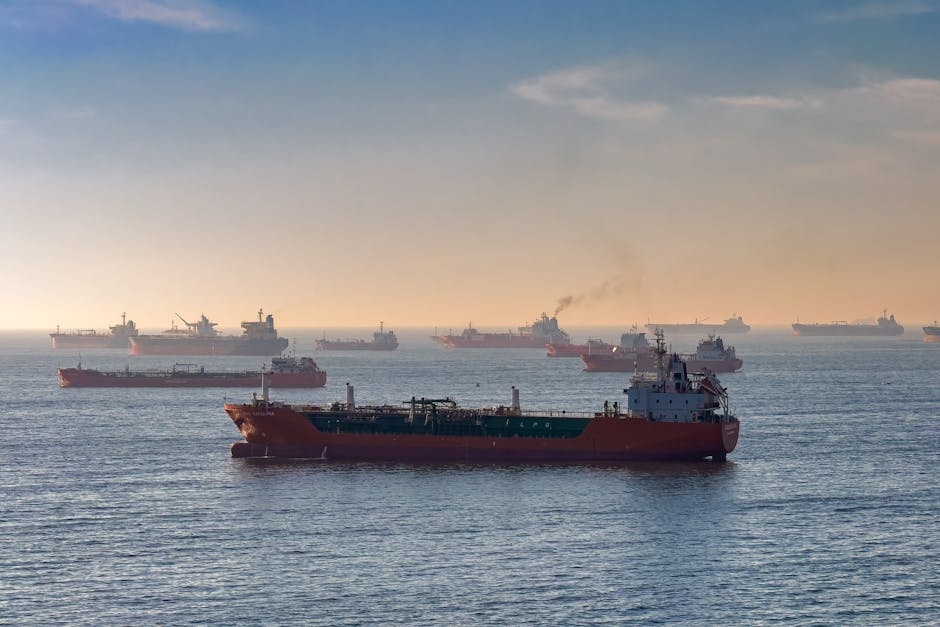
- US President Donald Trump claimed responsibility for keeping the Strait of Hormuz closed, sparking international shockwaves and economic concerns.
- The Strait of Hormuz is a critical waterway connecting the Persian Gulf to the Arabian Sea, with 20% of global oil trade passing through it.
- Tensions between the US and Iran have escalated over issues like nuclear proliferation, ballistic missile tests, and regional influence.
- Trump’s claim has added complexity to an already volatile situation, with the US and Iran accusing each other of provocative actions.
- The global economy and regional security are at risk due to the US-Iran standoff and the importance of the Strait of Hormuz.
The Strait of Hormuz, a vital waterway connecting the Persian Gulf to the Arabian Sea, has been at the center of rising tensions between the US and Iran. In a surprising turn of events, US President Donald Trump recently claimed that he, not Iran, is responsible for keeping the strait closed. This statement has sent shockwaves throughout the international community, with many questioning the motivations behind Trump’s assertion. The Strait of Hormuz is a critical chokepoint for global oil trade, with approximately 20% of the world’s petroleum passing through it. Trump’s claim has significant implications for the global economy and regional security.
Background and Context

The US and Iran have been engaged in a heated standoff in recent months, with tensions escalating over issues such as nuclear proliferation, ballistic missile tests, and regional influence. The Strait of Hormuz has been a focal point of this conflict, with both sides accusing each other of provocative actions. Iran has been accused of harassing and seizing oil tankers, while the US has been criticized for its military buildup in the region. The situation has been further complicated by the US withdrawal from the Joint Comprehensive Plan of Action (JCPOA), also known as the Iran nuclear deal. Trump’s claim that he is keeping the Strait of Hormuz closed has added a new layer of complexity to an already volatile situation.
Key Details and Developments

Trump’s statement on the Strait of Hormuz closure was made in response to a question about Iran’s role in the region. The US President claimed that his administration’s policies, including sanctions and military deployments, have been effective in deterring Iranian aggression. However, many experts have questioned the accuracy of Trump’s assertion, pointing out that Iran has not been responsible for closing the strait. In fact, Iran has repeatedly stated that it will continue to allow oil tankers to pass through the strait, despite the tensions with the US. The International Maritime Organization (IMO) has also confirmed that the strait remains open to commercial traffic. The discrepancy between Trump’s claim and the facts on the ground has raised concerns about the US President’s understanding of the situation and his approach to resolving the conflict.
Analysis and Implications
Trump’s claim that he is keeping the Strait of Hormuz closed has significant implications for regional security and global trade. If the strait were to be closed, it would have a devastating impact on the global economy, with oil prices likely to skyrocket. The closure would also have serious consequences for countries that rely heavily on oil imports, such as China, Japan, and South Korea. Furthermore, the situation could escalate into a full-blown conflict, drawing in other regional players such as Saudi Arabia and the United Arab Emirates. Experts have warned that Trump’s statement may be a tactic to pressure Iran into negotiations, but it also risks further destabilizing the region. The US President’s approach has been criticized for being unpredictable and lacking a clear strategy, which has contributed to the uncertainty and instability in the region.
Regional Consequences and Reactions
The reaction to Trump’s statement has been mixed, with some countries expressing concern about the potential consequences of a strait closure. The European Union has called for calm and restraint, urging all parties to avoid actions that could escalate the situation. China and Russia have also expressed concern, with both countries having significant economic interests in the region. Iran has responded by accusing the US of trying to fabricate a pretext for military action. The Iranian government has stated that it will continue to defend its interests and sovereignty, while also calling for a diplomatic resolution to the conflict. The situation remains volatile, with all parties waiting to see how the situation will unfold.
Expert Perspectives
Experts have offered differing opinions on Trump’s statement, with some seeing it as a negotiating tactic and others viewing it as a sign of US weakness. Dr. Sanam Vakil, a Middle East expert at Chatham House, believes that Trump’s statement is an attempt to pressure Iran into negotiations. “The US is trying to create a sense of urgency and raise the stakes for Iran,” she said. “However, this approach is risky and could backfire, leading to further escalation.” On the other hand, Dr. Trita Parsi, founder of the National Iranian American Council, sees Trump’s statement as a sign of US weakness. “The US is trying to compensate for its lack of a clear strategy by making bold statements,” he said. “However, this approach is unlikely to achieve the desired outcome and may ultimately harm US interests in the region.”
As the situation continues to unfold, all eyes will be on the Strait of Hormuz, waiting to see if Trump’s claim will lead to a resolution or further escalation. The US President’s approach has been criticized for being unpredictable and lacking a clear strategy, which has contributed to the uncertainty and instability in the region. One thing is certain, however: the stakes are high, and the consequences of a miscalculation could be severe. The international community will be watching closely to see how the situation develops, with many hoping for a diplomatic resolution to the conflict. The US and Iran must find a way to de-escalate tensions and negotiate a peaceful resolution, rather than risking a catastrophic conflict that could have far-reaching consequences for the entire world.