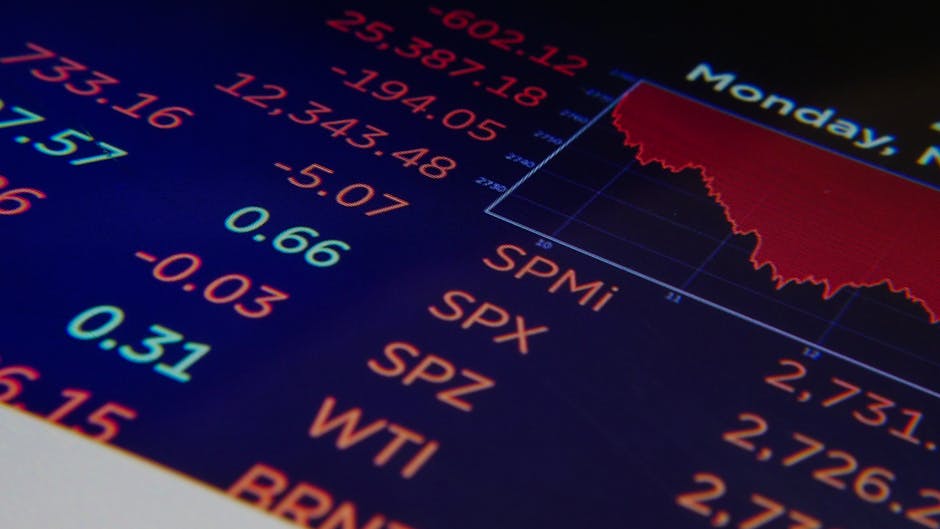
- The VIX, a measure of market volatility, has remained near 20 despite the S&P 500 reaching record highs, indicating persistent uncertainty.
- The VIX typically falls when the S&P 500 performs well, but its recent increase suggests investors are cautious about the market’s prospects.
- Elevated VIX levels are often associated with fear or uncertainty, but the current situation is unusual due to the disconnect between market performance and investor sentiment.
- Ongoing geopolitical tensions, inflation concerns, and potential monetary policy changes are contributing to the elevated VIX levels.
- The VIX’s role as a ‘fear gauge’ makes it a key indicator of investor sentiment and market expectations.
The S&P 500 touched record highs on Thursday morning, but beneath the surface of this bullish market, a different story is unfolding. The Cboe Volatility Index, commonly referred to as Wall Street’s ‘fear gauge,’ remained stuck near 20, a level that suggests investors are still cautious about the market’s prospects. This is unusual because typically, when the S&P 500 is performing well, the VIX would be expected to fall as investors become more confident. However, the VIX is actually up from where it was five days ago, indicating that despite the optimism reflected in stock prices, there is a persistent undercurrent of uncertainty.
Understanding the VIX and Its Role

The VIX is a measure of the implied volatility of the S&P 500 index options, essentially reflecting the market’s expectation of future volatility. It is often used as a barometer of investor sentiment, with high readings indicating fear or uncertainty and low readings suggesting complacency. The current situation, where the VIX remains elevated despite record highs in the S&P 500, suggests a disconnect between the market’s performance and investor sentiment. This disconnect is intriguing and warrants a closer look at the underlying factors driving the market and the VIX.
Key Drivers of the Current Trend

Several factors are contributing to the elevated VIX levels, including ongoing geopolitical tensions, concerns about inflation, and the potential for monetary policy changes. Investors are also keeping a watchful eye on corporate earnings, as any signs of weakness could quickly dampen market enthusiasm. Furthermore, the COVID-19 pandemic continues to cast a shadow over the global economy, with new variants and outbreaks threatening to disrupt recovery efforts. These risks, while not necessarily impacting the S&P 500’s upward trajectory, are keeping investors cautious, as reflected in the VIX.
Analyzing the Implications
An analysis of the current market dynamics and the VIX’s behavior reveals a complex interplay of factors. On one hand, the strong performance of the S&P 500 is a testament to the resilience of the US economy and the markets’ ability to absorb and adapt to challenges. On the other hand, the elevated VIX suggests that investors are not becoming complacent, recognizing that risks and uncertainties remain. This cautious optimism is reflected in the data, with investors seeking out safe-haven assets and hedging strategies to protect against potential downturns. Expert analysis suggests that this dichotomy between the S&P 500 and the VIX could be a sign of a more volatile market environment in the coming months.
Market Implications and Forward Look
The implications of this unusual trend are far-reaching, affecting not just investors but also policymakers and corporations. An elevated VIX can influence investment decisions, leading to a more risk-averse approach, which in turn can impact economic growth. Additionally, the disconnect between the market’s performance and investor sentiment, as indicated by the VIX, highlights the importance of considering a broad range of indicators when assessing market health. Moving forward, it will be crucial to watch how the VIX and the S&P 500 evolve, particularly in response to upcoming economic data releases, geopolitical events, and central bank decisions.
Expert Perspectives
Experts offer contrasting viewpoints on the significance of the current VIX levels. Some see the elevated VIX as a sign of a healthy market, where investors are prudent and aware of potential risks, while others view it as a warning sign, indicating underlying vulnerabilities in the market. According to one analyst, ‘The VIX is sending a clear signal that despite the optimism in equities, there are still significant risks on the horizon that investors need to be aware of.’ Another expert counters, ‘The disconnect between the VIX and the S&P 500 is not unusual and can persist for some time, reflecting the complexity and uncertainty of current market conditions.’
Looking ahead, the key question is how the VIX and the S&P 500 will correlate in the future. Will the VIX eventually fall in line with the optimism reflected in the S&P 500, or will it remain a contrarian indicator, signaling potential trouble ahead? The answer to this question will depend on a variety of factors, including how effectively policymakers and corporations navigate the challenges facing the global economy. As investors, policymakers, and market watchers, understanding the dynamics behind the VIX and its relationship with the broader market will be essential for making informed decisions in this complex and evolving financial landscape.