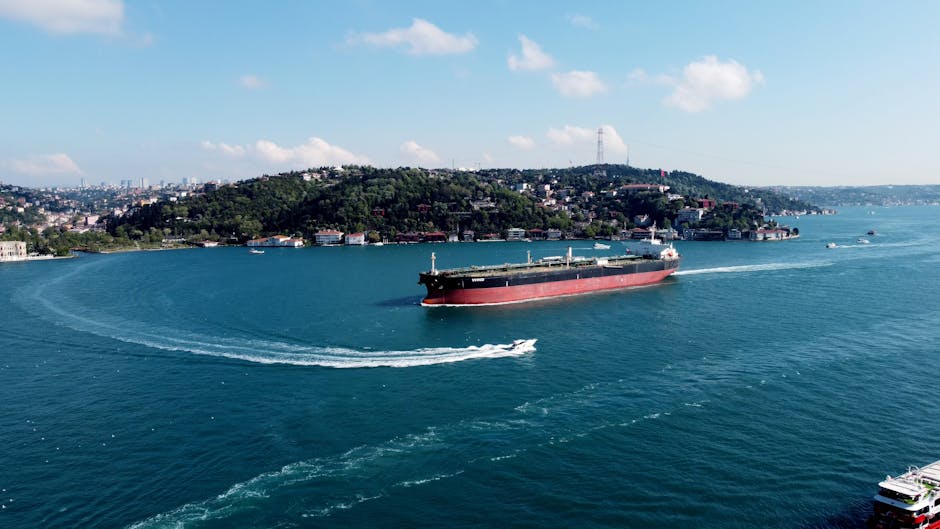
- The Strait of Hormuz is a critical waterway connecting the Persian Gulf to the Arabian Sea, accounting for 20% of the world’s crude oil shipments.
- The strait is a natural chokepoint, with thousands of vessels passing through it every year, making it a strategic focal point for global oil trade.
- The surrounding region is home to major oil producers, including Saudi Arabia, Iraq, and the United Arab Emirates, further emphasizing the strait’s importance.
- A blockade of the Strait of Hormuz has already led to a significant increase in oil prices, with traders and investors assessing the impact on global energy markets.
- The escalating tensions between Iran and the United States have brought the world to a critical juncture, with far-reaching consequences for global oil supplies and the economy.
The Strait of Hormuz, a critical waterway that connects the Persian Gulf to the Arabian Sea, has become a focal point of escalating tensions between Iran and the United States. In a dramatic turn of events, both nations have engaged in a high-stakes blockade of the strait, bringing most shipping traffic to a grinding halt. This development has significant implications for global oil supplies, with approximately 20% of the world’s crude oil passing through this narrow passageway. As the standoff continues, the world watches with bated breath, wondering what the consequences of this confrontation will be.
The Strategic Importance of the Strait of Hormuz

The Strait of Hormuz is a vital shipping lane, with thousands of vessels passing through it every year. The strait is only 21 miles wide at its narrowest point, making it a natural chokepoint for maritime traffic. The surrounding region is home to some of the world’s largest oil producers, including Saudi Arabia, Iraq, and the United Arab Emirates. As such, the strait is a critical artery for the global oil trade, with any disruption to shipping traffic having far-reaching consequences for the global economy. The current blockade has already led to a significant increase in oil prices, with traders and investors scrambling to assess the potential impact on global energy markets.
Key Players and Interests

The blockade of the Strait of Hormuz is a complex issue, involving multiple players with competing interests. The Iranian government has been seeking to exert its influence over the region, while the US has been attempting to maintain its dominance over global oil supplies. The US Navy has a significant presence in the region, with several warships and aircraft carriers stationed nearby. Meanwhile, Iran has been accused of attempting to disrupt shipping traffic, with several incidents of sabotage and piracy reported in recent months. As tensions escalate, other nations, including China and the European Union, are being drawn into the conflict, with each seeking to protect their own interests in the region.
Analysis of the Conflict
The current blockade of the Strait of Hormuz is the latest manifestation of a long-standing conflict between Iran and the US. The two nations have been engaged in a series of proxy wars and diplomatic skirmishes, with the US seeking to contain Iran’s growing influence in the region. The conflict has been fueled by a range of factors, including competing claims to oil and gas resources, as well as deeper ideological and cultural differences. As the blockade continues, analysts are warning of a potentially catastrophic escalation of the conflict, with some predicting a full-scale war between the two nations. The global economy is already beginning to feel the effects, with oil prices soaring and trade volumes plummeting.
Implications of the Blockade
The blockade of the Strait of Hormuz has significant implications for the global economy, with the potential to disrupt oil supplies and drive up prices. The impact will be felt across a range of industries, from manufacturing and transportation to consumer goods and services. As the conflict escalates, nations around the world will be forced to take sides, with some seeking to maintain their relationships with the US, while others will be drawn to Iran’s side. The humanitarian implications of the conflict are also significant, with the potential for widespread suffering and displacement in the region. As the world watches, leaders are being urged to seek a diplomatic solution to the crisis, before it’s too late.
Expert Perspectives
Experts are divided on the potential outcome of the conflict, with some warning of a catastrophic escalation, while others predict a negotiated settlement. According to Dr. Sanam Vakil, a leading expert on Middle East politics, “The current blockade is a symptom of a deeper disease, namely the lack of trust and communication between Iran and the US. Until these underlying issues are addressed, the conflict will continue to simmer, with the potential for periodic eruptions of violence.” In contrast, Dr. Michael Rubin, a scholar at the American Enterprise Institute, argues that “The US must take a firm stance against Iranian aggression, including the use of military force if necessary. Anything less would be seen as a sign of weakness, emboldening Iran to pursue its reckless ambitions.”
As the situation continues to unfold, one thing is clear: the world is watching with bated breath, waiting to see what the consequences of this high-stakes blockade will be. Will the conflict escalate, or will diplomats find a way to negotiate a peaceful resolution? Only time will tell, but one thing is certain: the fate of the global economy, and the stability of the Middle East, hang in the balance. The coming days and weeks will be critical, as leaders on all sides seek to navigate this treacherous landscape, and find a way to restore peace and stability to the region.