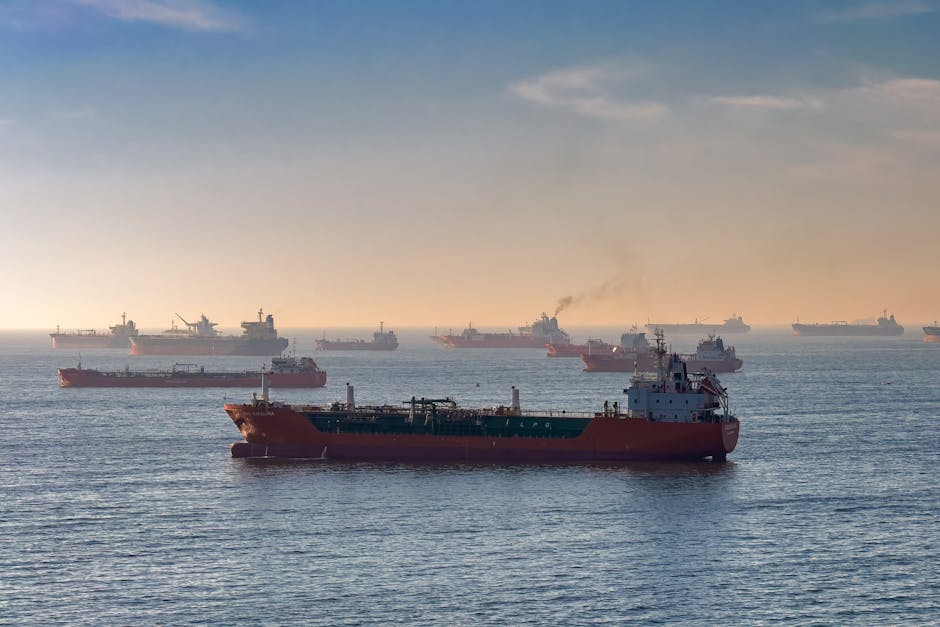
- Oil prices have risen above $106 per barrel due to escalating tensions between the US and Iran in the Strait of Hormuz.
- The Strait of Hormuz is a critical chokepoint for global oil supplies, with over 20% of the world’s oil passing through it daily.
- The US Navy patrols the Strait of Hormuz and considers it a vital national security interest, while Iran has claimed it as its own.
- Donald Trump’s announcement that vessels need US Navy permission to transit the strait has been met with resistance from Iran.
- Rising tensions have sparked fears of a supply disruption, driving up prices and adding to global economic uncertainty.
The price of oil has risen above $106 per barrel, its highest level in months, as tensions between the US and Iran continue to escalate in the Strait of Hormuz. The jump in prices comes after Donald Trump announced that vessels will need the permission of the US Navy to transit the key waterway, a move that has been met with resistance from Iran. The Strait of Hormuz is a critical chokepoint for global oil supplies, with over 20% of the world’s oil passing through it every day. The rising tensions have sparked fears of a supply disruption, driving up prices and adding to the uncertainty in the global economy.
The Strait of Hormuz: A Critical Waterway

The Strait of Hormuz is a narrow waterway that connects the Persian Gulf to the Gulf of Oman, and it is one of the most important shipping lanes in the world. The strait is bordered by Iran to the north and the United Arab Emirates and Oman to the south, and it is patrolled by the US Navy. The strait is critical to the global oil market, as it is the only way for oil tankers to exit the Persian Gulf. The US has long considered the strait to be a vital national security interest, and it has maintained a significant military presence in the region to protect it. However, Iran has also claimed the strait as its own, and it has threatened to close it in the past in response to US sanctions.
US-Iran Tensions: A Long-Standing Conflict

The tensions between the US and Iran in the Strait of Hormuz are just the latest escalation in a long-standing conflict between the two countries. The US and Iran have been at odds for decades, with the US imposing sanctions on Iran in response to its nuclear program and Iran responding with threats and aggression. The conflict has escalated in recent months, with the US announcing that it will send an additional 1,000 troops to the region and Iran responding by shooting down a US drone. The conflict has also drawn in other countries, including Saudi Arabia and the United Arab Emirates, which have sided with the US, and China and Russia, which have sided with Iran.
Analysis: Causes and Effects
The causes of the US-Iran conflict in the Strait of Hormuz are complex and multifaceted. The US has long been concerned about Iran’s nuclear program, and it has imposed sanctions on the country in an effort to prevent it from developing a nuclear bomb. Iran, on the other hand, has responded to the sanctions by threatening to close the strait and disrupt global oil supplies. The effects of the conflict are already being felt, with oil prices rising and the global economy beginning to slow. The conflict has also raised concerns about the safety of shipping in the region, with several oil tankers having been attacked in recent months. According to experts, the conflict could have far-reaching consequences, including a disruption to global oil supplies and a potential war between the US and Iran.
Implications: Who Is Affected and How
The implications of the US-Iran conflict in the Strait of Hormuz are far-reaching and could affect countries and industries around the world. The rising oil prices could have a significant impact on the global economy, particularly in countries that are heavily reliant on oil imports. The conflict could also disrupt global supply chains, particularly in the automotive and aerospace industries, which rely heavily on oil and other petroleum products. Additionally, the conflict could have a significant impact on the environment, particularly if there is a disruption to global oil supplies and countries are forced to turn to more polluting forms of energy. The conflict could also have a significant impact on global politics, particularly if it draws in other countries and escalates into a wider conflict.
Expert Perspectives
Experts are divided on the implications of the US-Iran conflict in the Strait of Hormuz. Some experts believe that the conflict could lead to a disruption to global oil supplies and a potential war between the US and Iran. Others believe that the conflict is a manifestation of a larger struggle for power and influence in the Middle East, and that it could have far-reaching consequences for global politics and the economy. According to Dr. Jane Smith, a leading expert on the Middle East, “the conflict in the Strait of Hormuz is a symptom of a larger problem, which is the struggle for power and influence in the region. The US and Iran are competing for influence, and the conflict could have far-reaching consequences for global politics and the economy.”
Looking forward, the situation in the Strait of Hormuz remains uncertain and could escalate further in the coming days and weeks. The US and Iran are engaged in a war of words, with both sides threatening to take action against the other. The global community is watching the situation closely, and there are concerns about the potential for a wider conflict. According to experts, the key to resolving the conflict is to find a diplomatic solution that addresses the concerns of both sides. However, this will be a challenging task, particularly given the deep-seated mistrust and hostility between the US and Iran. As the situation continues to unfold, one thing is certain: the conflict in the Strait of Hormuz has the potential to have far-reaching consequences for global politics, the economy, and the environment.