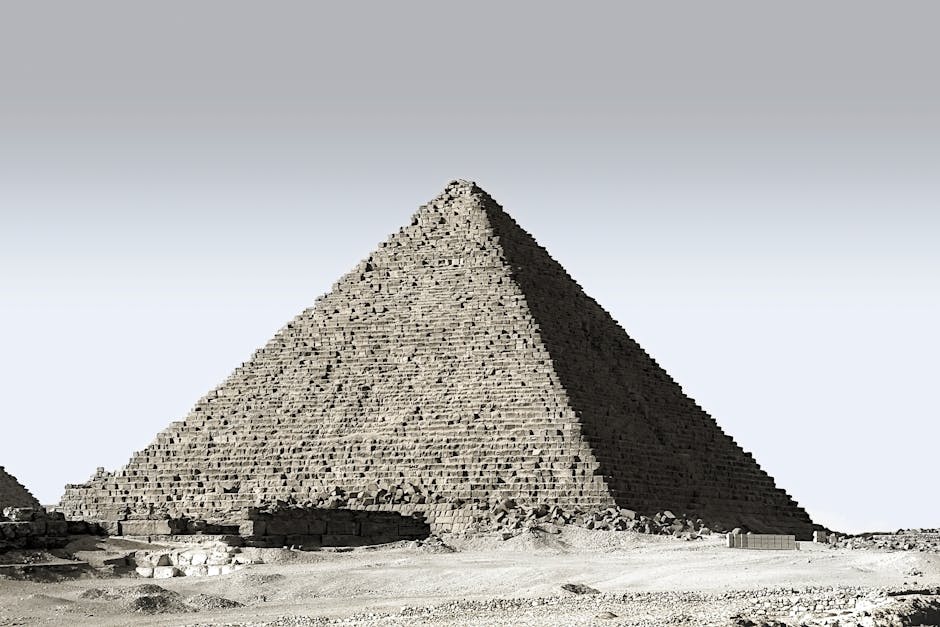
- Researchers have discovered two hidden air-filled voids behind the eastern face of the Menkaure pyramid in Egypt.
- The voids were detected using advanced, non-invasive techniques like radar and ultrasound, pinpointing a potential secret entrance.
- The Menkaure pyramid, built around 2490 BC, is the smallest of the three main pyramids on the Giza plateau but still an impressive 65 meters tall.
- The eastern face of the pyramid has been an area of interest due to its unique characteristics and suspected secrets.
- The discovery highlights the importance of continued exploration and the use of cutting-edge technology in uncovering ancient secrets.
A striking discovery has been made in Egypt’s pyramids, as researchers have found two hidden air-filled voids behind the eastern face of the Menkaure pyramid. This area has long been suspected to conceal something unusual, and the new findings have sparked fresh intrigue about the ancient structures. The voids, detected using advanced, non-invasive techniques like radar and ultrasound, have been pinpointed with surprising precision, lending strong support to the idea that a secret entrance may exist. With this revelation, the mysteries of the pyramids continue to unfold, captivating the imagination of scholars and the public alike. The discovery also underscores the importance of continued exploration and the use of cutting-edge technology in uncovering the secrets of these ancient wonders.
Unveiling the Mystery of Menkaure Pyramid

The Menkaure pyramid, one of the three main pyramids on the Giza plateau, has been a subject of interest for centuries. Built around 2490 BC, it is the smallest of the three but still an impressive structure, standing at a height of 65 meters. The pyramid’s eastern face, where the hidden voids were discovered, has been an area of particular interest due to its unique characteristics and the suspicion that it might conceal a secret entrance. The background of this discovery is rooted in years of research and speculation about the pyramids, with many experts believing that these ancient structures hold many more secrets than they reveal. The recent findings not only confirm these suspicions but also open up new avenues for research and exploration.
Key Findings and Discovery Process

The discovery of the hidden voids was made possible by the use of advanced, non-invasive techniques such as radar and ultrasound. These methods allowed researchers to scan the pyramid without causing any damage, providing detailed images of the internal structure. The team, composed of experts from various fields, worked meticulously to analyze the data, leading to the identification of two distinct air-filled cavities. The process was complex, involving the interpretation of complex data sets and the use of sophisticated software to visualize the internal structure of the pyramid. The key details of the discovery, including the size, shape, and location of the voids, are crucial in understanding the potential significance of this finding and how it contributes to our knowledge of the pyramid’s architecture and purpose.
Analyzing the Causes and Effects
The discovery of the hidden voids in the Menkaure pyramid has significant implications for our understanding of ancient Egyptian architecture and the construction of the pyramids. The presence of these voids suggests a high degree of sophistication and planning in the design of the pyramid, as well as the possibility of a secret entrance that has yet to be found. Analyzing the causes and effects of this discovery involves considering the historical context in which the pyramid was built, the technological capabilities of the ancient Egyptians, and the potential purposes of such voids. Expert analysis and further research are necessary to fully understand the significance of this finding, including the use of data from similar discoveries and the insights of historians and archaeologists. The discovery also raises questions about the construction techniques used by the ancient Egyptians and how they managed to create such precise and complex internal structures.
Implications and Potential Consequences
The implications of the hidden voids in the Menkaure pyramid are far-reaching, affecting not only our understanding of ancient Egyptian history and culture but also the field of archaeology as a whole. The discovery has the potential to shed new light on the lives and beliefs of the people who built these magnificent structures, as well as the techniques and knowledge they possessed. Furthermore, the possibility of a secret entrance raises questions about what might be found inside the pyramid, including potential treasures, artifacts, or even new texts that could provide valuable insights into ancient Egyptian society. The discovery also underscores the importance of preserving and protecting these historical sites, ensuring that future generations can continue to learn from and appreciate these incredible achievements of human ingenuity and craftsmanship.
Expert Perspectives
Experts in the field of archaeology and ancient history have offered contrasting viewpoints on the discovery of the hidden voids in the Menkaure pyramid. While some see this as a significant breakthrough that could lead to major new discoveries, others are more cautious, emphasizing the need for further research and verification before drawing conclusions. The variety of expert opinions highlights the complexity and multifaceted nature of this discovery, underscoring the need for a comprehensive and interdisciplinary approach to understanding its implications. As researchers continue to analyze the data and plan for potential future explorations, the input of experts from various fields will be invaluable in unraveling the mysteries of the pyramid and its hidden voids.
Looking forward, the discovery of the hidden voids in the Menkaure pyramid opens up a new chapter in the exploration of Egypt’s ancient wonders. As researchers and scholars delve deeper into the implications of this finding, they will be watching for opportunities to explore the pyramid further, potentially uncovering the secret entrance and revealing the secrets that lie within. An open question remains as to what these voids might contain and how they might change our understanding of the pyramids and the civilization that built them. The journey ahead promises to be filled with excitement and discovery, as the world waits with anticipation for the next revelation from the ancient sands of Egypt.