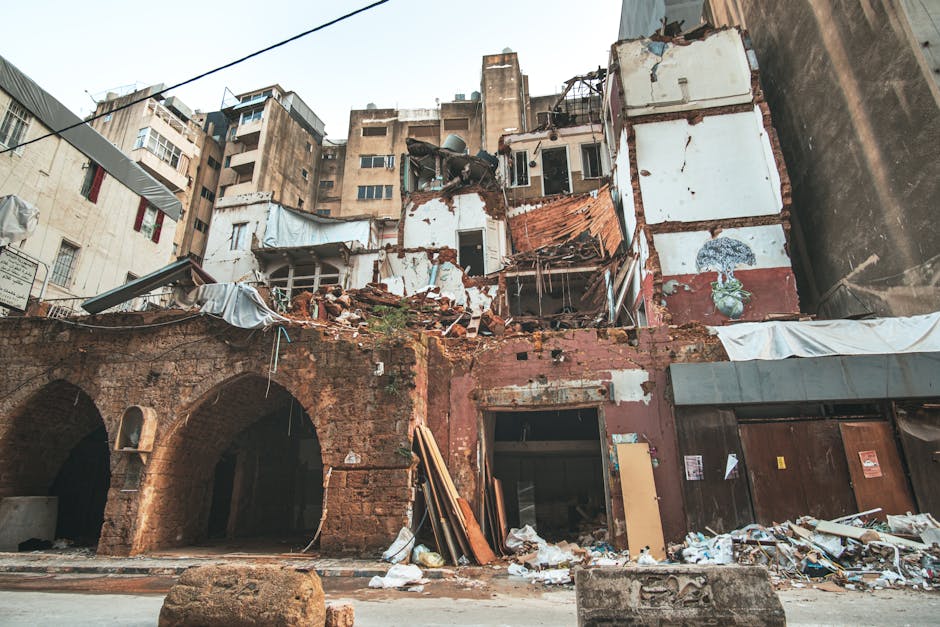
- Over 500 people have died in Lebanon’s conflict in the past month, highlighting the severity of the situation.
- Hezbollah fighters and civilians are being buried together in mass funerals, indicating the widespread impact of the fighting.
- The conflict has deep historical, political, and sectarian roots, involving various factions and external powers.
- A recent lull in fighting offers a brief respite, but the long-term stability of Lebanon remains uncertain.
- The international community is struggling to broker a peace deal, with the people of Lebanon left to cope with the humanitarian crisis.
The devastating conflict in Lebanon has resulted in a staggering number of casualties, with the death toll continuing to rise as the fighting rages on. According to recent reports, over 500 people have lost their lives in the past month alone, with many more injured and displaced. The humanitarian crisis is worsening by the day, with families and communities torn apart by the violence. As the situation on the ground remains dire, the people of Lebanon are coming together to bury their dead, with mass funerals being held across the southern region for both Hezbollah fighters and innocent civilians caught in the crossfire.
Background to the Conflict

The current conflict in Lebanon is a complex and multifaceted issue, with deep-rooted historical, political, and sectarian tensions at play. The country has long been a battleground for proxy wars between regional and international powers, with various factions and militias vying for control and influence. The latest escalation of violence is a culmination of years of simmering tensions, which have finally boiled over into all-out conflict. As the international community struggles to broker a peace deal, the people of Lebanon are left to pick up the pieces and mourn their losses. The recent lull in fighting has provided a brief respite, but it remains to be seen how long this fragile calm will last.
Key Players and Interests

The conflict in Lebanon involves a range of key players, including the Lebanese government, Hezbollah, and various other militias and factions. Each of these groups has its own distinct interests and agendas, which are often at odds with one another. Hezbollah, a Shia Islamist organization, has been a major player in the conflict, with its fighters engaged in fierce battles against rival groups and the Lebanese military. The Lebanese government, meanwhile, is struggling to maintain control and stability, as the country teeters on the brink of chaos. As the situation continues to unfold, it is clear that the interests of these various groups will play a significant role in shaping the outcome of the conflict.
Causes and Consequences
Analysts point to a range of factors as contributing to the current conflict in Lebanon, including political instability, sectarian tensions, and regional interference. The country’s fragile political system, which is based on a delicate balance of power between different sectarian groups, has been unable to withstand the pressures of the conflict. As a result, the situation has spiralled out of control, with devastating consequences for the people of Lebanon. The humanitarian toll is already staggering, with thousands displaced and many more affected by the violence. As the conflict continues to rage on, it is likely that the consequences will only worsen, with long-term damage to the country’s infrastructure, economy, and social fabric.
Humanitarian Implications
The humanitarian implications of the conflict in Lebanon are far-reaching and devastating. The mass funerals currently taking place across the southern region are a stark reminder of the human cost of the violence, with families and communities torn apart by the loss of loved ones. The displacement of thousands of people has also created a major humanitarian crisis, with many struggling to access basic necessities like food, water, and shelter. As the situation continues to deteriorate, it is likely that the humanitarian implications will only worsen, with a growing need for aid and support from the international community.
Expert Perspectives
Experts are divided on the best way forward for Lebanon, with some advocating for a negotiated peace deal and others calling for more robust international intervention. According to Dr. Amal Saad, a leading expert on the region, “the key to resolving the conflict lies in addressing the underlying sectarian and political tensions that have driven the violence.” Others, like former diplomat Michael Young, argue that “the international community needs to take a more proactive role in brokering a peace deal and providing humanitarian support to those affected by the conflict.” As the situation continues to unfold, it is clear that a range of perspectives and approaches will be needed to find a lasting solution.
Looking ahead, the situation in Lebanon remains highly uncertain, with a range of possible scenarios on the table. Will the current lull in fighting hold, or will the conflict escalate further? What role will the international community play in shaping the outcome of the conflict? As the people of Lebanon continue to bury their dead and struggle to come to terms with the devastation, one thing is clear: the road to peace and stability will be long and difficult, requiring patience, perseverance, and a commitment to finding a lasting solution to the conflict.