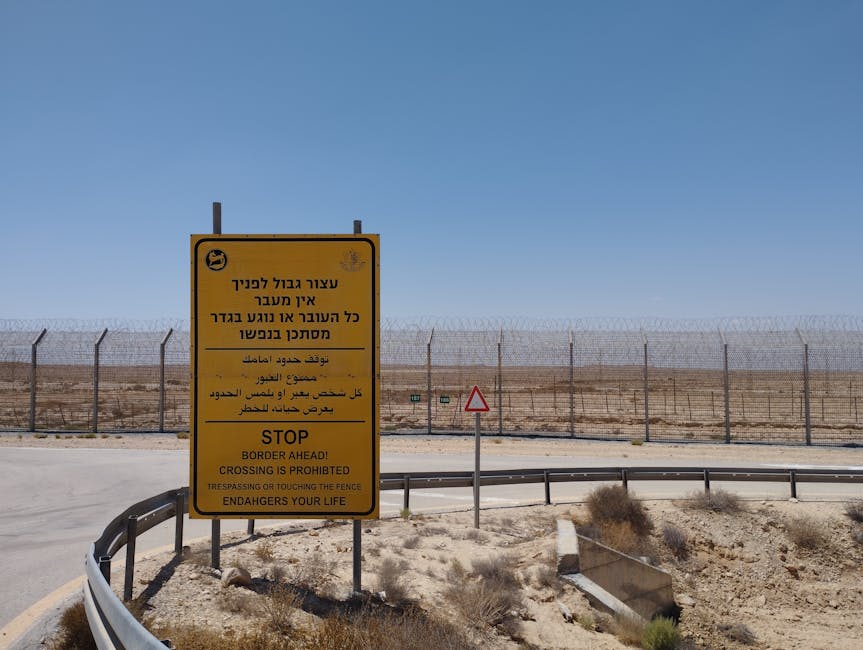
- Israel’s establishment of a military zone in southern Lebanon has raised fears of a repeat of the contentious ‘Yellow Line’ in Gaza.
- The ‘Yellow Line’ refers to a buffer zone Israel has carved out in Gaza, a major point of conflict between Israel and Hamas.
- The Lebanon ceasefire, brokered by the UN in 2006, has been fragile and repeatedly tested over the years.
- Israel’s move in southern Lebanon has raised concerns that the ceasefire may be on the verge of collapse.
- The establishment of a military zone in southern Lebanon comes amid heightened tensions in the region and ongoing conflict in Syria.
The recent establishment of a military zone by Israel inside southern Lebanon has raised eyebrows, with many drawing parallels to the contentious “Yellow Line” in Gaza. This development has sparked fears that Israel may be replicating a strategy that has been a point of contention in the region for years. The “Yellow Line” refers to a buffer zone that Israel has carved out in Gaza, which has been a major point of conflict between Israel and Hamas. With the creation of a similar zone in southern Lebanon, concerns are growing that Israel may be violating the ceasefire agreement with Lebanon.
Background and Context

The Lebanon ceasefire, which has been in place since 2006, has been fragile at best. The agreement, which was brokered by the United Nations, called for the withdrawal of Israeli forces from southern Lebanon and the disarmament of Hezbollah. However, the ceasefire has been repeatedly tested over the years, with both sides accusing each other of violations. The establishment of a military zone by Israel inside southern Lebanon has raised concerns that the ceasefire may be on the verge of collapse. The timing of this development is particularly sensitive, given the current tensions in the region and the ongoing conflict in Syria.
Military Zone and Its Implications

According to reports, the military zone established by Israel in southern Lebanon is several kilometers wide and stretches along the border with Israel. The zone is intended to prevent Hezbollah militants from infiltrating into Israel and to protect Israeli civilians living in the border region. However, the creation of this zone has been met with resistance from Lebanon, which claims that it is a violation of the country’s sovereignty. The Lebanese government has also accused Israel of attempting to recreate the “Yellow Line” in Gaza, which has been a major point of contention between Israel and the Palestinians. The situation is further complicated by the fact that Hezbollah is a powerful political and military force in Lebanon, and any attempt to disarm or restrict the group’s movements could lead to a major escalation of violence.
Analysis and Expert Opinion
Experts say that the establishment of a military zone by Israel in southern Lebanon is a calculated move aimed at preventing Hezbollah from gaining a strategic advantage in the region. However, this move also carries significant risks, including the potential for a major escalation of violence and a breakdown of the ceasefire. The situation is further complicated by the fact that the region is already a tinderbox, with tensions running high between Israel and Iran, as well as between Israel and the Palestinians. According to some analysts, the creation of a military zone in southern Lebanon may be a sign that Israel is preparing for a potential conflict with Hezbollah, which could have far-reaching consequences for the region.
Implications and Consequences
The implications of Israel’s military zone in southern Lebanon are far-reaching and potentially devastating. If the ceasefire were to break down, it could lead to a major escalation of violence, with potentially catastrophic consequences for the region. The conflict could also draw in other regional players, including Iran and Syria, which could lead to a wider conflict. Furthermore, the establishment of a military zone by Israel could also have significant humanitarian consequences, including the displacement of civilians and the destruction of infrastructure. As the situation continues to unfold, it is clear that the international community will need to play a major role in preventing a breakdown of the ceasefire and promoting a peaceful resolution to the conflict.
Expert Perspectives
Experts are divided on the implications of Israel’s military zone in southern Lebanon. Some argue that the move is a necessary step to prevent Hezbollah from gaining a strategic advantage in the region, while others claim that it is a provocative move that could lead to a major escalation of violence. According to one expert, “The creation of a military zone by Israel in southern Lebanon is a sign that the country is preparing for a potential conflict with Hezbollah. This could have far-reaching consequences for the region, including a breakdown of the ceasefire and a major escalation of violence.” Another expert notes that “The situation is complex and multifaceted, and it will require a nuanced and sophisticated approach to resolve. The international community will need to play a major role in promoting a peaceful resolution to the conflict and preventing a breakdown of the ceasefire.”
As the situation continues to unfold, it is clear that the coming weeks and months will be critical in determining the outcome of the conflict. The international community will need to be vigilant and proactive in promoting a peaceful resolution to the conflict, and in preventing a breakdown of the ceasefire. One key question that remains to be answered is whether the parties involved will be able to find a way to resolve their differences peacefully, or whether the conflict will escalate into a wider and more devastating war. As one expert notes, “The situation is highly volatile, and it will require careful diplomacy and negotiation to prevent a major escalation of violence. The international community will need to be prepared to play a major role in promoting a peaceful resolution to the conflict, and in preventing a breakdown of the ceasefire.”