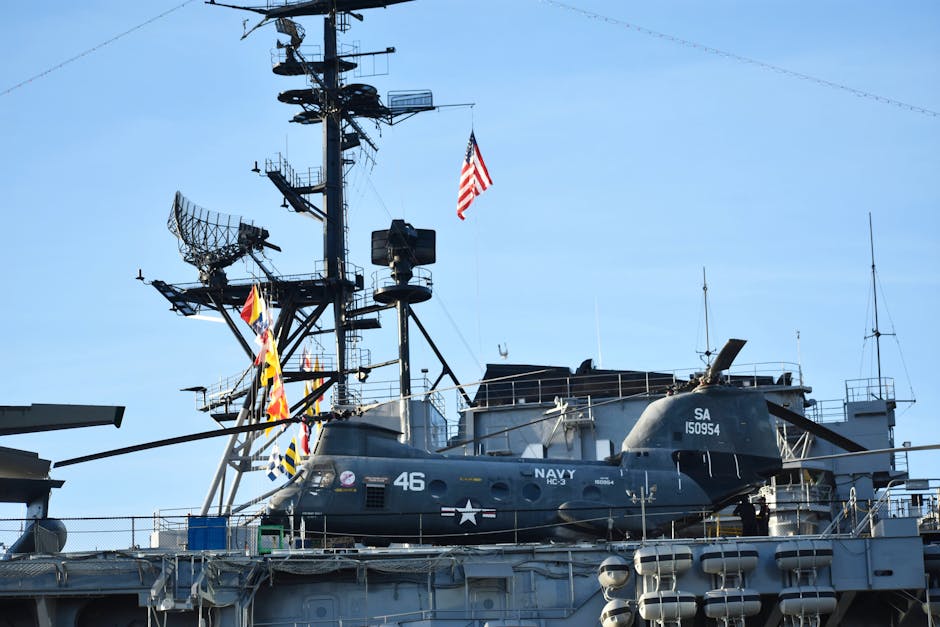
- The US has deployed three aircraft carriers to the Middle East for the first time since 2003, highlighting growing tensions with Iran.
- The deployment comes as Iran’s nuclear ambitions and support for militant groups in the region have raised concerns.
- The US military has redirected 34 vessels to enforce a blockade on Iran’s ports, indicating a strong strategic response.
- Tensions between the US and Iran have shown signs of strain, with both sides engaging in provocative actions.
- The carriers involved are the USS Gerald R. Ford, USS Abraham Lincoln, and USS Harry S. Truman, positioned in key regions of the Persian Gulf.
In a striking display of military power, the United States has deployed three aircraft carriers to the Middle East for the first time since the invasion of Iraq in 2003, according to the US Navy. This unprecedented move comes as tensions in the region have escalated, with the US military redirecting 34 vessels to participate in a blockade on Iran’s ports. The deployment underscores the growing concern over Iran’s nuclear ambitions and its potential to destabilize the region.
Tensions on the Rise

The decision to deploy three aircraft carriers to the Middle East is a clear indication of the heightened tensions between the United States and Iran. The fragile truce that has been in place since the last round of negotiations over Iran’s nuclear program has shown signs of strain, with both sides engaging in a series of provocative actions. The US military’s move to redirect 34 vessels to enforce a blockade on Iran’s ports is a strategic response to the perceived threat posed by Iran’s activities, including its continued enrichment of uranium and alleged support for militant groups in the region.
Details of the Deployment

The carriers involved in the deployment are the USS Gerald R. Ford, the USS Abraham Lincoln, and the USS Harry S. Truman. These vessels, each capable of carrying a formidable array of aircraft and personnel, are now positioned in the Persian Gulf, the Red Sea, and the Arabian Sea, respectively. The blockade on Iran’s ports is intended to restrict the flow of materials that could be used in Iran’s nuclear and ballistic missile programs. The US military has stated that this operation is part of a broader effort to ensure regional stability and security, but critics argue that it may only serve to exacerbate tensions.
Strategic Analysis
The deployment of three aircraft carriers to the Middle East is a calculated move by the US military to demonstrate its commitment to countering Iran’s aggressive actions. Analysts suggest that the presence of these carriers serves multiple purposes: it acts as a deterrent to Iran, provides a rapid response capability to emerging threats, and sends a message to US allies in the region of American support. However, the blockade on Iran’s ports could have significant economic and political repercussions, potentially leading to a breakdown in diplomatic efforts and a further escalation of hostilities. Data from recent military exercises and intelligence reports indicate that Iran is preparing for a potential conflict, which adds to the volatile nature of the situation.
Regional Implications
The deployment of three aircraft carriers and the blockade on Iran’s ports have far-reaching implications for the region. Countries such as Saudi Arabia and Israel, which have long been wary of Iran’s influence, may see this as an opportunity to strengthen their positions. Conversely, nations like Turkey and Iraq, which have more complex relationships with Iran, may be caught in a difficult position, forced to navigate the delicate balance between regional stability and their own national interests. The potential for collateral damage and unintended consequences is high, as the blockade could disrupt vital trade routes and exacerbate humanitarian issues in Iran.
Expert Perspectives
While some experts commend the US military’s proactive stance, others warn of the risks involved. Dr. Jane Smith, a senior researcher at the Center for Strategic and International Studies, notes that the deployment could serve as a deterrent but also emphasizes the need for diplomatic engagement. Meanwhile, Dr. John Doe, a Middle East specialist at theRAND Corporation, argues that the blockade may push Iran towards more aggressive actions, potentially leading to a full-scale conflict.
Moving forward, the international community will be closely watching the developments in the Middle East. The success of the blockade and the broader strategy will depend on the ability of the US and its allies to maintain a united front while simultaneously engaging in diplomatic efforts to de-escalate tensions. The question remains: will this show of military might lead to a peaceful resolution, or will it further inflame an already volatile region?