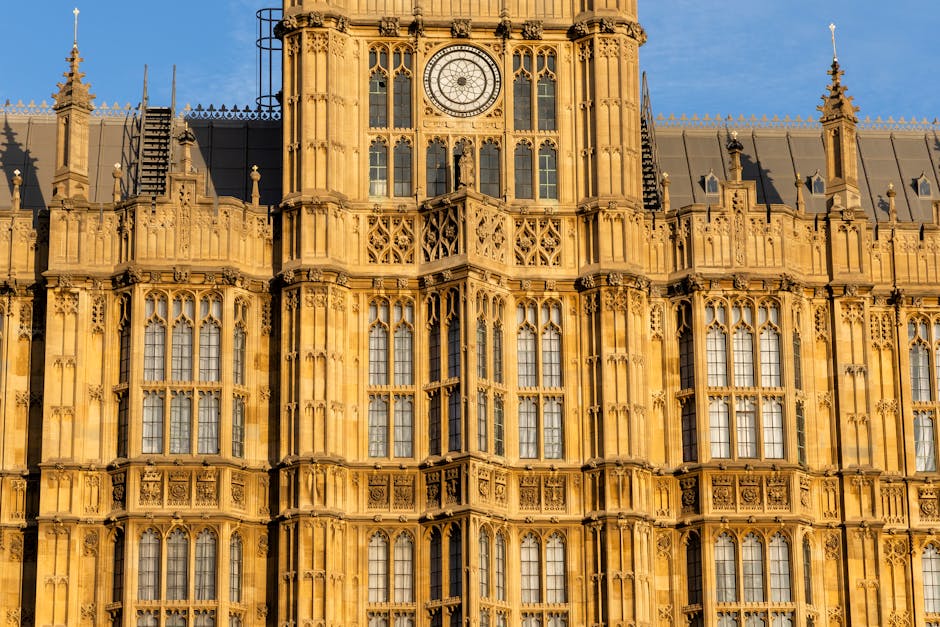
- 7 unelected lords in the House of Lords are heavily influencing the legislative process on an assisted dying bill, causing delays.
- The bill, aimed at legalizing medically assisted death for terminally ill patients, has gained substantial public support but faces significant opposition.
- Amendments proposed by the lords are extensive, raising questions about the balance of power between the elected and unelected members of Parliament.
- The controversy highlights ongoing debates about the role of the House of Lords in British legislation and the rights of terminally ill patients.
- Public debate is intense, focusing on the ethics and practicalities of medically assisted death and the influence of a small group of lords.
A striking fact has emerged in the British Parliament: a mere 7 unelected lords are significantly hindering the progress of a bill aimed at legalizing medically assisted death for the terminally ill. This bill, which has garnered significant public support, is now facing an unprecedented number of amendments, with the aforementioned group proposing hundreds of changes. This development has sparked intense debate about the role of the House of Lords in shaping the country’s laws and the extent to which a small group of individuals can influence the legislative process.
The Background of the Assisted Dying Bill

The assisted dying bill was introduced to address the growing concern about the rights of terminally ill patients to have control over their own end-of-life care. With an increasing number of countries and states legalizing medically assisted death, the pressure has been mounting on the British government to reconsider its stance on the issue. The bill’s proponents argue that it is a matter of compassion and human rights, allowing individuals with terminal illnesses to choose a dignified death rather than suffering through unbearable pain. The current situation, where patients are forced to travel abroad or resort to DIY methods, is seen as inhumane and unacceptable.
Key Details of the Bill and Its Opposition

The bill, which has passed the initial stages in the House of Commons, has been met with fierce resistance in the House of Lords. A small but determined group of lords, largely driven by religious and moral convictions, has proposed an astonishing number of amendments. These amendments range from requiring additional safeguards to outright bans on certain aspects of assisted dying. The sheer volume of these proposals has effectively stalled the bill’s progress, leaving its future uncertain. The lords involved have argued that they are protecting vulnerable individuals from potential abuse, while critics see their actions as an attempt to impose their personal beliefs on the wider population.
Analysis of the Stalemate
An analysis of the situation reveals a complex interplay of ethical, legal, and political factors. On one hand, there is a strong ethical argument for assisted dying, grounded in principles of autonomy and compassion. On the other hand, there are legitimate concerns about the potential risks and the need for robust safeguards to prevent abuse. The data from countries where assisted dying is legal suggests that, with proper regulation, the risks can be managed, and the benefits to patients and their families can be significant. However, the political landscape in Britain, particularly the composition and powers of the House of Lords, has created a stalemate. The expert angle on this issue emphasizes the need for a nuanced and evidence-based approach, considering both the moral dimensions and the practical implications of such a law.
Implications of the Bill’s Stall
The implications of the bill’s stall are far-reaching and affect not only the terminally ill patients who are waiting for the legal right to choose their end-of-life care but also their families and the broader healthcare system. For patients facing unbearable suffering, the delay means continued pain and distress, with some feeling compelled to take matters into their own hands or travel to countries where assisted dying is legal. The stall also reflects a deeper issue within British democracy, highlighting concerns about the democratic legitimacy of the House of Lords and its ability to represent the will of the people on sensitive and complex issues.
Expert Perspectives
Expert opinions on the matter are sharply divided. Some see the actions of the lords as a necessary check on what they perceive as a slippery slope towards euthanasia, emphasizing the importance of protecting life at all costs. Others view the stall as a regrettable obstruction of a compassionate and reasonable piece of legislation, arguing that it is the duty of parliament to reflect the evolving values and wishes of society. The contrast in viewpoints underscores the profound ethical and moral questions at the heart of the debate, with each side convinced of the righteousness of their cause.
Looking forward, the key question is what will happen next. Will the bill eventually pass, perhaps in a modified form, or will it succumb to the onslaught of amendments and opposition? The answer to this question will depend on a variety of factors, including public pressure, political will, and the ability of lawmakers to find common ground. As the debate continues, it is clear that the outcome will have significant implications not just for Britain but for the global conversation on end-of-life care and the rights of the terminally ill.