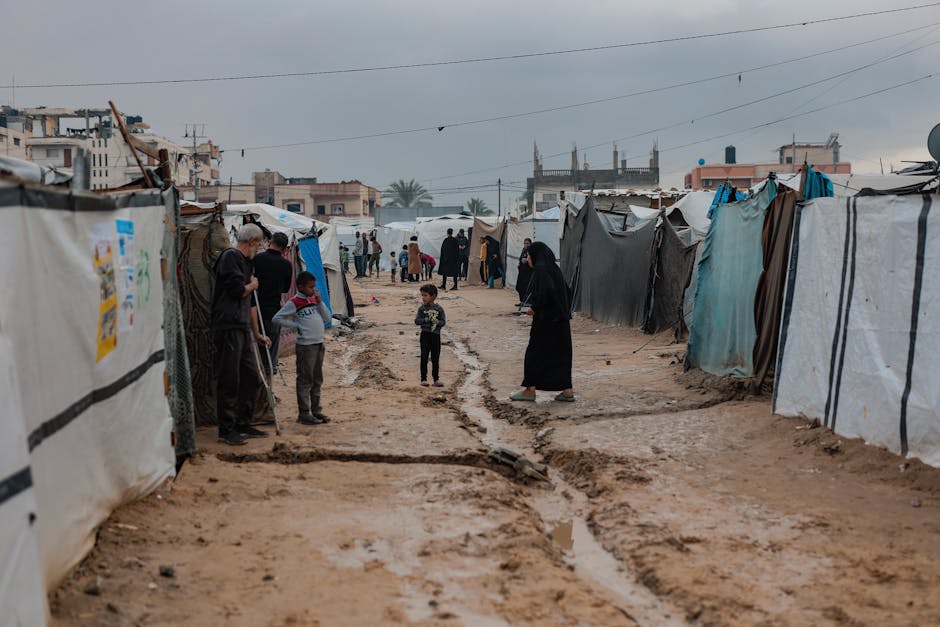
- The Gaza Strip is a coastal enclave with a population of approximately 2 million people, plagued by decades of conflict.
- US President Donald Trump proposed relocating Palestinians from Gaza to neighboring countries, but the plan has been met with skepticism and rejection.
- The conflict in Gaza has its roots in the Israeli-Palestinian dispute, which dates back to the mid-20th century.
- The humanitarian situation in Gaza is deteriorating, with significant damage to infrastructure and a substantial loss of life.
- Trump’s relocation plan involves moving Palestinians to Egypt and Jordan, but both countries have resisted the proposal.
The Gaza Strip, a coastal enclave with a population of approximately 2 million people, has been a focal point of conflict in the Middle East for decades. Recently, US President Donald Trump proposed a plan to relocate Palestinians from Gaza to neighboring countries, sparking widespread controversy and rejection from Arab countries. According to Trump, the heavily bombed enclave has become “a demolition site,” and relocating its residents, either temporarily or long-term, could be a viable solution to the ongoing crisis.
The Background of the Crisis

The conflict in Gaza has its roots in the Israeli-Palestinian dispute, which dates back to the mid-20th century. Over the years, the situation has escalated, with periods of relative calm punctuated by outbreaks of violence. The most recent escalation has resulted in significant damage to infrastructure and a substantial loss of life. With the humanitarian situation in Gaza deteriorating, the international community has been searching for a solution to the crisis. Trump’s proposal, however, has been met with skepticism and outright rejection by many Arab countries, who view it as an attempt to bypass the core issues underlying the conflict.
The Proposed Relocation Plan

Trump’s plan involves relocating Palestinians from Gaza to Egypt and Jordan, two countries that have historically been involved in the Israeli-Palestinian peace process. The proposal has been met with resistance from both countries, who argue that they cannot absorb the large number of refugees. Egypt, in particular, has been concerned about the potential economic and social implications of accepting a large influx of refugees. Jordan, which already hosts a significant number of Palestinian refugees, has also expressed reservations about the plan. The Palestinian leadership has rejected the proposal outright, arguing that it undermines their right to self-determination and a sovereign state.
Analysis of the Proposal
From an analytical perspective, Trump’s proposal raises several concerns. Firstly, it ignores the underlying causes of the conflict, which are deeply rooted in the Israeli-Palestinian dispute. By focusing solely on the relocation of Palestinians, the proposal fails to address the core issues of borders, settlements, and Jerusalem’s status. Secondly, the plan overlooks the significant economic and social challenges that would arise from relocating a large population. The influx of refugees would put a strain on the resources of the host countries, potentially exacerbating social and economic tensions. Finally, the proposal has been criticized for its lack of consultation with the Palestinian leadership and the international community, which has undermined its credibility and legitimacy.
Implications of the Proposal
The implications of Trump’s proposal are far-reaching and potentially devastating. If implemented, the plan could lead to a significant escalation of the conflict, as Palestinians resist the relocation effort. The humanitarian situation in Gaza, which is already dire, could deteriorate further, leading to a substantial increase in human suffering. The proposal could also damage the already fragile relationships between the US and Arab countries, which have been critical of the plan. Furthermore, the proposal undermines the principle of self-determination, which is a fundamental right of the Palestinian people. By attempting to impose a solution on the Palestinians without their consent, the US risks undermining its credibility as a broker of peace in the region.
Expert Perspectives
Experts have weighed in on the proposal, with many expressing skepticism and concern. According to Dr. Khalil Shikaki, a prominent Palestinian scholar, “the proposal is a non-starter, as it ignores the fundamental rights of the Palestinian people and undermines their sovereignty.” In contrast, some Israeli officials have welcomed the proposal, arguing that it could provide a solution to the humanitarian crisis in Gaza. However, these views are not universally held, and many experts argue that the proposal is a distraction from the core issues underlying the conflict.
Looking forward, the key question is what the international community will do to address the crisis in Gaza. Will the US continue to pursue its relocation plan, despite the opposition from Arab countries and the Palestinian leadership? Or will the international community come together to find a more comprehensive and sustainable solution to the conflict? As the situation in Gaza continues to deteriorate, the need for a credible and effective solution has never been more urgent. The international community must come together to address the root causes of the conflict and find a solution that respects the rights and dignity of the Palestinian people.