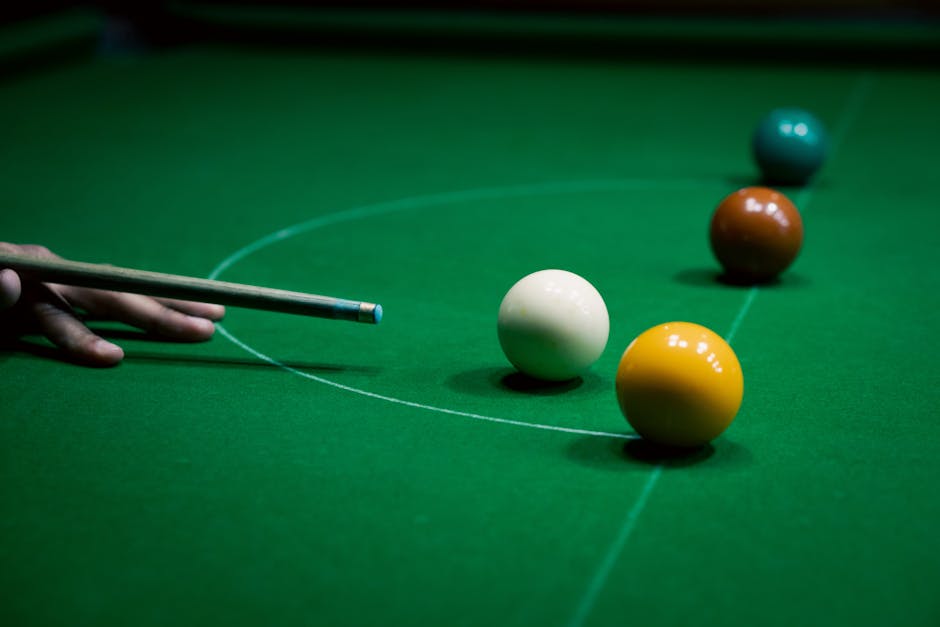
- Ronnie O’Sullivan’s decision to use two cues during the World Championship has sparked intense interest and raised questions about his strategy.
- O’Sullivan’s unconventional approach reflects his adaptability and willingness to innovate in high-pressure competitions.
- The World Championship is a stage where every decision, no matter how small, can significantly impact the outcome.
- O’Sullivan’s decision to use two cues adds a new layer of complexity to his game, both technically and psychologically.
- This bold move highlights the mental and physical challenges that top athletes face in high-stakes competitions.
Ronnie O’Sullivan, one of the most successful snooker players of all time, has been making headlines at the World Championship with his unconventional approach to the game. In a surprising move, O’Sullivan has been using two cues, switching between them during matches. This unorthodox strategy has raised eyebrows among fans and pundits, with many questioning the reasoning behind it. As O’Sullivan himself put it, ‘I thought a bit of a roll of the dice, it was a gamble. I was a bit nervous because I thought you could look a bit silly.’ This bold move has sparked intense interest, with many wondering what inspired O’Sullivan to take such a risk.
The World Championship Stage

The World Championship is the pinnacle of professional snooker, attracting the best players from around the globe. It is a stage where reputations are made and broken, and where every decision, no matter how small, can have a significant impact on the outcome. O’Sullivan, with his vast experience and numerous titles, is no stranger to this pressure. However, his decision to use two cues adds a new layer of complexity to his game, both technically and psychologically. This move not only reflects O’Sullivan’s adaptability and willingness to innovate but also highlights the mental and physical challenges that top athletes face in high-stakes competitions.
The Cue Switch: What’s Behind It?

So, what prompted O’Sullivan to adopt this unconventional strategy? According to the player, the idea was to experiment and potentially gain an edge over his opponents. By using two cues, O’Sullivan aims to adapt more effectively to different playing conditions and shots, leveraging the unique characteristics of each cue to his advantage. This approach requires immense skill and confidence, as switching between cues during a match can be disruptive and requires precise adjustment. O’Sullivan’s opponents and fellow competitors are watching closely, analyzing the effects of this strategy and possibly considering similar innovations in their own games.
Analysis of the Strategy
From a technical standpoint, using two cues can offer several potential benefits. Different cues can have distinct weights, balances, and tips, which can affect the trajectory and spin of the ball. By selecting the right cue for the shot, a player might achieve more consistent results and improve their overall performance. However, this strategy also introduces variables such as the time taken to switch cues and the psychological impact of such an unconventional approach on both the player and their opponent. Experts and fans are closely monitoring O’Sullivan’s progress, eager to see if this gamble pays off and how it influences the dynamics of the game.
Implications for the Sport
The implications of O’Sullivan’s decision to use two cues extend beyond his personal performance at the World Championship. It challenges traditional norms and encourages innovation within the sport. If successful, this strategy could inspire other players to experiment with their equipment and techniques, potentially leading to a new era of creativity and advancement in snooker. Furthermore, it underscores the psychological aspect of professional sports, where mental agility and the willingness to take calculated risks can be as crucial as physical skill. As the tournament unfolds, all eyes will be on O’Sullivan, not just to see how his unorthodox approach affects his standing but also to witness the broader impact on the game.
Expert Perspectives
Experts in the field have varied opinions on O’Sullivan’s strategy. Some praise his ingenuity and willingness to challenge conventional wisdom, seeing it as a testament to his dedication to improvement and his passion for the sport. Others are more skeptical, questioning the practicality of switching cues during a match and suggesting that the potential benefits may not outweigh the risks. As one analyst noted, ‘It’s a bold move, but in a sport where margins are so fine, any edge, no matter how small, could be significant.’ This divergence in opinion reflects the complexity of the issue and the multifaceted nature of professional sports.
Looking forward, the success or failure of O’Sullivan’s two-cue strategy will be closely watched. Will it become a trend in professional snooker, or will it remain an isolated experiment? The answer to this question will depend on O’Sullivan’s performance at the World Championship and the reactions of his peers. One thing is certain, however: Ronnie O’Sullivan’s decision to use two cues has already made this year’s tournament more intriguing, opening up new discussions about innovation, strategy, and the pursuit of excellence in sports.