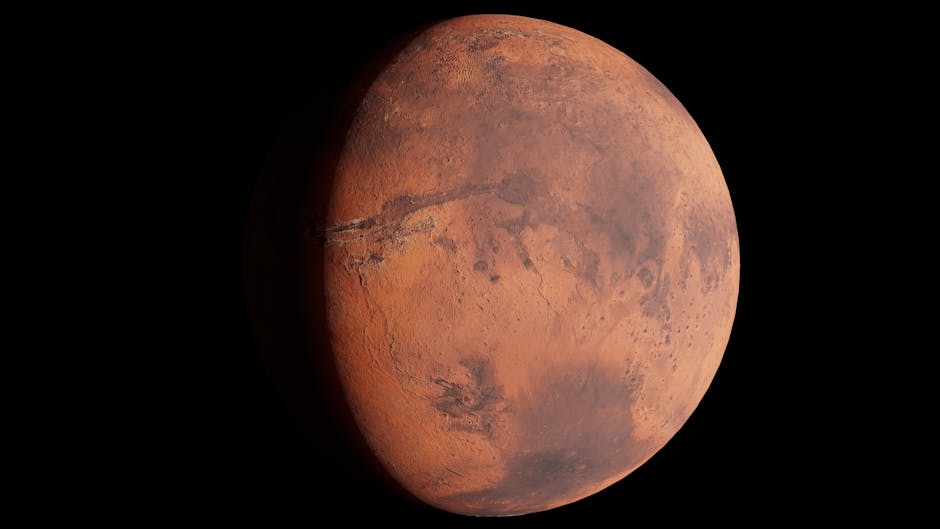
- NASA’s Curiosity rover discovered organic molecules on Mars, indicating the planet may have had the conditions for life.
- The molecules were found in the Murray Formation, a dried lakebed that could have been a potential habitat for life 3.5 billion years ago.
- This discovery does not confirm the presence of past life on Mars but suggests the planet could have supported simple life forms in the past.
- The findings have significant implications for understanding the origins of life and the potential for life elsewhere in the universe.
- Scientists are now focusing on studying the organic molecules to determine if they are of Martian origin or could have been brought to Mars by meteorites.
The discovery of organic molecules on Mars by NASA’s Curiosity rover has sent shockwaves throughout the scientific community, with many hailing it as a major breakthrough in the search for life beyond Earth. The rover, which has been exploring the Martian surface since 2012, has detected a range of organic compounds, including some that are considered to be the building blocks of life. While the findings do not provide conclusive evidence of life on Mars, they do suggest that the planet may have had the necessary ingredients for life to emerge at some point in its history. The discovery has significant implications for our understanding of the origins of life in our solar system and raises important questions about the potential for life to exist elsewhere in the universe.
The Martian Lakebed

The organic molecules were discovered in a dried lakebed near the Martian equator, an area that scientists believe may have once been home to a large lake or even an ocean. The lakebed, which is known as the Murray Formation, is a geological treasure trove, with rocks and sediment that date back over 3.5 billion years. The discovery of organic molecules in this region suggests that the lakebed may have been a fertile ground for life to emerge, with the necessary energy and nutrients available to support the growth of microorganisms. While the lakebed is now a barren and inhospitable environment, the discovery of organic molecules suggests that it may have been very different in the past.
Key Details of the Discovery

The discovery of organic molecules on Mars was made using the Curiosity rover’s Sample Analysis at Mars (SAM) instrument, which is capable of analyzing the chemical composition of Martian rocks and soil. The instrument detected a range of organic compounds, including thiophene, 2- and 3-methylthiophene, methanethiol, and dimethylsulfide, some of which have never been seen on Mars before. While the discovery of these compounds is significant, scientists are cautious about what it might mean, with many emphasizing that the presence of organic molecules does not necessarily imply the presence of life. The molecules could have been delivered to Mars on meteorites or formed through geological processes, and further analysis is needed to determine their origin.
Analysis and Implications
The discovery of organic molecules on Mars has significant implications for our understanding of the origins of life in our solar system. While the findings do not provide conclusive evidence of life on Mars, they do suggest that the planet may have had the necessary ingredients for life to emerge at some point in its history. The presence of organic molecules on Mars also raises important questions about the potential for life to exist elsewhere in the universe, with many scientists believing that the discovery increases the likelihood of finding life on other planets. The discovery also highlights the importance of continued exploration and research into the Martian environment, with scientists eager to learn more about the planet’s history and the potential for life to exist there.
Implications for the Search for Life
The discovery of organic molecules on Mars has significant implications for the search for life beyond Earth. While the findings do not provide conclusive evidence of life on Mars, they do suggest that the planet may have had the necessary ingredients for life to emerge at some point in its history. The discovery also highlights the importance of continued exploration and research into the Martian environment, with scientists eager to learn more about the planet’s history and the potential for life to exist there. The findings also raise important questions about the potential for life to exist elsewhere in the universe, with many scientists believing that the discovery increases the likelihood of finding life on other planets.
Expert Perspectives
Scientists are divided about what the discovery of organic molecules on Mars might mean, with some hailing it as a major breakthrough in the search for life beyond Earth. “The discovery of organic molecules on Mars is a significant finding that suggests the planet may have had the necessary ingredients for life to emerge at some point in its history,” said one scientist. Others are more cautious, emphasizing that the presence of organic molecules does not necessarily imply the presence of life. “While the discovery of organic molecules on Mars is interesting, it is not conclusive evidence of life on the planet,” said another scientist. “Further analysis is needed to determine the origin of the molecules and what they might mean for our understanding of the Martian environment.”
As scientists continue to analyze the data from the Curiosity rover, they are also looking to the future, with many eager to learn more about the Martian environment and the potential for life to exist there. The discovery of organic molecules on Mars raises important questions about the potential for life to exist elsewhere in the universe, and scientists are eager to explore other planets and moons in our solar system to see if they might harbor life. With ongoing and future missions, such as the European Space Agency’s ExoMars rover and NASA’s Mars 2020 rover, scientists are hopeful that they will soon have more answers about the potential for life beyond Earth.