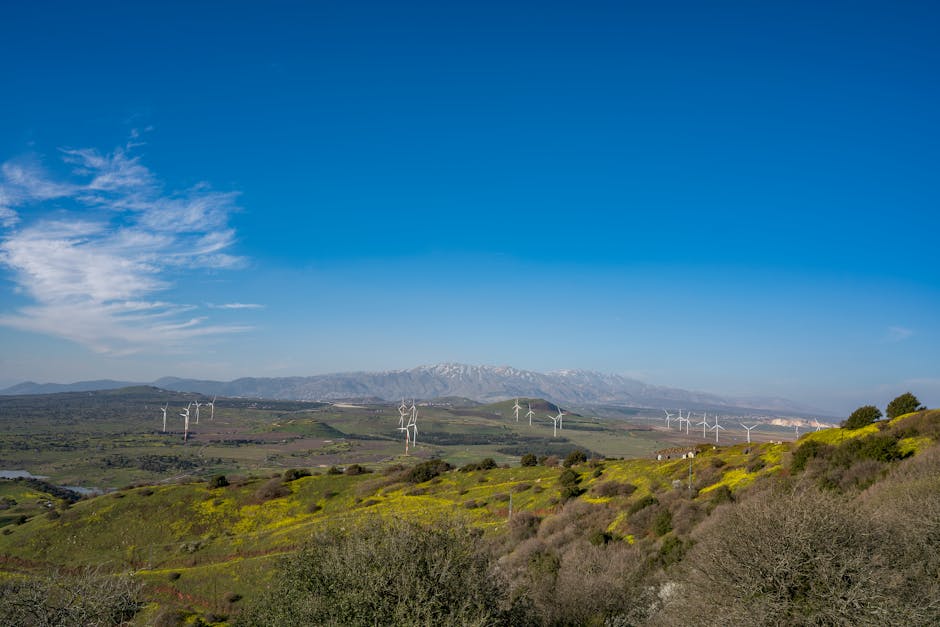
In a striking and provocative move, dozens of Israeli settlers have crossed into Syrian territory in the Golan Heights, sparking concerns of a significant escalation in the region. The settlers, who are demanding the establishment of a new settlement, have barricaded themselves on a rooftop, refusing to leave until their demands are met. This brazen act has heightened tensions between Israel and Syria, with the international community watching closely to see how the situation will unfold. The Golan Heights, a disputed territory that has been occupied by Israel since 1967, has long been a flashpoint in the region, and this latest development has the potential to ignite a wider conflict.
The Disputed Territory of the Golan Heights

The Golan Heights, a strategic plateau that borders Israel, Syria, and Jordan, has been a source of contention for decades. The territory was captured by Israel during the Six-Day War in 1967, and since then, it has been occupied and settled by thousands of Israeli citizens. However, the international community has never recognized Israel’s annexation of the Golan Heights, and it remains a disputed territory. The recent influx of Israeli settlers into Syrian territory has brought the issue back to the forefront, with many questioning the legitimacy of Israel’s claims to the land. As the situation continues to unfold, it is clear that the Golan Heights will remain a major point of contention in the region.
A New Settlement in the Making

According to reports, the Israeli settlers who crossed into Syrian territory are demanding the establishment of a new settlement in the area. The settlers, who are largely made up of young families and ideological supporters of the settlement movement, believe that they have a right to settle in the Golan Heights and are willing to take bold action to achieve their goal. The Israeli government has thus far refused to comment on the situation, but it is likely that the settlers have the tacit support of some government officials. As the standoff continues, it remains to be seen whether the settlers will be successful in their demands, or if the Israeli government will ultimately be forced to intervene and remove them from the area.
Analysis of the Situation
The situation in the Golan Heights is complex and multifaceted, with a variety of factors at play. From a geopolitical perspective, the establishment of a new settlement in the area would be a significant development, with the potential to alter the balance of power in the region. The Syrian government, which has long claimed sovereignty over the Golan Heights, is likely to view the settlers’ actions as a provocation, and may respond with force. Meanwhile, the international community is watching the situation closely, with many calling for restraint and a peaceful resolution to the crisis. As the situation continues to unfold, it is clear that a deep understanding of the historical, cultural, and geopolitical context of the Golan Heights is essential for making sense of the events on the ground.
Implications of the Crisis
The implications of the crisis in the Golan Heights are far-reaching and significant. If the settlers are successful in their demands, it could lead to a significant escalation of tensions in the region, with the potential for violence and instability. The Syrian government, which is already facing significant challenges in the form of a brutal civil war, may view the establishment of a new settlement as a threat to its sovereignty and territorial integrity. Meanwhile, the Israeli government, which is facing pressure from its own citizens to support the settlement movement, may be forced to choose between its commitment to the settlers and its obligation to maintain peace and stability in the region. As the situation continues to unfold, it is clear that the consequences of the crisis will be felt for a long time to come.
Expert Perspectives
Experts on the region are divided in their assessment of the situation, with some viewing the settlers’ actions as a legitimate expression of their right to settle in the Golan Heights, while others see it as a reckless and provocative move. According to Dr. Aaron David Miller, a former US diplomat and expert on the Middle East, “the settlers’ actions are a clear challenge to the status quo in the Golan Heights, and have the potential to ignite a wider conflict.” Meanwhile, Dr. Khalil Shikaki, a Palestinian scholar and expert on the Israeli-Palestinian conflict, believes that “the settlers’ demands are a distraction from the real issue at hand, which is the occupation of Palestinian territory and the denial of Palestinian rights.” As the situation continues to unfold, it is clear that a variety of perspectives and opinions will be brought to bear on the crisis.
Looking ahead, it is clear that the situation in the Golan Heights will continue to be a major point of contention in the region. As the settlers remain barricaded on the rooftop, the international community will be watching closely to see how the situation is resolved. Will the Israeli government ultimately be forced to intervene and remove the settlers, or will they be successful in their demands? Only time will tell, but one thing is certain: the crisis in the Golan Heights has the potential to ignite a wider conflict, and it is essential that all parties involved work towards a peaceful and negotiated resolution.