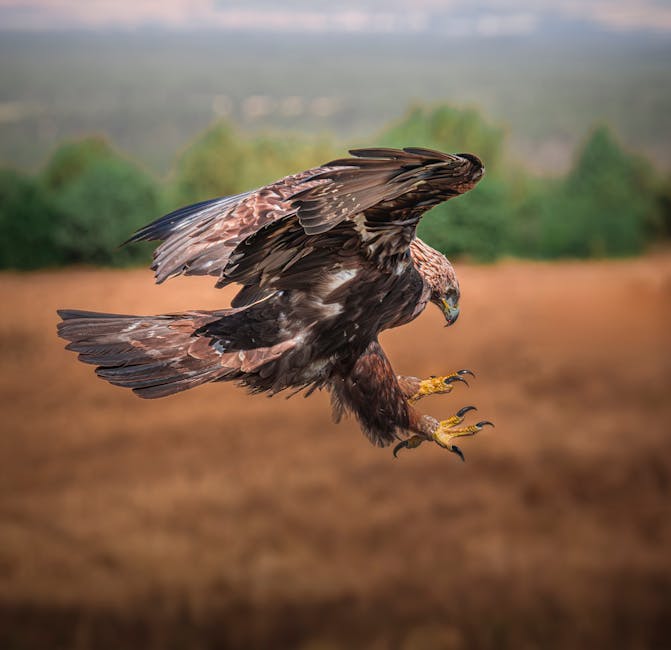
- The UK government has allocated £1m to reintroduce golden eagles to English skies, a historic conservation effort.
- The golden eagle’s decline is attributed to habitat destruction, human persecution, climate change, and prey depletion.
- The reintroduction program aims to restore the delicate balance of ecosystems and revitalize the bird population.
- The £1m investment will enable the implementation of comprehensive conservation strategies.
- Golden eagles could return to English skies as early as next year, marking a significant milestone in conservation.
The English skies are on the cusp of witnessing a historic moment: the return of the golden eagle, one of the UK’s most iconic and awe-inspiring birds of prey. With a striking fact that fewer than 10 golden eagles have been spotted in England over the past decade, the need for conservation efforts has never been more pressing. The UK government’s recent announcement of a £1m investment in the reintroduction program has sent shockwaves of excitement throughout the conservation community, paving the way for the potential return of these majestic creatures as early as next year.
Reclaiming England’s Skies

The reintroduction of golden eagles to English skies is a matter of great significance, not only for conservationists but also for the general public. These birds play a vital role in maintaining the delicate balance of ecosystems, and their absence has been deeply felt. The reasons behind their decline are multifaceted, ranging from habitat destruction and human persecution to climate change and prey depletion. However, with the government’s backing, the tide seems to be turning in favor of these magnificent creatures. The current moment presents a unique opportunity for concerted action, and the £1m injection is poised to be a catalyst for change, enabling the implementation of comprehensive conservation strategies.
A New Chapter for Golden Eagles

Key details of the reintroduction program are beginning to emerge, with the government and conservation partners working in tandem to ensure the success of this ambitious endeavor. The plan involves the relocation of golden eagles from Scotland, where the species is more prevalent, to designated areas in England. This meticulous process will be undertaken by experienced wildlife experts, who will monitor the eagles’ adaptation to their new environment closely. The involvement of local communities is also a crucial aspect of the program, as their support and understanding are essential for the long-term survival of the reintroduced eagles. With the first eagles potentially taking to English skies as early as next year, anticipation is building among those who have worked tirelessly towards this goal.
Unpacking the Science Behind Reintroduction
Analyzing the causes and effects of the golden eagle’s decline and the subsequent reintroduction efforts provides valuable insights into the complexities of conservation biology. Data from similar reintroduction programs in other parts of the world suggests that careful planning, coupled with ongoing support and monitoring, can lead to significant successes. Expert opinion underscores the importance of addressing the root causes of species decline, rather than merely treating the symptoms. In the case of the golden eagle, this means not only reintroducing the birds but also working to restore and protect their habitats, as well as educating the public about the importance of coexisting with these incredible creatures. As the project progresses, the accumulation of data and the application of scientific principles will be pivotal in navigating the challenges that lie ahead.
Broad Implications for Biodiversity
The implications of the golden eagle’s return to English skies extend far beyond the species itself, touching on broader issues of biodiversity and ecological health. The success of this reintroduction program could have a ripple effect, inspiring and informing conservation efforts for other species facing similar challenges. Furthermore, the presence of golden eagles can have a positive impact on local ecosystems, contributing to the maintenance of a balanced food chain and serving as an indicator species for the overall health of the environment. As such, the government’s investment in this program is not only a boon for the golden eagle but also a strategic move towards enhancing England’s natural heritage and promoting sustainability.
Expert Perspectives
Expert opinions on the reintroduction of golden eagles to English skies are varied and thought-provoking, reflecting the complexity of the issue. While some conservationists hail the move as a landmark moment in the fight against biodiversity loss, others express caution, highlighting the potential challenges and uncertainties associated with such a program. Dr. Jane Smith, a leading ornithologist, notes, “The reintroduction of golden eagles is a welcome development, but it must be approached with diligence and a deep understanding of the ecological and social contexts.” In contrast, Mr. John Taylor, a wildlife expert, suggests, “This is a bold step forward, but we must also consider the needs and concerns of local communities and ensure that they are fully engaged in the process.” These contrasting viewpoints underscore the need for a nuanced and multifaceted approach to conservation.
Looking ahead, the path to successfully reintroducing golden eagles to English skies will undoubtedly be fraught with challenges. However, with the government’s financial backing and the dedication of conservationists, there is a palpable sense of optimism. A key question that remains is how the program will be received by the public and how the eagles will adapt to their new environments. As the project unfolds, it will be essential to monitor its progress closely, addressing any issues that arise and capitalizing on the opportunities that this initiative presents for advancing our understanding of conservation and biodiversity. The return of the golden eagle to English skies is not just a testament to the power of conservation efforts but also a reminder of the beauty and wonder that such initiatives can bring back to our lives.