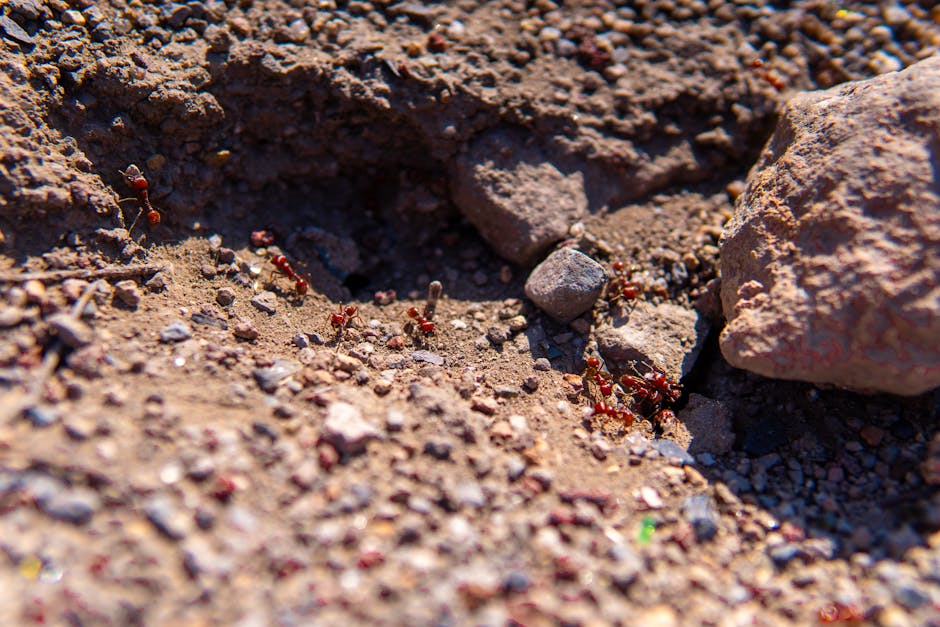
- Researchers discovered a unique form of grooming between two ant species in the Arizona desert.
- The Arizona ‘cleaner’ ant was observed nibbling and licking workers of a different ant species, mimicking a desert spa.
- This finding challenges our current understanding of ant social dynamics and highlights the complexity of insect sociality.
- The discovery raises questions about the evolution of sociality and the role of cooperation in insect societies.
- The study published in Nature journal sheds new light on ant behaviour and encourages further research.
In a fascinating display of social behaviour, researchers have observed a species of ant in the Arizona desert engaging in a unique form of grooming with another ant species. This remarkable discovery, published in the journal Nature, has shed new light on the complex social dynamics of insects and challenges our current understanding of their behaviour. The study found that the Arizona ‘cleaner’ ant, a species known for its distinctive habits, was observed nibbling and licking the workers of a different ant species, in a behaviour reminiscent of a desert spa.
Uncovering the Secrets of Ant Sociality

The discovery of this unusual behaviour is significant, as it highlights the complex and often mysterious world of insect sociality. Ants are notoriously social creatures, living in highly organized colonies with complex communication systems and division of labour. However, this latest finding suggests that their social behaviour may be more nuanced and multifaceted than previously thought. The fact that two different ant species are engaging in a form of grooming behaviour raises important questions about the evolution of sociality and the role of cooperation in insect societies.
A Closer Look at the Cleaner Ant

The Arizona ‘cleaner’ ant, the species at the centre of this discovery, is a fascinating insect with a range of unusual habits. Found in the desert regions of Arizona, this ant is known for its distinctive behaviour of cleaning the bodies of other insects, including other ants. However, the observation that it is also engaging in a form of grooming behaviour with another ant species is a new and significant finding. The researchers involved in the study used a combination of field observations and laboratory experiments to investigate this behaviour, and their findings have important implications for our understanding of insect social dynamics.
Understanding the Implications of This Behaviour
The discovery of this unusual grooming behaviour between two ant species has significant implications for our understanding of insect sociality. It suggests that cooperation and mutualism may play a more important role in the evolution of social behaviour than previously thought. The fact that two different ant species are engaging in a form of grooming behaviour raises important questions about the role of reciprocity and cooperation in insect societies. Furthermore, this behaviour may have important consequences for the ecology and evolution of these ant species, and may even have implications for our understanding of human social behaviour.
Broader Implications for Ecosystems
The discovery of this unusual behaviour also has broader implications for our understanding of ecosystems and the complex interactions between different species. The fact that two ant species are engaging in a form of grooming behaviour suggests that there may be a range of other, as yet undiscovered, interactions between different species in the Arizona desert ecosystem. This highlights the importance of continued research and exploration into the natural world, and the need for a more nuanced understanding of the complex interactions between different species.
Expert Perspectives
Experts in the field of entomology have welcomed this new discovery, highlighting its significance for our understanding of insect sociality. ‘This finding is a game-changer for our understanding of ant social behaviour,’ said one expert. ‘It suggests that cooperation and mutualism may play a more important role in the evolution of social behaviour than previously thought.’ However, other experts have cautioned that more research is needed to fully understand the implications of this behaviour, and to determine its significance in the broader context of ecosystem dynamics.
As researchers continue to study this unusual behaviour, a number of important questions remain to be answered. What are the evolutionary origins of this behaviour, and how does it benefit the ants involved? How common is this behaviour in other ant species, and what are the implications for our understanding of insect sociality? As we continue to explore the natural world, it is likely that we will uncover many more secrets and surprises, challenging our current understanding of the complex and fascinating world of insects.