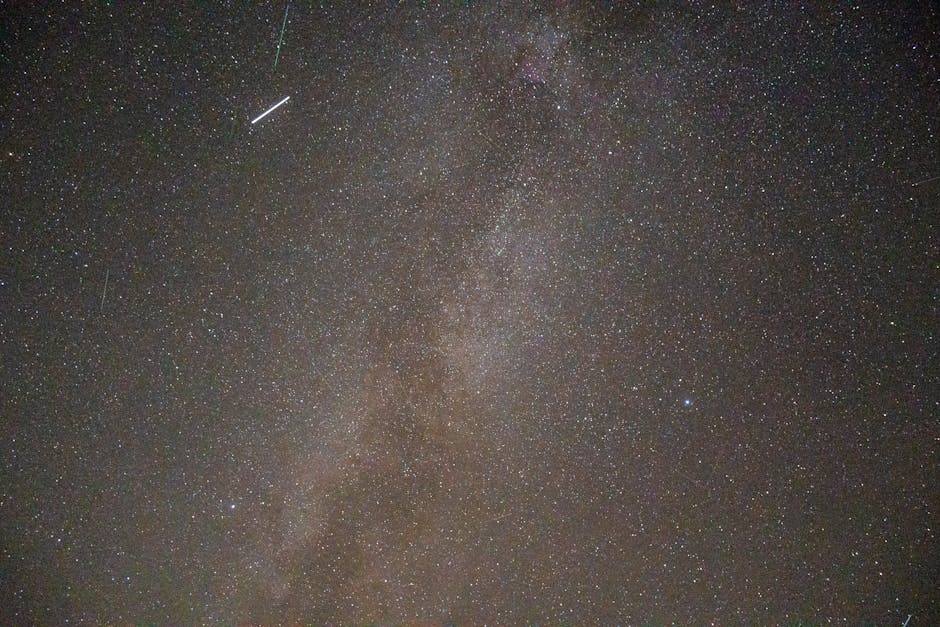
- The Big Bend region of West Texas boasts the darkest skies in the continental United States, covering 30,000 square miles of wilderness.
- The preservation of dark skies is a pressing concern for astronomers, with over 70% of the world’s population living in areas with artificial lighting.
- The Big Bend Dark Sky Reserve is the largest of its kind on Earth, providing a unique window into the universe’s distant past.
- The region’s exceptionally dark skies allow researchers to detect faint signals from distant galaxies, stars, and other celestial objects.
- The Big Bend’s remote location and minimal artificial lighting make it an ideal location for conducting cutting-edge astronomical research.
The Big Bend region of West Texas is home to a staggering 30,000 square miles of virtually untouched wilderness, boasting the darkest skies in the continental United States. This vast expanse of inky blackness is not just a treat for stargazers; it has also become a portal to the early universe, enabling scientists to study the cosmos in unprecedented detail. With over 70% of the world’s population living in areas where the night sky is obscured by artificial lighting, the preservation of dark skies has become a pressing concern for astronomers, and West Texas has emerged as a global leader in this effort.
Unlocking the Secrets of the Universe

The Big Bend Dark Sky Reserve, designated as such in 2019, is the largest of its kind on Earth, providing a unique window into the universe’s distant past. The region’s exceptionally dark skies allow researchers to detect faint signals from distant galaxies, stars, and other celestial objects, which would be impossible to observe in areas with heavier light pollution. This has significant implications for our understanding of the cosmos, as scientists can now study the formation and evolution of the universe in greater detail than ever before. The reserve’s remote location, coupled with its minimal artificial lighting, makes it an ideal location for conducting cutting-edge astronomical research.
Astronomical Research in the Big Bend

Several research initiatives are currently underway in the Big Bend region, taking advantage of the area’s uniquely dark skies. The McDonald Observatory, located near Fort Davis, is one of the world’s premier astronomical research facilities, and it has been at the forefront of many groundbreaking discoveries. Scientists from around the globe have flocked to the observatory to conduct research on a wide range of topics, from the detection of dark energy to the study of black holes. The observatory’s state-of-the-art telescopes, including the 9.2-meter Hobby-Eberly Telescope, have enabled researchers to collect vast amounts of data on the universe, which are then analyzed using sophisticated computer algorithms.
Understanding Dark Energy
One of the most significant areas of research being conducted in the Big Bend region is the study of dark energy, a mysterious and poorly understood phenomenon that is thought to be driving the accelerating expansion of the universe. Dark energy is estimated to make up approximately 68% of the universe’s total energy density, yet very little is known about its nature or properties. By studying the distribution of galaxies and galaxy clusters in the universe, scientists hope to gain a better understanding of dark energy and its role in shaping the cosmos. The Big Bend Dark Sky Reserve provides a unique opportunity for researchers to conduct this type of research, as the area’s exceptionally dark skies allow for the detection of faint signals from distant galaxies and galaxy clusters.
Implications for Humanity
The research being conducted in the Big Bend region has significant implications for humanity, as it has the potential to greatly expand our understanding of the universe and our place within it. By studying the cosmos, scientists can gain insights into the fundamental laws of physics, which can then be applied to a wide range of fields, from medicine to technology. Furthermore, the preservation of dark skies is essential for maintaining our connection to the natural world and promoting a sense of wonder and awe, which are essential for inspiring future generations of scientists and explorers. As the world becomes increasingly urbanized, the importance of protecting areas like the Big Bend Dark Sky Reserve cannot be overstated.
Expert Perspectives
According to Dr. Emily Levesque, a leading astronomer at the University of Washington, the Big Bend Dark Sky Reserve is a “game-changer” for astronomical research. “The exceptionally dark skies in West Texas provide a unique opportunity for scientists to study the universe in unprecedented detail,” she notes. “The research being conducted in this region has the potential to greatly expand our understanding of the cosmos and drive breakthroughs in a wide range of fields.” In contrast, Dr. Brian Thomas, a physicist at the University of Chicago, sounds a note of caution, warning that the increasing development of the region poses a significant threat to the preserve’s dark skies. “As more people move to the area, the risk of light pollution increases, which could have devastating consequences for astronomical research,” he warns.
As researchers continue to explore the secrets of the universe in the Big Bend region, one question remains: what other mysteries will be uncovered in this vast and untouched corner of the world? Will the study of dark energy reveal new insights into the fundamental nature of the universe, or will it raise more questions than answers? As scientists push the boundaries of human knowledge, the Big Bend Dark Sky Reserve will undoubtedly remain at the forefront of astronomical research, providing a unique window into the cosmos and inspiring future generations of explorers and scientists.