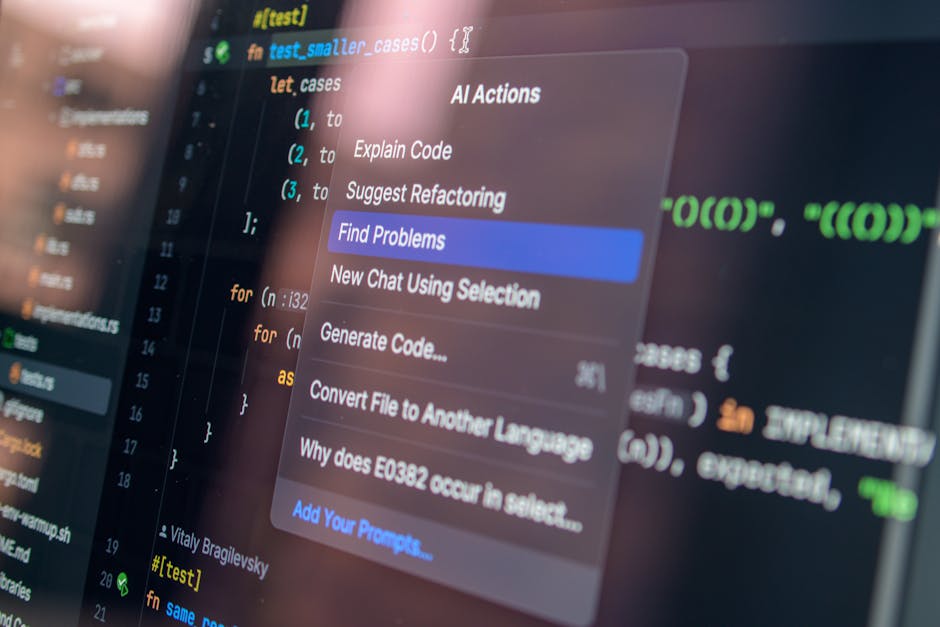
- Custom skills in AI development allow for tailored tasks and applications, enhancing the model’s capabilities.
- Claude’s custom skills are built using Markdown files, providing a comprehensive instruction set for the model.
- Custom skills enable complex systems that can interact with users in a more human-like way.
- Portability of skills across different AI models would significantly enhance their value and applicability.
- Developers can create custom skills using Markdown files, making it accessible and user-friendly.
The development of artificial intelligence (AI) has led to the creation of various models, each with its unique capabilities and applications. One such model is Claude, which allows users to create custom skills using Markdown files (SKILL.md files). These skills serve as persistent instructions for Claude, enabling it to perform specific tasks and behave in a certain way when triggered. With the increasing popularity of AI models like ChatGPT, the question arises: can Claude’s custom skills be exported and used in ChatGPT? This is a crucial consideration for developers and users who have invested significant time and resources into creating complex skill systems.
The Importance of Custom Skills in AI Development

Custom skills are essential in AI development as they enable models to perform tasks that are tailored to specific needs and applications. In the case of Claude, users can create a folder of SKILL.md files that act as a comprehensive instruction set for the model. Each skill has a name, description, trigger condition, and detailed instructions on how Claude should behave when that trigger fires. This level of customization allows developers to create complex systems that can interact with users in a more human-like way. The portability of these skills across different AI models would significantly enhance their value and applicability.
Understanding Claude’s Custom Skills

Claude’s custom skills are built using Markdown files, which provide a straightforward and accessible way to create and edit instructions for the model. These skills can reference each other and build upon one another, creating an interconnected system that can perform a wide range of tasks. The complexity and depth of these skills depend on the user’s requirements and the level of customization needed. For instance, a user might create a skill that triggers a response based on a specific input, while another skill might be designed to handle more complex conversations. The ability to export and import these skills would facilitate the sharing of knowledge and expertise among developers.
Technical Feasibility of Exporting Custom Skills
From a technical standpoint, the feasibility of exporting Claude’s custom skills to ChatGPT depends on several factors, including the compatibility of the two models and the format of the skill files. If the skill files are written in a standard format that can be easily parsed by ChatGPT, then the process of exporting and importing these skills might be relatively straightforward. However, if the skill files are proprietary or use a custom format, the process could be more complex and might require significant development effort. Additionally, the architecture of ChatGPT and its ability to support custom skills would play a crucial role in determining the success of such an endeavor.
Implications of Portable Custom Skills
The implications of being able to export and use Claude’s custom skills in ChatGPT are far-reaching. It would enable developers to leverage their existing investments in AI development and apply them to new models and applications. This portability would also facilitate the creation of more sophisticated AI systems that can learn from each other and adapt to new environments. Furthermore, it would open up new avenues for collaboration and innovation among AI researchers and developers, leading to faster progress in the field. However, it also raises questions about intellectual property, data privacy, and the potential risks associated with transferring complex AI systems across different platforms.
Expert Perspectives
Experts in the field of AI development have differing opinions on the portability of custom skills across different models. Some believe that the standardization of skill formats and the development of more open architectures would facilitate the exchange of skills between models. Others argue that the complexity and proprietary nature of some AI systems make it challenging to achieve true portability. As one expert noted, “The ability to export and import custom skills would be a game-changer for AI development, but it requires a concerted effort from developers, researchers, and industry leaders to create common standards and frameworks.”
Looking ahead, the question of whether Claude’s custom skills can be exported to ChatGPT remains an open one. As AI technology continues to evolve, we can expect to see more emphasis on interoperability and portability. Developers and researchers will need to work together to address the technical, legal, and ethical challenges associated with transferring complex AI systems across different platforms. The potential benefits of portable custom skills are significant, and exploring this possibility could lead to breakthroughs in AI development and application.