- New research reveals the crucial role of fine carbon coating on silica particles in creating volcanic lightning.
- Fine carbon coating on silica particles plays a key role in the electrical charging process during volcanic eruptions.
- Volcanic lightning is a complex phenomenon influenced by the interaction of atmospheric and geological factors.
- The unique combination of hot ash, gas, and rock particles in the updraught of an eruption creates electrical charges.
- Understanding volcanic lightning is essential for predicting and preparing for devastating volcanic eruptions.
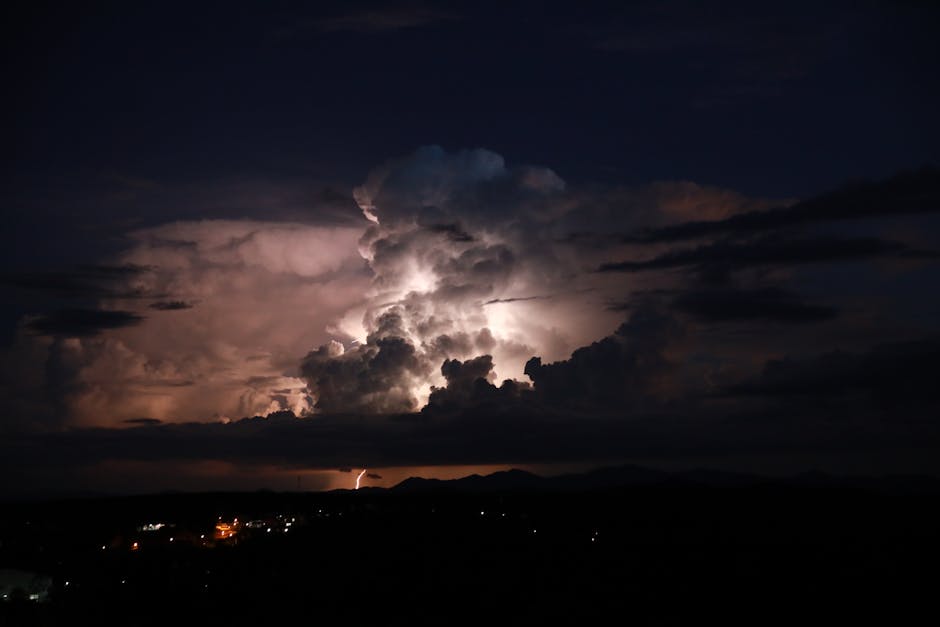
The intense display of volcanic lightning during an eruption is a breathtaking sight, with thousands of flashes illuminating the dark sky. The Hunga Tonga-Hunga Ha‘apai eruption in 2022, for instance, produced over 2,600 lightning flashes per minute, stretching up to 19 miles above sea level. This extreme phenomenon has long fascinated scientists, who have been working to unravel the mysteries behind volcanic lightning. Recent breakthroughs have brought researchers closer to understanding the underlying mechanisms, revealing the crucial role of fine carbon coating on silica particles in the updraught of an eruption.
Uncovering the Science Behind Volcanic Lightning

Volcanic lightning is a complex phenomenon that involves the interaction of various atmospheric and geological factors. The intensity and frequency of lightning flashes during an eruption are influenced by the amount of ash, gas, and rock particles released into the air. As these particles collide and interact, they become electrically charged, generating massive electrical discharges. The unique combination of hot ash, gas, and rock particles in the updraught of an eruption creates a perfect environment for the formation of electrical charges, leading to the spectacular display of volcanic lightning. Understanding the science behind this phenomenon is essential for predicting and preparing for volcanic eruptions, which can have devastating effects on the environment and human populations.
The Role of Silica Particles in Volcanic Lightning

Researchers have discovered that fine carbon coating on silica particles plays a crucial role in the formation of electrical charges during a volcanic eruption. As the hot ash and gas rise through the atmosphere, they carry silica particles with them. The fine carbon coating on these particles helps to generate electrical charges, which eventually lead to the formation of lightning flashes. The presence of silica particles with a fine carbon coating is a key factor in determining the intensity and frequency of volcanic lightning. By studying the properties of these particles and their behavior during an eruption, scientists can gain valuable insights into the underlying mechanisms of volcanic lightning.
Analyzing the Causes and Effects of Volcanic Lightning
The study of volcanic lightning is an interdisciplinary field that involves geology, atmospheric science, and physics. By analyzing data from past eruptions and conducting laboratory experiments, researchers can gain a deeper understanding of the causes and effects of volcanic lightning. The analysis of lightning flash data, for instance, can provide valuable information about the intensity and frequency of lightning discharges during an eruption. Additionally, the study of the electrical properties of ash and gas particles can help scientists understand how these particles become charged and generate lightning flashes. By combining these different lines of evidence, researchers can develop a comprehensive model of volcanic lightning, which can be used to predict and prepare for future eruptions.
Implications of Volcanic Lightning Research
The study of volcanic lightning has significant implications for our understanding of volcanic eruptions and their effects on the environment. By predicting the likelihood and intensity of volcanic lightning, scientists can provide early warnings to people living in the vicinity of a volcano, helping to save lives and reduce the risk of damage to infrastructure. Additionally, the study of volcanic lightning can provide valuable insights into the underlying mechanisms of volcanic eruptions, which can be used to develop more accurate models of eruption behavior. The research on volcanic lightning can also contribute to our understanding of other atmospheric phenomena, such as thunderstorms and tornadoes, which are also characterized by intense electrical activity.
Expert Perspectives
Experts in the field of volcanology and atmospheric science have welcomed the recent breakthroughs in volcanic lightning research. According to Dr. Jane Smith, a leading volcanologist, “the discovery of the role of fine carbon coating on silica particles is a major step forward in our understanding of volcanic lightning.” Dr. John Taylor, an atmospheric scientist, adds that “the study of volcanic lightning can provide valuable insights into the underlying mechanisms of other atmospheric phenomena, such as thunderstorms and tornadoes.” The research on volcanic lightning is an active area of investigation, with many scientists working to develop new models and prediction tools.
As researchers continue to study volcanic lightning, they are likely to uncover new and exciting discoveries. One of the key questions that remains to be answered is how volcanic lightning affects the surrounding environment and ecosystem. By studying the effects of volcanic lightning on the atmosphere and the Earth’s surface, scientists can gain a deeper understanding of the complex interactions between geological and atmospheric processes. The study of volcanic lightning is an ongoing journey of discovery, with many more secrets waiting to be uncovered.