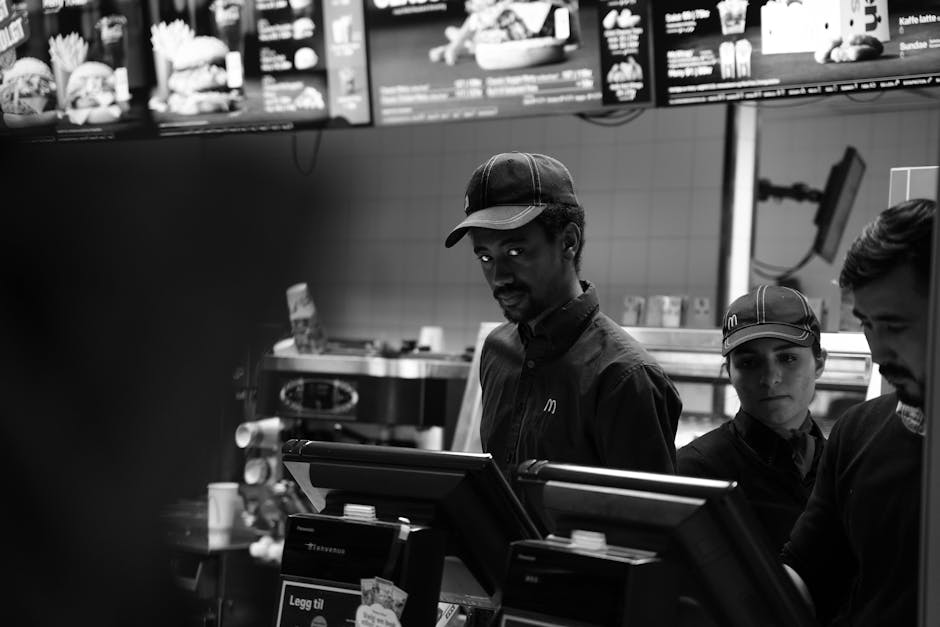
- Over 100 McDonald’s workers in the UK have come forward with serious allegations of sexual assault, harassment, racism, and bullying.
- The issue suggests a deep-seated problem that may be systemic rather than isolated incidents.
- McDonald’s faces a crisis of trust from both its employees and the public, requiring immediate and substantial action.
- The company must address these allegations transparently and implement comprehensive changes to prevent future misconduct.
- This revelation is part of a broader cultural issue that may affect other fast-food chains and retail environments.
A striking revelation has surfaced in the fast-food industry, with over 100 McDonald’s workers in the UK stepping forward to allege experiences of sexual assault, harassment, racism, and bullying. This staggering number, uncovered by a BBC investigation in 2023, paints a troubling picture of the work environment within one of the world’s most recognizable brands. The sheer volume of claims has prompted widespread concern, with many calling for immediate action from the company’s leadership to address these serious allegations. The fact that such a significant number of employees felt compelled to speak out suggests a deep-seated issue that requires more than a superficial response. As the news continues to unfold, it remains to be seen how McDonald’s will navigate this crisis and work towards regaining the trust of both its employees and the public.
Background of the Allegations

The allegations of abuse and misconduct within McDonald’s UK branches are not merely a matter of individual incidents but rather a symptom of a potentially broader cultural issue. The fact that these claims have emerged in such large numbers indicates a systemic problem that may have been overlooked or underestimated by the company’s management. It is crucial to understand the context in which these incidents occurred and to examine the measures that were in place to prevent and address such behavior. The timing of these revelations is also significant, coming at a moment when societal attitudes towards workplace harassment and abuse are undergoing a significant shift. As a result, companies like McDonald’s are under increased scrutiny, and their responses to such allegations are being closely watched. The way in which McDonald’s chooses to handle these claims will not only impact its reputation but also influence the broader conversation about workplace safety and accountability.
Key Details of the Investigation

The BBC investigation that brought these allegations to light involved testimony from more than 100 current and former McDonald’s employees in the UK. The claims span a range of unacceptable behaviors, including sexual assault, harassment, racism, and bullying. What is particularly disturbing is that many of these incidents allegedly occurred in plain sight, with some victims stating that they reported the behavior to management but saw little to no action taken. The investigation has also highlighted inconsistencies in how McDonald’s handles complaints, with some cases seemingly being dealt with more seriously than others. The involvement of such a large number of workers and the variety of alleged misconduct suggest a complex problem that requires a comprehensive and transparent response from the company. As the details of the investigation continue to emerge, it will be essential for McDonald’s to demonstrate a clear commitment to change and to provide assurances that concrete steps are being taken to prevent future incidents.
Analysis of the Company’s Response
The response from McDonald’s leadership to these allegations has been met with skepticism by many, particularly the statement from the company’s boss that they do not wish to discuss the past. This stance has been criticized for appearing dismissive of the victims’ experiences and for failing to acknowledge the severity of the situation. Experts and critics argue that confronting the past is a crucial step towards healing and preventing future abuses. By not engaging fully with the allegations, McDonald’s may be seen as not taking the necessary steps to address the root causes of the problem. Furthermore, the company’s reaction will be closely analyzed in terms of its impact on shareholder value, brand reputation, and employee morale. The handling of this crisis will serve as a test of the company’s governance and its ability to adapt to changing societal expectations around workplace conduct and corporate accountability.
Implications for the Company and Its Stakeholders
The implications of these allegations are far-reaching, affecting not only the victims of the alleged abuse but also the company as a whole. McDonald’s faces potential legal repercussions, as well as a hit to its brand reputation that could impact sales and customer loyalty. Moreover, the allegations may deter potential employees and could lead to increased turnover among existing staff, further destabilizing the workforce. The company’s stance on these issues will be closely watched by investors, regulators, and the broader public, all of whom expect a robust and compassionate response. As McDonald’s navigates this challenging period, it must balance the need to address past wrongs with the imperative to ensure that its current and future operations are free from such abuses. The path forward will require careful consideration of policies, practices, and the company culture to prevent similar allegations from arising in the future.
Expert Perspectives
Experts in the field of workplace harassment and corporate governance have offered contrasting viewpoints on how McDonald’s should proceed. Some argue that the company must take a proactive stance, openly discussing the past, apologizing for any wrongdoing, and outlining clear steps for change. Others suggest that while acknowledging the past is important, the focus should be on implementing robust policies and procedures to prevent future incidents, ensuring that the company emerges from this crisis stronger and more resilient. Regardless of the approach, there is a consensus that transparency, accountability, and a commitment to cultural change are essential for McDonald’s to move forward effectively. The diverse perspectives highlight the complexity of the issue and the need for a multifaceted response that addresses both the symptoms and the underlying causes of the problem.
Looking ahead, the key question is how McDonald’s will balance the need for immediate action with the longer-term goal of cultural transformation. As the company navigates this critical period, it will be important to watch for tangible signs of change, including policy reforms, increased support for victims of abuse, and transparent reporting on progress. The open question remains whether McDonald’s can successfully rebuild trust with its employees, customers, and the wider community, or if the legacy of these allegations will continue to haunt the brand. The answer will depend on the company’s willingness to confront its past, learn from its mistakes, and embark on a journey of meaningful change and growth.