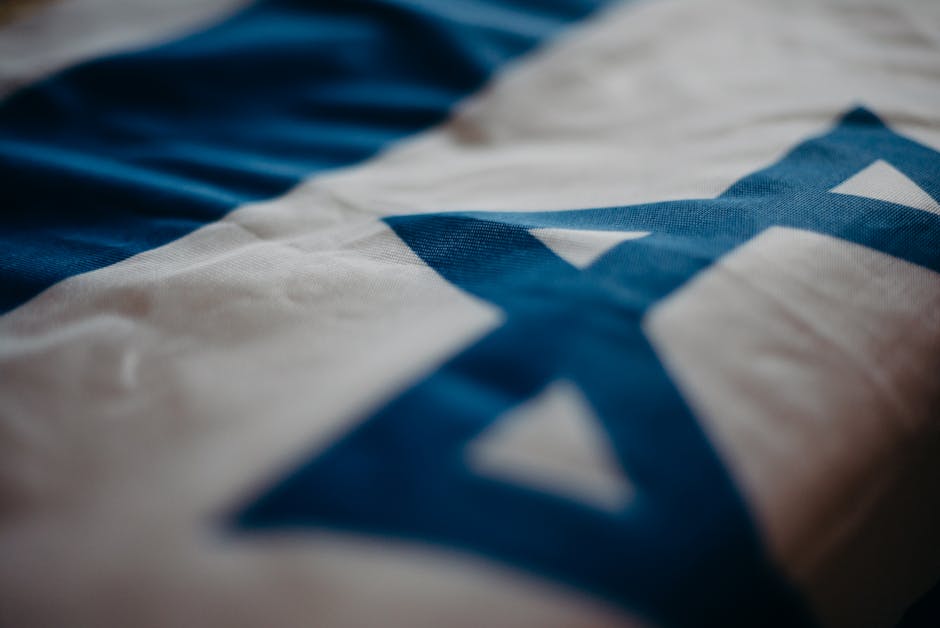
- The removal of Israeli flags by ultra-Orthodox Jews is a complex issue rooted in their rejection of Zionist ideology.
- Ultra-Orthodox Jews view the Israeli flag as a symbol of Zionist ideology, which they believe is incompatible with their religious beliefs.
- The conflict between the ultra-Orthodox community and the Israeli state is fueled by deep-seated tensions and disagreements over civic duty and nationality.
- The removal of Israeli flags is part of a broader pattern of behavior reflecting the community’s strained relationship with the Israeli state.
- The incident highlights the challenges of balancing religious pluralism and civic duty in Israel, leaving the country’s fragile social fabric in question.
In a striking display of defiance, two ultra-Orthodox Jews were arrested by Israeli police for tearing down Israeli flags in the city of Beit Shemesh, highlighting the deep-seated tensions between the ultra-Orthodox community and the Israeli state. The incident, which occurred in a neighborhood with a large ultra-Orthodox population, has sparked widespread controversy and raised questions about the complex relationships between religion, identity, and nationality in Israel. With the country already grappling with issues of religious pluralism and civic duty, this latest incident has brought the simmering tensions to a boil, leaving many to wonder what the future holds for this fragile social fabric.
Background to the Conflict

The removal of Israeli flags by ultra-Orthodox Jews is not an isolated incident, but rather part of a broader pattern of behavior that reflects the community’s complex and often fraught relationship with the Israeli state. For many ultra-Orthodox Jews, the Israeli flag is seen as a symbol of Zionist ideology, which they view as incompatible with their religious beliefs. This rejection of Zionist ideology is rooted in a deeper theological objection to the idea of a Jewish state, which some ultra-Orthodox Jews believe can only be established by the Messiah. As a result, the ultra-Orthodox community has long been at odds with the Israeli authorities, who view their refusal to recognize the state’s symbols as a rejection of their civic duty and a threat to national unity.
The Incident in Beit Shemesh

The arrest of the two ultra-Orthodox Jews in Beit Shemesh has brought the conflict into sharp focus, with many in the community rallying to their defense. According to eyewitnesses, the two men were seen tearing down Israeli flags in a public area, before being detained by police. The incident has sparked a heated debate about the limits of free speech and the role of the police in enforcing public order. While some have condemned the men’s actions as a provocative and disrespectful challenge to the authority of the state, others have defended their right to express their religious beliefs, even if those beliefs are at odds with the dominant ideology of the state.
Analysis of the Causes and Effects
The underlying causes of the conflict between the ultra-Orthodox community and the Israeli state are complex and multifaceted, reflecting a deeper clash of values and ideologies. On one hand, the ultra-Orthodox community is driven by a desire to preserve its unique cultural and religious identity, which it sees as being under threat from the secularizing influences of the state. On the other hand, the Israeli authorities are determined to assert their authority and maintain national unity, which they view as being essential to the country’s survival. As the conflict escalates, it is likely to have far-reaching effects, not only for the ultra-Orthodox community but also for the wider Israeli society. With tensions already running high, there is a risk of further polarization and division, which could have serious consequences for the country’s social cohesion and stability.
Implications of the Conflict
The implications of the conflict between the ultra-Orthodox community and the Israeli state are far-reaching and profound, affecting not only the parties directly involved but also the wider Israeli society. For the ultra-Orthodox community, the conflict raises fundamental questions about their place within the state and their relationship to the dominant Zionist ideology. For the Israeli authorities, the conflict poses a challenge to their authority and their ability to maintain national unity. As the conflict continues to escalate, it is likely to have significant consequences for the country’s social fabric, potentially leading to further polarization and division. With the ultra-Orthodox community making up a significant proportion of the Israeli population, the conflict has the potential to affect not only the community itself but also the wider society, highlighting the need for a nuanced and sensitive approach to addressing the complex issues at play.
Expert Perspectives
Experts are divided on the best way to address the conflict, with some arguing that the Israeli authorities need to take a firmer line against ultra-Orthodox extremism, while others believe that a more nuanced and sensitive approach is needed. According to Dr. Rabbi David Rosen, a leading expert on Jewish affairs, “the key to resolving the conflict lies in finding a way to balance the competing demands of religious freedom and national unity.” Meanwhile, Professor Moshe Halbertal, a renowned scholar of Jewish law and philosophy, argues that “the ultra-Orthodox community has a right to express its religious beliefs, even if those beliefs are at odds with the dominant ideology of the state.” As the debate continues, it is clear that there are no easy answers, and that a solution will require a deep understanding of the complex issues at play.
Looking to the future, it is unclear how the conflict will be resolved, but one thing is certain – the situation will require careful monitoring and a nuanced approach to addressing the complex issues at play. As the Israeli authorities struggle to balance the competing demands of religious freedom and national unity, they will need to be mindful of the potential consequences of their actions, not only for the ultra-Orthodox community but also for the wider Israeli society. With the country already grappling with issues of religious pluralism and civic duty, the conflict has the potential to have far-reaching effects, highlighting the need for a thoughtful and considered approach to addressing the complex challenges ahead.