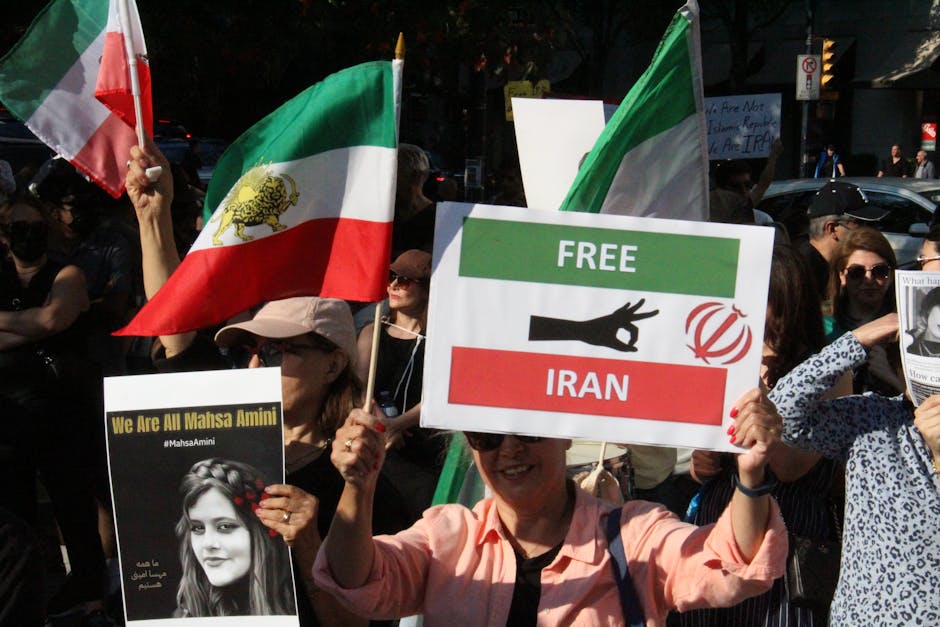
- Iran categorically rejected negotiations with the US under threat, signaling a deepening mistrust and hostility.
- President Trump’s commitment to maintaining a blockade in the Strait of Hormuz has significant implications for global oil supplies and regional stability.
- The US withdrawal from the Joint Comprehensive Plan of Action (JCPOA) led to the reimposition of economic sanctions on Iran, severely impacting its economy.
- Incidents such as the downing of a US drone and the seizure of foreign tankers raised fears of a direct military confrontation.
- The rejection of talks under threat suggests diplomatic channels may no longer be viable for resolving tensions between the two nations.
The ongoing standoff between Iran and the US has taken a dramatic turn, with Tehran categorically rejecting the possibility of negotiations under the shadow of threats. This striking stance comes as President Trump reaffirms his commitment to maintaining a blockade in the strategic Strait of Hormuz, a move that has significant implications for global oil supplies and regional stability. The Iranian position, emphasized through various official channels, underscores the deepening mistrust and hostility between the two nations, setting the stage for further escalation in an already volatile conflict.
Background to the Crisis

The current crisis has its roots in the US withdrawal from the Joint Comprehensive Plan of Action (JCPOA), commonly known as the Iran nuclear deal, and the subsequent reimposition of stringent economic sanctions on Iran. These actions have severely impacted Iran’s economy, leading to widespread discontent and a hardening of the Iranian government’s stance towards the US. The situation has been further complicated by incidents such as the downing of a US drone and the seizure of foreign tankers, which have raised fears of a direct military confrontation. Against this backdrop, the rejection of talks under threat signals a significant escalation, as it suggests that diplomatic channels, which have historically provided a safety valve for tensions, may no longer be viable.
Key Developments in the Conflict

Recent developments have seen a sharp increase in military deployments and rhetorical exchanges between the US and Iran. The US has dispatched additional troops and military hardware to the region, citing the need to deter Iranian aggression, while Iran has responded with threats to close the Strait of Hormuz, a vital waterway through which a significant portion of the world’s oil passes. The involvement of other regional actors, including Saudi Arabia and the UAE, has added complexity to the situation, with both countries expressing support for US actions against Iran. Meanwhile, European powers, who are still party to the JCPOA, have found themselves in a precarious position, attempting to salvage the nuclear deal while also maintaining good relations with the US.
Analysis of the Situation
Analysts point to the interplay of economic, strategic, and ideological factors as driving the current impasse. The US strategy of applying maximum pressure through sanctions is seen as an attempt to force Iran into negotiations on more favorable terms, possibly including concessions on its missile program and regional influence. However, this approach has been met with resistance from Iran, which views the sanctions as an act of economic warfare and the demand for negotiations under threat as unacceptable. Data on the impact of sanctions shows significant declines in Iran’s oil exports and GDP, underscoring the economic dimensions of the conflict. Experts warn that without a diplomatic breakthrough, the situation could deteriorate further, potentially leading to accidental or intentional military clashes with unforeseeable consequences.
Implications of the Crisis
The implications of the US-Iran standoff are far-reaching, affecting not only the two countries directly involved but also the broader region and global economy. The potential for conflict to disrupt oil supplies has already led to increased volatility in energy markets, with possible long-term effects on economic growth and stability. Furthermore, the crisis has significant geopolitical implications, as it tests alliances and challenges the existing international order. For countries in the region, the situation presents a delicate balancing act, as they seek to maintain relations with both the US and Iran while avoiding being drawn into the conflict.
Expert Perspectives
Experts offer contrasting viewpoints on the way forward, with some advocating for a return to diplomatic efforts and others suggesting that the US needs to take a firmer stance against Iranian aggression. There is a consensus, however, that the current path is unsustainable and that without meaningful engagement, the risk of miscalculation and conflict will continue to rise. The role of international organizations and other global powers in mediating the conflict is also seen as crucial, as they may provide a platform for dialogue and help in crafting a compromise that addresses the concerns of all parties involved.
Looking forward, the key question is what steps can be taken to de-escalate tensions and reopen the door to negotiations. This will likely require a combination of diplomatic efforts, economic incentives, and a willingness from both sides to compromise. As the situation continues to unfold, observers will be watching for any signs of flexibility from either the US or Iran, as well as the responses of other global actors, in the hope that a peaceful resolution can still be achieved. The coming weeks and months will be critical in determining the trajectory of the conflict and the future of the region.